

Stem Cell Therapy in Orthopaedics: What Can It Treat and Who May Benefit?
Stem cell therapy is one of the most heavily marketed areas in modern orthopaedics, but the language used around it can make the treatment sound more established than the evidence actually shows.
Cell-based treatments may have a role in selected musculoskeletal conditions, particularly some forms of osteoarthritis and cartilage injury, but they are not a proven way to regrow a normal joint, reverse advanced arthritis or guarantee that surgery can be avoided.
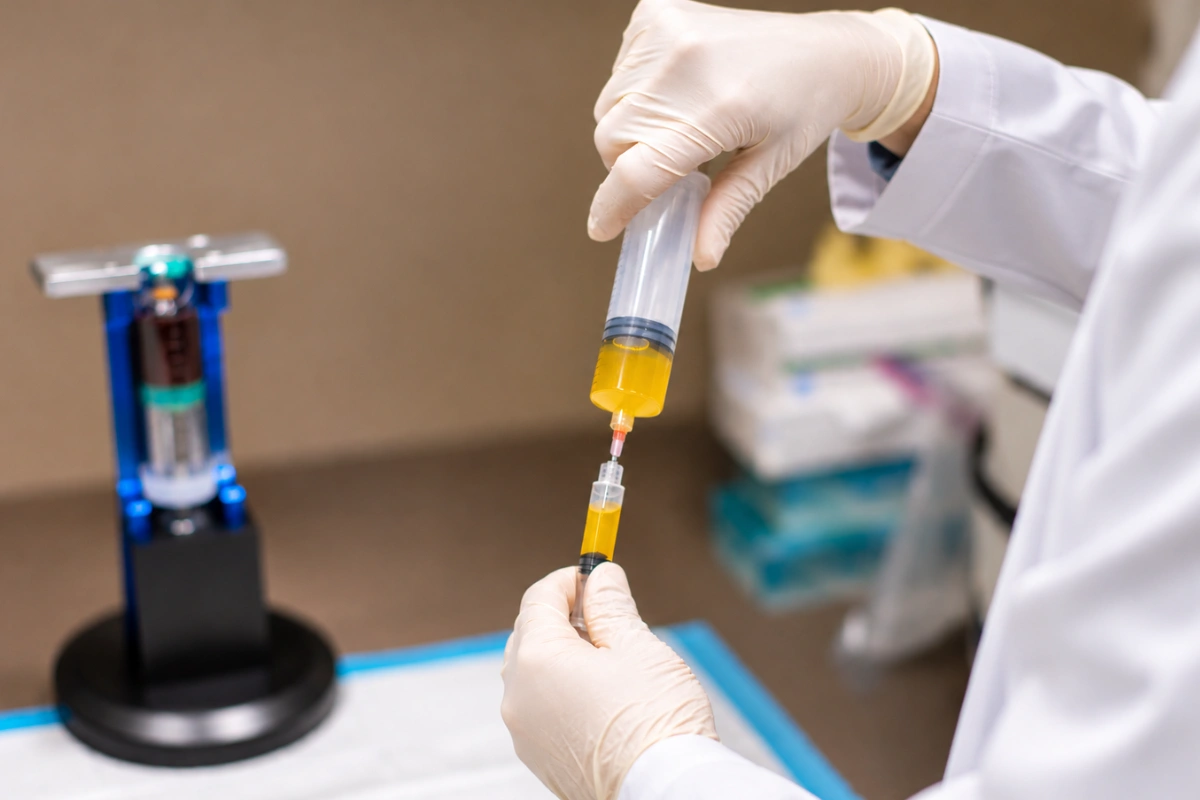
The first step is also understanding what is actually being injected. Treatments described as “stem cell therapy” may include bone marrow aspirate concentrate, fat-derived cell preparations or other cell-containing products. These are not necessarily purified or laboratory-expanded stem cells, and different preparations can contain very different numbers and types of cells.
The American Academy of Orthopaedic Surgeons’ current orthobiologics resources emphasise the need to separate promising biological treatments from claims that have moved ahead of the clinical evidence. In 2026, AAOS again highlighted that orthobiologics remain a rapidly developing field in which stronger evidence and standardisation are still needed.
What Does “Stem Cell Therapy” Mean In Orthopaedics?
Stem cells are cells with the ability to develop into other cell types and to influence biological processes around them. In orthopaedic practice, however, the term “stem cell injection” is often used loosely.
Two commonly discussed approaches are:
- Bone Marrow Aspirate Concentrate (BMAC): bone marrow is taken from the patient, commonly from the pelvis, and concentrated. The final product contains a mixture of cells, platelets and signalling molecules. Only a small proportion of the cells are mesenchymal stromal or progenitor cells.
- Fat-Derived Preparations: adipose tissue is collected and processed to produce a cell-containing preparation. Depending on the method and local regulations, this may include stromal vascular fraction or other minimally manipulated fat-derived products.
These products are biologically different from cultured mesenchymal stromal cells that have been expanded in a laboratory.
That distinction matters because evidence from one product should not automatically be applied to another.
The AAOS Biologics Dashboard describes orthobiologics as a broad group that includes platelet-rich plasma, autologous blood products and cell-based therapies. It is therefore more accurate to ask which biologic product is being proposed, for which diagnosis, and what evidence supports that exact use.
Are PRP And Stem Cell Therapy The Same Thing?
No. Platelet-rich plasma, or PRP, is prepared from the patient’s blood and contains a higher concentration of platelets and associated growth factors. It does not contain a therapeutic population of stem cells.
Cell-based orthobiologics such as BMAC or selected fat-derived preparations are obtained from tissue that contains progenitor or stromal cells.
Both may be grouped under “regenerative medicine,” but they should not be presented as interchangeable treatments.
This distinction becomes important when discussing evidence, cost, risks and regulatory requirements.
What does the evidence say about PRP in shoulder conditions?
A 2023 critical review published in EFORT Open Reviews examined 24 studies investigating platelet-rich plasma (PRP) in different shoulder pathologies. The review found considerable variation in patient numbers, control groups, treatment protocols and clinical outcomes. Although several studies reported positive effects and suggested potential benefits in selected shoulder conditions, the differences between studies made it difficult to draw definitive conclusions about PRP effectiveness across all shoulder disorders.
This highlights an important point: PRP should not be considered a universally effective treatment for every shoulder condition. Its potential role needs to be assessed according to the specific diagnosis, disease stage and available clinical evidence.
Reference: Rosso C, Morrey ME, Schär MO, Grezda K. The role of platelet-rich plasma in shoulder pathologies: a critical review of the literature. EFORT Open Reviews. 2023;8(4):213–222. DOI: 10.1530/EOR-22-0104.
What Orthopaedic Conditions Are Being Studied With Cell-Based Therapies?
Research has explored cell-based treatments for several musculoskeletal conditions, including:
- osteoarthritis
- focal cartilage injuries
- tendon disorders
- ligament injuries
- rotator cuff disease
- meniscal pathology
- bone-healing problems
The strength of evidence is not the same for all of these conditions.
A treatment being studied for a condition does not mean it is established as standard care for that condition.
Stem Cells For Osteoarthritis: What Does The Evidence Actually Show?
Osteoarthritis is the area in which cell-based orthobiologics have attracted the greatest patient interest.
Some studies, particularly in knee osteoarthritis, report improvement in pain or function after injections containing bone marrow- or fat-derived cells. However, studies vary substantially in how cells are collected, processed, counted and injected, which makes it difficult to compare one product with another.
The International Society for Stem Cell Research’s osteoarthritis fact sheet describes cell-based therapy for osteoarthritis as unproven despite its use in many countries. It notes that better-quality trials have generally not demonstrated convincing cartilage regeneration that would represent a cure for arthritis.
That difference is crucial. Feeling better after an injection is not the same as rebuilding normal cartilage. A patient can experience reduced pain without the structural arthritis disappearing.
For this reason, cell-based therapy should not be marketed as a way to “reverse” osteoarthritis.
Can Stem Cells Regrow Cartilage?
At present, patients should be very cautious with claims that a routine injection can regrow a normal joint surface.
Cartilage biology is complex. Once osteoarthritis becomes established, the problem involves more than a small area of missing cartilage. The bone underneath the cartilage, joint lining, ligaments, muscles and overall mechanics of the joint may all be affected.
The ISSCR specifically notes that high-quality clinical studies have not demonstrated the kind of cartilage regeneration that would justify describing current cell therapy as an arthritis cure.
Researchers continue to study tissue engineering and cell-based cartilage restoration, but these approaches should be distinguished from commercially marketed injections.
What About Focal Cartilage Injuries?
A focal cartilage defect is different from widespread osteoarthritis.
Younger or active patients can sometimes develop a localised area of cartilage damage following injury or repetitive loading while the rest of the joint remains relatively healthy.
Cell-containing products are being studied as part of cartilage-restoration strategies, sometimes alongside surgery or a scaffold rather than as a simple injection.
Whether a patient is suitable depends on factors such as:
- the size and location of the defect
- the condition of the surrounding cartilage
- joint alignment
- ligament stability
- age and activity demands
- previous surgery
This is a very different decision from giving an injection for generalised osteoarthritis.
Can Cell Therapy Heal Tendons Or Ligaments?
The biological rationale is attractive because tendons and ligaments often have slower healing capacity than muscle.
Cell-based treatments have therefore been studied for chronic tendinopathy and ligament injuries.
However, the evidence remains inconsistent and condition-specific.
For example, a chronic tendon problem is not the same as a complete tendon rupture. A cell-based injection should not be presented as an alternative to repairing a tendon when the tendon is mechanically detached and surgical repair is clinically indicated.
The same principle applies to ligament instability. A biological treatment cannot reliably restore stability if the underlying problem is a major structural disruption.
For Dr. Marouane, the key question is therefore not “Can stem cells help tendons?” in the abstract. It is what exactly is damaged, how much function has been lost, and whether the problem is biological, mechanical or both.
What About Rotator Cuff Injuries?
Rotator cuff disease ranges from tendinopathy to partial tears and complete tears.
Orthobiologics are being investigated both as injections and as possible adjuncts to surgical repair. Yet the role of cell-based therapy remains less established than standard treatments such as activity modification, physiotherapy and, for selected structural tears, surgical repair.
A complete traumatic rotator cuff tear associated with substantial weakness should not be managed as though it were simply a biological healing problem.
Likewise, a small degenerative tear that remains functional does not automatically require either surgery or a biologic injection.
Treatment should begin with the clinical significance of the tear rather than the availability of a new procedure.
 What do the 2026 ESSKA-ESA recommendations say about partial rotator cuff tears?
The 2026 ESSKA-ESA Formal Consensus on partial-thickness posterosuperior rotator cuff tears provides updated recommendations on treatment, rehabilitation and return to sport. Developed by a steering group of 13 shoulder surgeons and evaluated by an independent rating group of 20 experts over three rounds, the consensus produced 30 recommendations.
The recommendations favour an initial non-operative approach for most patients, with physiotherapy and activity modification generally recommended for 3–6 months. PRP injections may be considered for short-term pain and symptom relief in selected patients, although treatment protocols and supporting evidence remain variable.
Surgical treatment may be considered when pain or functional limitations persist despite appropriate conservative management. Tear thickness, tissue quality, symptoms and individual activity demands should all influence the decision rather than imaging findings alone.
Importantly, the consensus does not support routine use of biological augmentation, including PRP or stem cell implantation, during rotator cuff repair because the available evidence remains insufficient.
These recommendations reinforce the importance of individualised treatment rather than assuming that every partial rotator cuff tear requires surgery or biological treatment.
Reference: Kany J, et al. The 2026 ESSKA-ESA formal consensus on partial-thickness posterosuperior rotator cuff tears (Part 2): Treatment strategies, rehabilitation, return to sport and complications. Knee Surgery, Sports Traumatology, Arthroscopy. 2026. DOI: 10.1002/ksa.70622.
Can Stem Cells Help A Fracture Or Bone That Is Slow To Heal?
Orthopaedics has long used biological strategies to support bone healing. Bone grafts and bone-marrow-derived products may be used in selected complex fractures, non-unions or reconstructive procedures.
This is different from a consumer “stem cell injection” for joint pain.
When biological augmentation is considered for bone healing, it is usually part of a broader treatment plan that also addresses stability, alignment, blood supply, infection risk and fixation.
If a fracture is unstable, no injection can substitute for adequate mechanical stability.
Who May Potentially Benefit From A Cell-Based Orthopaedic Treatment?
There is no universal “stem cell candidate.”
A discussion may be reasonable for carefully selected patients when:
- there is a clearly defined musculoskeletal diagnosis
- the condition is one for which there is at least a plausible evidence base
- standard non-surgical treatment has been considered appropriately
- symptoms remain important enough to justify an additional intervention
- the joint or tissue is not so structurally damaged that another treatment is clearly more appropriate
- the patient understands that improvement is not guaranteed
- the proposed product and indication comply with current regulatory requirements
The goal should be realistic: usually reducing symptoms or supporting a biological environment, not promising to create a new joint.
Who Is Less Likely To Benefit?
Cell-based therapy is less likely to solve a problem when the main issue is mechanical or structurally advanced.
Examples include:
- advanced joint destruction with major deformity
- gross instability
- a complete tendon rupture that requires repair
- a displaced fracture that requires fixation
- significant nerve compression
- infection
- another diagnosis that has not yet been correctly identified
A patient with advanced “bone-on-bone” arthritis may still ask about stem cells because they hope to avoid replacement surgery. That conversation should include the possibility that a biologic injection may not address the underlying structural loss sufficiently to restore function.
Avoiding surgery is only a useful goal when the alternative treatment has a reasonable chance of meeting the patient’s functional needs.
Does Age Determine Whether Someone Is Suitable?
Age matters, but it is not the only factor.
The biological quality of tissues can change with age, but two patients of the same age may have completely different levels of arthritis, muscle strength, activity demands and general health.
Suitability is therefore better assessed using the whole clinical picture:
- diagnosis
- severity
- imaging
- function
- tissue quality
- activity level
- previous treatment
- general medical health
- treatment goals
An age cut-off alone is rarely enough to make the decision.
What Are the Risks and Side Effects of Stem Cell Therapy?
The risks depend on what product is used and how it is obtained and processed.
Potential risks may include:
- pain or bruising at the harvest site
- bleeding
- infection
- temporary inflammatory flare after injection
- failure to improve
- cost without meaningful clinical benefit
- risks related to processing or contamination
More extensively manipulated or unapproved cell products raise additional concerns.
The U.S. Food and Drug Administration’s patient information on regenerative medicine warns that unapproved products have been associated with serious complications including infection, unwanted immune responses and abnormal tissue growth. FDA regulation applies to the United States rather than Dubai, but the safety message remains relevant: the source, processing, oversight and evidence behind a cell product matter.
What Are The Current Rules For Stem Cell Treatment In Dubai?
Dubai has a specific regulatory framework for stem cell services.
The Dubai Health Authority Standards for Stem Cell Services, effective from 28 February 2026, state that licensed clinical stem cell practice is restricted to autologous cells and products that are minimally manipulated unless specifically authorised under an approved clinical trial or transplantation programme.
The standards also restrict allogeneic stem-cell therapy for non-transplant regenerative purposes outside specified authorised pathways.
This means a treatment being available in another country, advertised online or described as “natural” does not automatically mean it is appropriate or permitted in Dubai.
Orthopaedic cell-based treatment must also be carried out within the physician’s licensed scope and in a facility that meets the relevant requirements.
Patients should therefore ask not only “Does this treatment work?” but also “What exactly is the product, what is the approved indication, and under which regulatory pathway is it being offered?”
 What Questions Should I Ask Before Considering Treatment?
Before paying for any cell-based orthopaedic procedure, useful questions include:
- What is my exact diagnosis?
- What tissue is being collected?
- What are the realistic alternatives?
- Is the product autologous or from a donor?
- What happens if the treatment does not work?
- What processing happens before it is injected?
- Is this use permitted under current Dubai regulations?
- Is the facility appropriately licensed for the procedure?
- What evidence supports its use for my specific condition?
- Is this BMAC, an adipose-derived product, cultured cells or something else?
- Is the goal pain reduction, improved function, tissue healing or something else?
A clinician should be able to answer these questions without relying on claims such as “regeneration guaranteed” or “surgery avoided permanently.”
How Is This Different From Established Orthopaedic Treatment?
Orthobiologics should sit within an overall treatment plan rather than replace diagnosis and rehabilitation.
Depending on the condition, established management may include:
- activity modification
- progressive physiotherapy
- strengthening
- weight management for weight-bearing joint arthritis
- medication when appropriate
- conventional injections
- bracing
- surgery when a structural problem requires it
AAOS’s current work on orthobiologics continues to emphasise evidence-based selection rather than assuming biological treatment is automatically superior because it is newer.
Frequently Asked Questions
Is stem cell therapy proven for osteoarthritis?
Some studies report improvement in pain and function, particularly in knee osteoarthritis, but current evidence does not support describing cell therapy as a proven cure or reliable method of regenerating normal cartilage.
Can stem cells prevent a joint replacement?
They may help symptoms in selected patients, but there is no guarantee that they will prevent future replacement surgery. In advanced structural arthritis, a biologic injection may not provide enough benefit.
Is BMAC the same as pure stem cells?
No. Bone marrow aspirate concentrate contains a mixture of cells and biological components. Mesenchymal progenitor cells make up only a small part of that mixture.
Are fat-derived cells better than bone marrow cells?
There is not enough high-quality comparative evidence to say that one source is universally superior. The answer also depends on the condition and how the product is processed.
Can stem cells repair a complete tendon tear?
A biologic treatment should not be assumed to reconnect a mechanically detached tendon. Complete tears may require surgical repair depending on the tendon, symptoms and functional demands.
Is PRP a stem cell treatment?
No. PRP is prepared from blood and concentrates platelets and signalling molecules. It is an orthobiologic but not a stem cell therapy.
How quickly should a patient expect improvement?
There is no reliable universal timeline. Response depends on the condition, product and patient. Claims of immediate tissue regeneration should be viewed cautiously.
Do stem cell injections have side effects?
Yes. Risks can include pain, bleeding, infection, inflammatory reactions and failure to improve. Risks also depend on the source and processing of the product.
Is cell therapy suitable for older patients?
Age alone does not determine suitability. The severity of disease, tissue quality, overall health, function and treatment goals are more useful considerations.
Is stem cell therapy legal in Dubai?
Dubai permits stem-cell services only within a specific regulatory framework. Current DHA standards restrict clinical use and require appropriate licensing, indications, processing and oversight.
Conclusion
Stem cell therapy in orthopaedics is a promising area of research, but the phrase covers several different biological products and the evidence is not equally strong for every condition.
For selected patients with a clearly defined musculoskeletal problem, a regulated cell-based treatment may be one option to discuss. However, current therapies should not be presented as a proven way to regrow normal cartilage, reverse advanced arthritis, repair every tendon injury or guarantee avoidance of surgery.
For Dr. Marouane, Senior Orthopaedic Surgeon – Hand to Shoulder in Dubai, the decision starts with the diagnosis and the mechanical condition of the joint or tendon. Only then does it make sense to ask whether a biological treatment has enough evidence, regulatory support and realistic potential benefit for that individual patient.
If you are considering a treatment advertised as “stem cell therapy,” a detailed orthopaedic assessment can help clarify what the product actually is, whether your condition is suitable for it and how it compares with established non-surgical or surgical options.
Medical Disclaimer
This article provides general educational information and does not replace individual medical advice, diagnosis or treatment. Cell-based and regenerative treatments are evolving areas of medicine, and availability, evidence and regulatory requirements can change. Treatment suitability depends on the diagnosis, examination findings, investigations, medical history, product used and current local regulatory requirements.