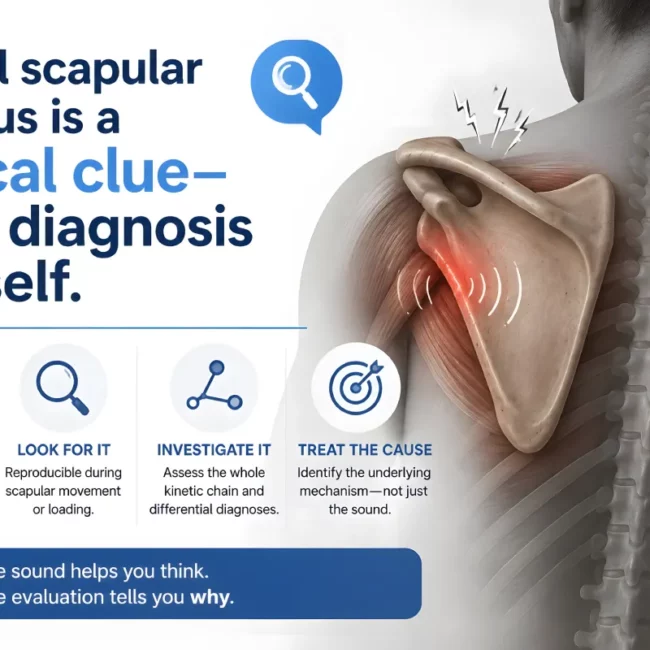


8 Common Causes: Why Does My Shoulder Hurt at Night?
If your shoulder feels reasonably manageable during the day but begins aching once you lie down, or regularly wakes you during the night, there may be an underlying shoulder problem worth assessing.
Shoulder pain at night is commonly associated with rotator cuff problems, bursitis, frozen shoulder and arthritis, although several different conditions can produce a similar pattern.
Night pain itself is not a diagnosis. Where the pain is located, which movements aggravate it, whether you have weakness or stiffness, whether there was an injury, and whether symptoms travel into your arm can all provide useful clues.
For example, the American Academy of Orthopaedic Surgeons’ information on rotator cuff tears explains that rotator cuff tears can cause pain and weakness, while some smaller tears may cause relatively few symptoms. This is one reason a scan finding must always be interpreted alongside the patient’s actual symptoms and examination.
So, if your shoulder hurts while you sleep, the important question is not simply why the pain becomes worse at night. The aim is to identify what structure is causing the symptoms and whether the shoulder is also becoming weak, stiff or functionally limited.
Why does shoulder pain feel worse at night?
There is no single explanation that applies to everyone.
Sleeping directly on a painful shoulder can put additional pressure on sensitive tendons, the bursa and other structures. Certain positions can also place the shoulder in a position that aggravates already irritated tissue.
Some conditions can hurt even when the shoulder is not moving. Frozen shoulder is a good example. The NHS guidance on frozen shoulder specifically describes shoulder pain that can become worse at night and disturb sleep.
Pain can also become more noticeable at night simply because there are fewer distractions than during the day. The pattern accompanying the night pain is therefore often more informative than the night pain itself.
| Possible cause | Clues you may notice |
| Rotator cuff tendinopathy | Pain lifting the arm or sleeping on that side |
| Rotator cuff tear | Pain with weakness or difficulty raising the arm |
| Bursitis / impingement | Outer shoulder pain, particularly with overhead movement |
| Frozen shoulder | Pain with progressively restricted movement |
| Shoulder arthritis | Deep ache, stiffness, grinding and reduced movement |
| Calcific tendinitis | Sometimes sudden or intense shoulder pain |
| Biceps tendinopathy | Pain mainly at the front of the shoulder |
| Referred pain from the neck | Pain with tingling, numbness or arm weakness |
These conditions can overlap, so symptoms alone may not always distinguish them reliably.
1. Rotator Cuff Tendinopathy
The rotator cuff is made up of muscles and tendons that stabilise the shoulder and help you lift and rotate your arm.
These tendons can become painful because of repetitive loading, overhead activity, age-related tendon changes or a combination of factors.
Rotator cuff-related pain may be noticeable when:
- raising your arm above shoulder level
- lowering the arm after reaching overhead
- reaching behind your back
- lifting objects away from the body
- performing overhead gym exercises
- sleeping on the affected shoulder
Pain is often felt around the outer shoulder and may extend into the upper arm. Rotator cuff tendinopathy can also occur alongside irritation of the nearby bursa. This is why terms such as rotator cuff pain, bursitis and shoulder impingement may sometimes appear together.
Does rotator cuff tendinopathy require surgery?
Usually, it does not. Many patients can initially be managed with modification of aggravating activities and an appropriate rehabilitation programme designed to restore movement, strength and tendon-loading capacity.
Pain medication or an injection may sometimes be considered depending on the diagnosis and individual circumstances.
Surgery is not recommended simply because an ultrasound or MRI contains the word “tendinopathy.”
2. Rotator Cuff Tear
A rotator cuff tendon can develop a partial tear, where part of the tendon remains intact, or a full-thickness tear, where the tendon is torn through its complete thickness.
Some tears develop gradually because of age-related tendon changes. Others occur suddenly after an injury such as a fall, dislocation or forceful lifting event.
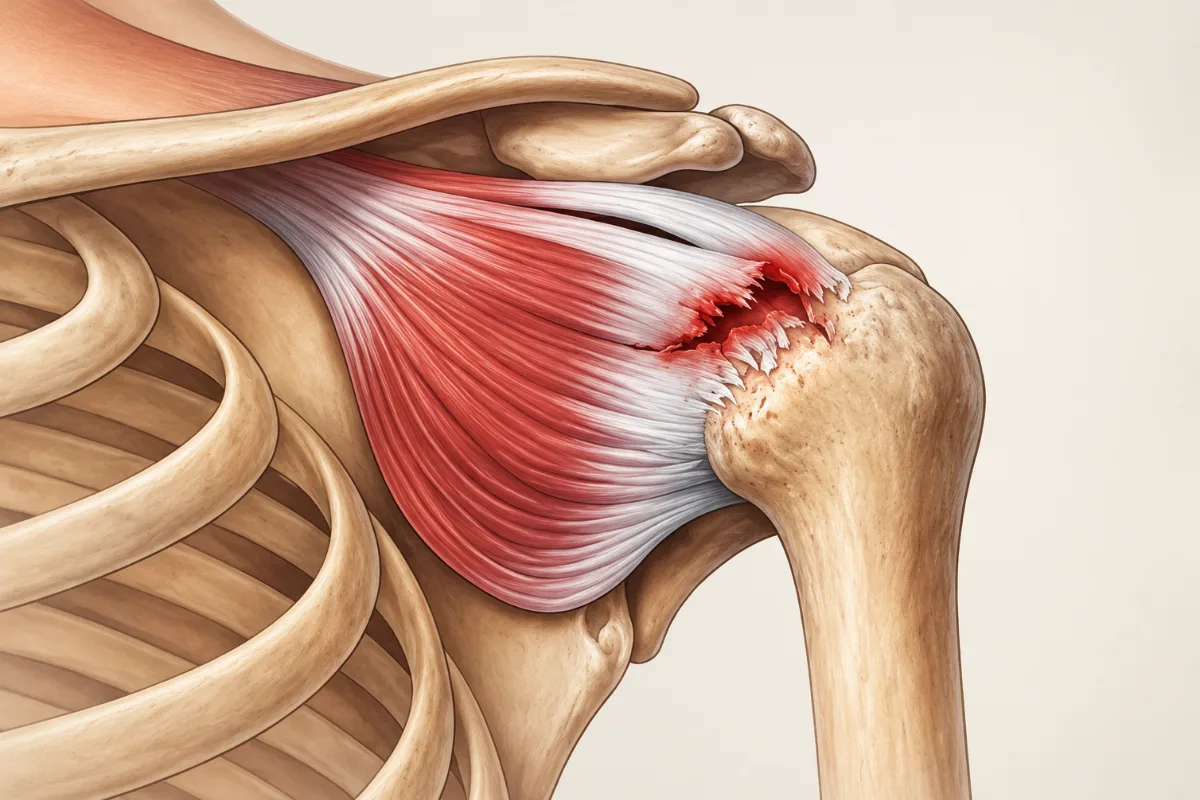
Symptoms can include:
- shoulder pain at night
- pain while lying on the affected side
- weakness when lifting the arm
- difficulty reaching overhead
- difficulty dressing
- reduced ability to exercise or work normally
- pain extending into the upper arm
The AAOS guidance on the management of rotator cuff injuries explains that clinical examination is an important part of diagnosis and that MRI or ultrasound can improve diagnostic accuracy when interpreted alongside that examination.
Does every rotator cuff tear need surgery?
No. A rotator cuff tear on an MRI does not automatically mean you need an operation.
Treatment depends on factors such as:
- whether the tear followed an injury
- tear size and location
- shoulder strength
- functional limitation
- age and activity requirements
- tissue quality
- overall health
- previous treatment
- how much the problem affects everyday life
AAOS guidance also recognises that not every rotator cuff tear requires immediate surgery and that treatment decisions depend on the patient’s clinical situation.
An acute traumatic tear associated with significant weakness may require a different approach from a degenerative tear in someone who retains good strength and function.
This is why Dr. Marouane considers the patient’s symptoms, strength and functional limitations together with the scan, rather than allowing the MRI report alone to determine treatment.
3. Subacromial Bursitis and Shoulder Impingement
A bursa is a small fluid-filled structure that helps tissues around a joint move with less friction.
In the shoulder, the subacromial bursa sits close to the rotator cuff tendons. When this area becomes irritated, pain may develop around the outer or upper shoulder.
It can become noticeable when:
- reaching into a high cupboard
- washing or drying your hair
- putting on a shirt
- lifting your arm overhead
- performing pressing or overhead gym exercises
- sleeping on the painful side
The NHS information on shoulder impingement describes pain around the top and outside of the shoulder that may worsen when the arm is raised and can also become more troublesome at night.
Does shoulder impingement mean something is trapped inside my shoulder?
Not necessarily. The term “impingement” has traditionally been used to describe irritation occurring around the rotator cuff and subacromial space. However, shoulder pain can involve tendon loading, bursitis, muscle function and movement patterns rather than simply one structure being mechanically trapped.
Treatment commonly begins without surgery and may include modification of aggravating activities, physiotherapy and appropriate pain management.
4. Frozen Shoulder
Frozen shoulder, also called adhesive capsulitis, causes both pain and progressive restriction of shoulder movement. The stiffness is an important clue.
With many rotator cuff problems, moving the shoulder yourself may be painful or weak, while another person can still move the joint through a relatively reasonable range. With frozen shoulder, both active and passive movement become restricted.
Patients often find activities such as these increasingly difficult:
- reaching behind the back
- fastening clothing
- putting on a jacket
- reaching for a seatbelt
- washing their hair
- raising the arm overhead
Night pain may be particularly troublesome during the earlier, more painful phase. According to the NHS information on frozen shoulder, pain and stiffness can continue for months and sometimes longer, although the condition usually improves over time.
Diabetes is also associated with a higher risk of developing frozen shoulder.

Does frozen shoulder require surgery?
Most patients do not begin with surgery. Treatment may include appropriate pain management, gentle movement, physiotherapy and, in selected circumstances, an injection.
Treatment should also reflect the stage of the condition. Simply forcing a very painful, stiff shoulder through aggressive exercises is not necessarily helpful.
5. Shoulder Osteoarthritis
Shoulder osteoarthritis can cause night pain together with stiffness and reduced movement.
The main ball-and-socket joint of the shoulder is known as the glenohumeral joint. Its surfaces are normally covered with smooth cartilage that allows the bones to move against each other with relatively little friction.
With osteoarthritis, this cartilage becomes progressively damaged.
Symptoms can include:
- deep aching inside the shoulder
- stiffness
- reduced range of movement
- grinding or clicking
- difficulty reaching behind the back
- reduced ability to exercise
- pain while sleeping
The AAOS guidance on glenohumeral joint osteoarthritis notes that patients may experience pain with movement, reduced range of motion and pain while sleeping. X-rays can help identify joint-space narrowing and other changes associated with osteoarthritis.
Does shoulder arthritis automatically mean joint replacement?
No. Treatment depends on the severity of the arthritis, the degree of pain and stiffness, and how significantly the condition is affecting function and quality of life.
Earlier management may include:
- activity modification
- physiotherapy or appropriate exercise
- pain medication when suitable
- selected injections
The AAOS guidance describes several non-surgical options that may be used in earlier stages of glenohumeral arthritis. Shoulder replacement is generally considered when arthritis has become sufficiently advanced and pain and loss of function remain unacceptable despite appropriate conservative treatment.
6. Calcific Tendinitis
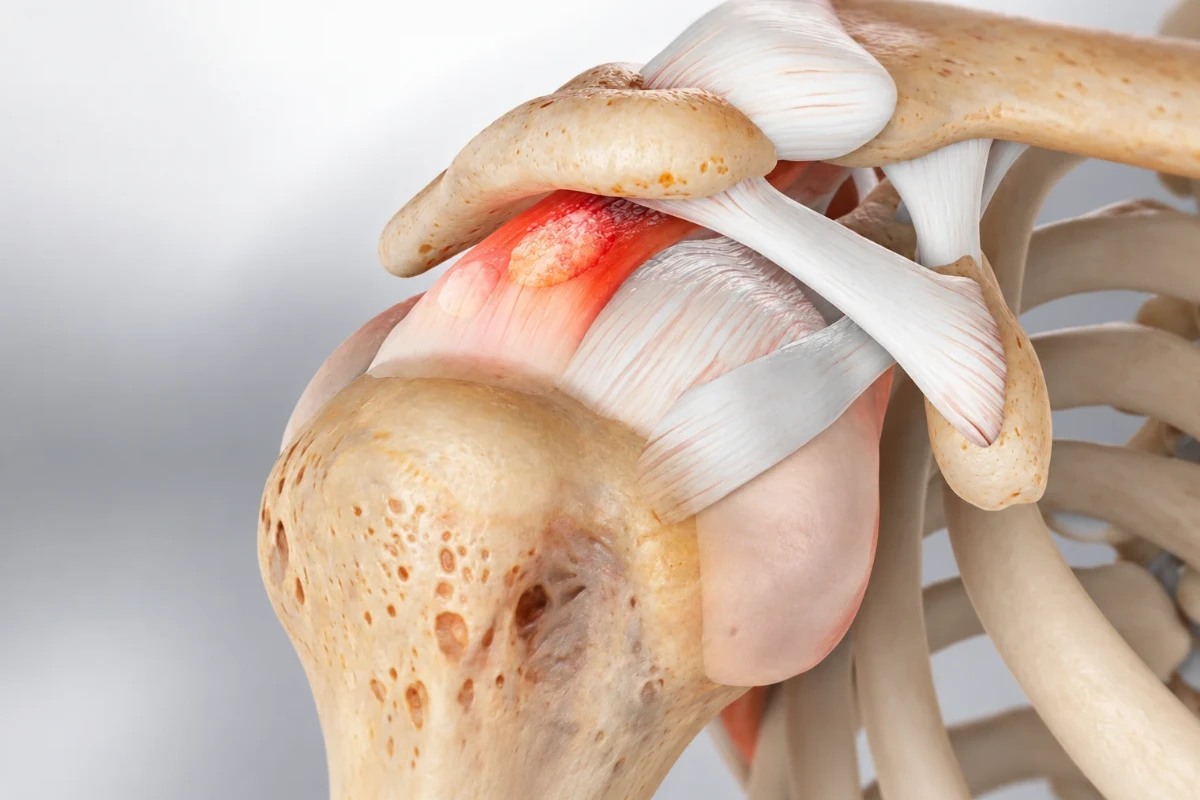
Calcific tendinitis develops when calcium deposits form within a tendon, most commonly one of the rotator cuff tendons. Interestingly, not every calcium deposit causes symptoms.
Some are discovered incidentally on an X-ray performed for another reason. In other patients, however, the calcium deposit becomes irritated and the shoulder can become extremely painful.
The Cleveland Clinic overview of calcific tendinitis describes symptoms that can include sudden shoulder pain, severe pain during movement, reduced range of motion and pain intense enough to disturb sleep.
An X-ray or ultrasound can often demonstrate the calcium deposit.
Does calcific tendinitis require surgery?
Usually not as the first treatment.
Depending on the stage and severity, management can include:
- modification of aggravating activity
- pain medication when appropriate
- physiotherapy
- selected injections
- shockwave therapy in some patients
- ultrasound-guided needling or lavage in selected cases
The Cleveland Clinic also describes lavage and shockwave therapy among the potential treatment approaches for calcific tendinitis, with surgery generally reserved for selected cases.
One useful point for patients is that pain intensity does not always correspond directly with the amount of structural damage.
Calcific tendinitis can sometimes be intensely painful without representing the same structural problem as a major traumatic tendon rupture.
7. Biceps Tendinopathy
The long head of the biceps tendon passes through the front of the shoulder and attaches near the top of the shoulder socket.
When the tendon becomes irritated, discomfort is often felt more toward the front of the shoulder.
Pain may occur during:
- lifting
- carrying
- pulling
- overhead activity
- reaching behind the body
- putting on a jacket
- certain gym exercises
It may also extend down the upper arm. Biceps problems frequently occur alongside other conditions, such as rotator cuff disease or labral pathology. This means identifying biceps irritation on an ultrasound or MRI does not necessarily prove that it is the only cause of the patient’s symptoms.
Treatment is generally non-surgical initially, with surgery considered only in selected persistent or structurally significant cases.
8. Pain Referred From The Neck
Not every painful shoulder problem actually starts in the shoulder. A nerve leaving the cervical spine in the neck can become irritated or compressed. This is known as cervical radiculopathy.
Pain may travel into the:
- shoulder
- shoulder blade
- upper arm
- forearm
- hand
Other clues can include:
- neck pain
- burning or shooting pain
- tingling
- numbness
- hand or arm weakness
- symptoms that change with neck position
Pain extending below the elbow, particularly when combined with numbness or tingling, may increase suspicion that a cervical nerve is involved. This distinction matters because shoulder treatment will not solve a problem whose primary source is nerve compression in the neck.
For this reason, a shoulder examination may also include assessment of neck movement, arm strength, reflexes and sensation when the symptom pattern suggests a neurological cause.
What if my shoulder clicks or catches as well?
Clicking by itself does not necessarily indicate serious damage. However, pain accompanied by catching, locking, instability or a sensation that the shoulder is slipping can sometimes point toward other problems, including:
- labral injury
- shoulder instability
- biceps pathology
- arthritis
- tendon problems
Even here, imaging needs context.
Age-related structural changes may appear on MRI without necessarily being responsible for the patient’s symptoms.
A clinically meaningful diagnosis therefore requires the scan to match the history and examination.
How Is Nighttime Shoulder Pain Diagnosed?
There is no single scan or test that is appropriate for every painful shoulder.
The clinical assessment may consider:
- where the pain is located
- when symptoms began
- whether there was an injury
- which activities make the pain worse
- active range of motion
- passive range of motion
- rotator cuff strength
- shoulder stability
- biceps function
- neck movement
- sensation
- neurological strength and reflexes where appropriate
Imaging can then be selected according to what the examination suggests.

1. X-rays
X-rays are useful for assessing:
- arthritis
- fractures
- bone alignment
- calcium deposits
- certain degenerative changes
2. Ultrasound
Ultrasound can help assess:
- rotator cuff tendons
- biceps tendon
- bursa
- some dynamic shoulder abnormalities
Its accuracy can depend on operator expertise.
3. MRI
MRI provides more detailed information about soft tissues such as:
- rotator cuff tendons
- muscles
- labrum
- biceps attachment
- cartilage
- other shoulder structures
However, an MRI report is not the same as a diagnosis. This principle is also reflected in the AAOS rotator cuff guidance, which supports using imaging alongside clinical examination rather than in isolation.
The clinically useful question is not simply:
“What does the MRI show?”
It is:
“Does this MRI finding explain the patient’s pain, weakness, stiffness and loss of function?”
What can I do if my shoulder hurts while I sleep?
If the pain is relatively mild, there has been no significant injury and you still have reasonable movement, simple changes may help initially.
Avoiding direct pressure on the painful shoulder can make sleeping more comfortable. Supporting the affected arm with a pillow may also help some patients. Complete immobilisation, however, is not generally the goal for uncomplicated shoulder pain.
The NHS advice for managing shoulder pain recommends keeping the shoulder gently active rather than completely stopping movement, while avoiding activities that clearly make the pain worse.
The right exercises depend on the actual diagnosis.
A rehabilitation programme suitable for rotator cuff tendinopathy may not be appropriate for:
- an acute traumatic tear
- shoulder instability
- severe frozen shoulder
- a fracture
- another significant injury
This is why repeatedly attempting strenuous shoulder exercises found online without knowing the cause of the pain may not be helpful.
When should nighttime shoulder pain be assessed?
A few uncomfortable nights after unfamiliar exercise are different from pain that wakes you repeatedly for several weeks.
Consider medical assessment if your shoulder pain:
- continues or progressively worsens
- repeatedly interrupts your sleep
- causes increasing stiffness
- is associated with noticeable weakness
- began after a fall or injury
- makes lifting your arm difficult
- is accompanied by persistent tingling or numbness
- affects work, sport or normal daily activities
It recommends seeking assessment when pain is worsening or has not started improving after around two weeks, and also when moving the arm or shoulder becomes very difficult.
That two-week timeframe should not be viewed as a rigid rule. If there has been significant trauma, marked weakness or persistent neurological symptoms, earlier assessment may be appropriate.
When does shoulder pain need urgent attention?
Some symptoms should not simply be monitored at home.
Seek urgent medical attention if there is:
- sudden severe shoulder pain
- inability to move the arm
- obvious deformity
- major swelling after an injury
- persistent pins and needles
- loss of sensation
- an arm that becomes unusually hot or cold
- severe pain following a significant fall or accident
- fever or feeling significantly unwell alongside shoulder pain
These warning signs can indicate problems such as fracture, dislocation or significant tendon or ligament injury that require prompt assessment.
Shoulder or arm discomfort associated with chest pressure, shortness of breath, sweating or other symptoms concerning for a heart problem requires emergency medical care rather than an orthopaedic appointment.
When Does Nighttime Shoulder Pain Require Surgery?
No. Night pain by itself is not an indication for shoulder surgery. Many common causes of nighttime shoulder pain can initially be managed without an operation.
Depending on the diagnosis, treatment may involve:
- modification of aggravating activities
- physiotherapy
- progressive rehabilitation
- suitable pain medication
- an injection in selected circumstances
- monitoring
Surgery becomes relevant when the underlying diagnosis, severity of structural damage, loss of function and response to appropriate non-surgical treatment justify it.
An acute traumatic rotator cuff tear associated with significant weakness, for example, is a very different clinical problem from mild rotator cuff tendinopathy in someone who still has good strength and movement.
Similarly, frozen shoulder and advanced osteoarthritis can both cause severe night pain, but their treatment pathways are very different.
The fact that the shoulder hurts at night tells us that the problem deserves attention. It does not, on its own, tell us which treatment is required.
Frequently Asked Questions
1. Why does my shoulder hurt only when I lie down?
Sleeping on the painful side can increase pressure on sensitive tendons or the bursa. Some shoulder conditions also cause pain at rest, making symptoms more noticeable once you stop using the arm.
2. Why does my shoulder wake me up in the middle of the night?
Rotator cuff disorders, frozen shoulder, arthritis, bursitis and other conditions can all disturb sleep. The specific time at which pain wakes you does not identify the diagnosis.
3. Does shoulder pain at night mean I have a rotator cuff tear?
No. A rotator cuff tear is one possible cause, but tendinopathy, bursitis, frozen shoulder, arthritis and calcific tendinitis can produce similar symptoms.
4. Can a rotator cuff tear improve without surgery?
Yes. Some patients can achieve useful pain relief and good shoulder function without surgery. The treatment decisions depend on factors such as tear characteristics, age, activity level, symptoms and overall health rather than the scan finding alone.
5. How can I tell frozen shoulder from rotator cuff pain?
Frozen shoulder generally causes substantial restriction of both active and passive movement. With many rotator cuff problems, active movement may be painful or weak while passive movement remains relatively better. A clinical examination is often needed to distinguish them reliably.
6. Can neck problems cause shoulder pain at night?
Yes. Cervical nerve irritation can cause pain around the shoulder or shoulder blade and may extend into the arm. Tingling, numbness, burning pain or weakness can provide additional clues.
7. Do I need an MRI for shoulder pain at night?
Not automatically. The most appropriate investigation depends on the history and examination. Some patients may need an X-ray or ultrasound first, while others may not require immediate imaging.
8. Can shoulder arthritis cause pain while sleeping?
Yes. Shoulder arthritis can cause pain while sleeping, particularly when the joint is inflamed or stiff. Night-time pain may make it difficult to find a comfortable sleeping position and can lead to disturbed sleep. Other symptoms may include shoulder stiffness, reduced range of motion, and pain during activities that involve moving the arm.
9. Is it harmful to sleep on my painful shoulder?
If sleeping directly on that side clearly aggravates symptoms, changing position is reasonable. Persistent pain, however, should not simply be managed indefinitely by avoiding that side without considering the underlying cause.
10. Does severe night pain mean there is severe structural damage?
Not necessarily. Pain severity and structural damage do not always correspond closely. Calcific tendinitis, for example, can occasionally produce very severe pain despite being very different from a large traumatic tendon rupture.
11. Can I continue going to the gym with shoulder pain?
It depends on the diagnosis. Gentle movement may remain appropriate, but heavy pressing, repetitive overhead loading or exercises that significantly aggravate symptoms may need to be modified until the problem is assessed.
12. When should I see a shoulder surgeon?
A specialist assessment may be appropriate when pain persists, repeatedly interrupts sleep, follows a significant injury, causes noticeable weakness or stiffness, or has not responded to appropriate initial treatment.
Treatment for Nighttime Shoulder Pain Depends on the Cause
Nighttime shoulder pain can become particularly frustrating because disturbed sleep starts affecting energy, concentration, work and everyday life.
But the fact that your shoulder hurts at night does not tell us whether the problem is coming from a rotator cuff tendon, the bursa, the shoulder capsule, arthritis, the biceps tendon or even a nerve in the neck.
For Dr. Marouane, Senior Orthopaedic Surgeon – Hand to Shoulder in Dubai, identifying the source of the symptoms comes before deciding on treatment. The history, shoulder movement, strength, functional limitations and relevant imaging need to fit together.
Many shoulder problems can be treated without surgery. Others, particularly acute injuries associated with significant weakness or certain structural problems, may require a different approach.
If shoulder pain is regularly waking you, limiting your movement or affecting how you use your arm, a detailed assessment can help determine what is causing the pain, whether imaging is necessary and which treatment options are appropriate for your individual condition.
Medical Disclaimer
This article provides general educational information and does not replace individual medical advice, diagnosis or treatment. Treatment suitability depends on the patient’s symptoms, examination findings, investigations, medical history and individual clinical circumstances.