

Shoulder Pain After Gym: Muscle Strain or Rotator Cuff Injury ?
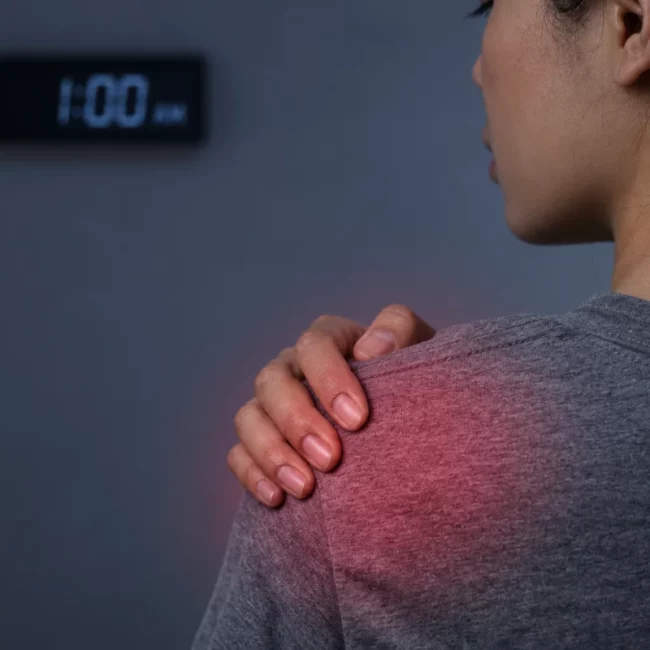
Shoulder pain after a gym session does not automatically mean that you have torn your rotator cuff. Sometimes the discomfort is delayed-onset muscle soreness after a harder or unfamiliar workout. Sometimes a muscle has been strained. In other cases, training may have irritated a rotator cuff tendon or exposed a tear that was not previously causing symptoms.
The timing and behaviour of the pain are more useful than the pain intensity alone. General muscle soreness that develops later and gradually settles is different from a sharp pain during one repetition, persistent weakness, repeated night pain or a sudden inability to raise the arm.
DOMS typically develops after exercise rather than during a workout, becoming most noticeable over the following one to three days. In contrast, a rotator cuff injury may cause shoulder pain, weakness and reduced movement, particularly when lifting or reaching.
The useful question after a painful gym session is not simply, “Did I injure my shoulder?” It is whether the shoulder is sore, strained, mechanically weak or losing function.
Muscle Soreness, Muscle Strain Or Rotator Cuff Injury: How Do They Differ?
Delayed-Onset Muscle Soreness
More likely when:
- the workout was new or more intense than usual
- soreness appears several hours later or the next day
- the discomfort feels spread through the trained muscles
- both sides may feel sore after a bilateral workout
- strength feels temporarily reduced because the muscles are fatigued
- symptoms gradually improve over several days
Muscle Strain
More likely when:
- pain begins during a lift or soon after
- a specific muscle feels tender
- stretching or contracting that muscle reproduces the pain
- there may be bruising or swelling in a more significant strain
- weakness is mainly because using the muscle hurts
Rotator Cuff Injury
More likely when:
- pain is felt around the outer or front part of the shoulder
- raising the arm overhead is painful
- lowering the arm is painful or difficult
- the arm feels genuinely weak
- night pain persists
- lying on the affected shoulder hurts
- a sudden injury caused a marked change in strength or movement
These patterns overlap. A clinical examination may be needed when symptoms do not settle or when weakness is significant.
Could It Just Be Normal Post-Workout Soreness?
Yes. If you have recently increased your training volume, introduced a new exercise or returned to the gym after a break, the muscles around the shoulder may simply be responding to an unfamiliar load.
Delayed-onset muscle soreness, or DOMS, commonly follows unfamiliar or high-load exercise, particularly movements with a strong eccentric component, where the muscle works while lengthening.
Post-workout soreness typically develops gradually after exercise, becomes most noticeable within one to three days and usually resolves over several days.
DOMS can cause:
- general muscle tenderness
- stiffness
- temporary reduction in strength
- discomfort when moving
- soreness when the trained muscles are touched
The important feature is that the pain should gradually improve rather than progressively worsen.
What Makes Normal Muscle Soreness Less Likely?
DOMS becomes less likely when the pain is:
- sharp and localised
- present during a specific repetition
- associated with a pop or tearing sensation
- linked to immediate weakness
- repeatedly waking you from sleep
- associated with substantial swelling or bruising
- getting worse instead of better
- persisting well beyond the expected recovery period
A shoulder that became suddenly painful during a heavy press should not automatically be labelled “gym soreness.” The mechanism of injury matters.
What Is A Shoulder Muscle Strain?
A strain occurs when muscle fibres are overstretched or torn. The NHS guidance on sprains and strains distinguishes a strain as an injury to muscle, while a sprain involves a ligament.
Around the shoulder, muscles that may become strained during training include:
- deltoid
- pectoralis major
- latissimus dorsi
- upper back and scapular muscles
- smaller stabilising muscles
A strain can occur when:
- the weight is increased too quickly
- fatigue changes lifting technique
- a movement becomes uncontrolled
- a sudden load exceeds the muscle’s capacity
- training volume rises faster than the tissues can adapt
A mild strain may cause pain and tenderness without major loss of function. A more significant strain can cause bruising, swelling and a noticeable reduction in strength.

How Does A Muscle Strain Feel Different From A Rotator Cuff Problem?
A muscle strain is often more localised to the muscle itself. Pressing on the painful area, stretching the muscle or contracting it against resistance may reproduce the symptoms.
Rotator cuff pain is often felt around the outer shoulder and upper arm, although the painful tendon is located deeper inside the shoulder.
Patients with rotator cuff-related pain may notice difficulty with:
- overhead presses
- lateral raises
- reaching into a high cupboard
- putting on a shirt or jacket
- reaching behind the back
- lowering the arm after lifting it
Rotator cuff injuries commonly cause pain when lifting the arm or reaching overhead, along with night pain and shoulder weakness.
What Is The Rotator Cuff?
The rotator cuff is a group of four muscles and their tendons that surround the shoulder joint.
They help:
- keep the ball of the upper arm centred in the shoulder socket
- initiate and control arm elevation
- rotate the shoulder
- stabilise the joint during lifting and overhead movement
The four muscles are:
- supraspinatus
- infraspinatus
- subscapularis
- teres minor
Gym exercises place different loads on these muscles depending on arm position, resistance, speed and technique.
Heavy training does not automatically damage the cuff. The problem occurs when the load exceeds what the tissue can tolerate or when an existing tendon problem becomes symptomatic.
Which Gym Exercises Commonly Provoke Rotator Cuff Pain?
Symptoms may become noticeable during:
- overhead press
- bench press
- lateral raises
- dips
- pull-ups
- heavy rows
- upright rows
- Olympic lifting
- repeated overhead sport-specific training
The exercise itself is not necessarily “bad.”
The same movement may be tolerated perfectly by one person and painful for another because tendon capacity, previous injuries, technique and training volume differ.
This is why simply banning one exercise rarely solves the whole problem.
Does Pain During Bench Press Mean I Tore My Rotator Cuff?
No. Bench-press pain can come from several structures.
Possible causes include:
- rotator cuff-related pain
- pectoral muscle or tendon strain
- biceps tendon irritation
- acromioclavicular joint pain
- shoulder instability
- excessive training load
The location of pain can help.
Pain over the outer shoulder may fit a rotator cuff problem. Pain at the front of the shoulder may involve the biceps tendon or another anterior structure. Pain directly over the top of the shoulder near the end of the collarbone may suggest the acromioclavicular joint.
A diagnosis cannot be made from the name of the exercise alone.
What If I Felt A Sharp Pain Or Pop During One Repetition?
A sudden sharp pain deserves more attention than routine post-workout soreness.
This is especially important when it is followed by:
- immediate weakness
- inability to continue the exercise
- loss of shoulder movement
- bruising
- swelling
- a visible change in muscle contour
- a feeling that something tore
A pop does not always mean a major rupture, but it changes the assessment.
Seek prompt medical assessment if you experience immediate arm weakness following an injury, as this may indicate an acute rotator cuff tear.
Similarly, sudden bruising or deformity around the chest or upper arm after a heavy press can suggest a pectoral or biceps injury rather than the rotator cuff.
Pain-Limited Movement Versus True Weakness
This is one of the most useful distinctions after a gym-related shoulder injury.
Pain-Limited Movement
The shoulder can produce force, but pain makes you stop.
This may occur with:
- tendinopathy
- bursitis
- mild muscle strain
- other painful shoulder conditions
True Weakness
You try to generate force but the shoulder cannot produce its usual strength.
This raises greater concern about:
- a significant rotator cuff tear
- nerve-related weakness
- a substantial muscle or tendon injury
For Dr. Marouane, the question is therefore not only “Does lifting hurt?” but whether the shoulder has actually lost power compared with its previous function.
Does Night Pain Mean I Have A Rotator Cuff Tear?
No. Night pain can occur with rotator cuff tendinopathy, bursitis, frozen shoulder and several other shoulder conditions.
A rotator cuff tear can cause night pain, but the symptom is not specific enough to diagnose a tear on its own.
What matters more is the combination of:
- persistent night pain
- weakness
- reduced function
- traumatic onset
- loss of movement
One or two uncomfortable nights after an unusually intense workout are different from a shoulder that repeatedly wakes you for weeks.
 Could Shoulder Pain After The Gym Be Tendon Irritation Rather Than A Tear?
Yes. Rotator cuff tendinopathy and related subacromial pain are much more common than an acute major tear in many gym-goers.
The NHS guidance on shoulder impingement and tendon-related pain describes pain that becomes worse when lifting the arm overhead and can also be worse at night.
Treatment commonly starts with:
- reducing aggravating overhead loading
- maintaining comfortable shoulder movement
- progressive rehabilitation
- gradually rebuilding strength
The aim is not complete rest forever. Tendons need appropriately progressed load to regain capacity.
Should I Stop Going To The Gym?
Not necessarily. You may need to stop or modify the specific movements that reproduce sharp pain, but complete inactivity is rarely the goal for an uncomplicated shoulder problem.
The NHS shoulder pain guidance advises staying gently active while avoiding activities that clearly worsen symptoms. It also cautions against continuing strenuous self-directed exercise or heavy gym equipment while the shoulder is painful.
A practical approach might include:
- temporarily reducing heavy overhead pressing
- reducing range of motion if a specific position is painful
- lowering the weight
- avoiding repeated painful sets
- continuing lower-body or non-provocative training
- beginning appropriate shoulder rehabilitation
The exact modification depends on the diagnosis.
Should I Stretch A Painful Shoulder Aggressively?
No. Gentle comfortable movement may be useful, but forceful stretching is not automatically the answer. If a muscle is mildly sore, comfortable mobility can help keep it moving.
If there is an acute tendon, muscle or ligament injury, repeatedly forcing the painful position may aggravate the problem.
A shoulder that feels “tight” because pain is protecting it does not necessarily need more aggressive stretching.
The diagnosis should determine the rehabilitation plan.
Should I Use Ice Or Heat?
Either may be used for symptom relief depending on what feels comfortable. For a recent strain, cold therapy can help manage pain in the early phase. For general stiffness or post-workout soreness, some patients prefer heat.
Neither treatment repairs a torn tendon. Pain relief should be viewed as a way to stay comfortable while the tissue recovers or while the shoulder is being assessed.
Should I Take Painkillers And Keep Training?
Masking pain simply to continue the same painful workout is not a good strategy.
Over-the-counter pain medication may be suitable for some patients, but suitability depends on medical history, kidney or stomach problems, cardiovascular risk and other medications.
Pain relief should support normal movement and rehabilitation, not make it easier to repeatedly overload a shoulder that has not been diagnosed.
If you need medication before most workouts because the same shoulder keeps hurting, the cause deserves assessment.
Do I Need An MRI?
An MRI is not always required immediately. A physical examination helps determine whether further imaging, such as an MRI, X-ray or ultrasound, is necessary.
Assessment may include:
- how the pain started
- which exercise triggered it
- location of pain
- active range of movement
- passive range of movement
- rotator cuff strength
- biceps and pectoral function
- shoulder stability
- neck and nerve examination when relevant
Imaging can then be selected according to the suspected problem.
X-Ray
Useful for:
- fracture
- arthritis
- calcific deposits
- some bone or joint abnormalities
Ultrasound
Useful for:
- rotator cuff tendons
- biceps tendon
- bursa
- selected dynamic problems
MRI
Useful when there is concern about:
- a significant rotator cuff tear
- another important soft-tissue injury
- persistent unexplained weakness
- symptoms that are not improving as expected
The Mayo Clinic guidance on rotator cuff diagnosis notes that ultrasound and MRI can both be used to assess the rotator cuff.
The useful question is not “Can we get an MRI?” but “What clinical question would the MRI answer?”
Does A Rotator Cuff Tear Always Need Surgery?
No. Some tears can be managed without surgery, particularly when they are degenerative, strength remains reasonable and symptoms respond to rehabilitation.
The treatment decision depends on:
- whether the tear is traumatic or degenerative
- tear size
- tendon quality
- amount of weakness
- age
- sporting or occupational demands
- duration of symptoms
- response to physiotherapy
An acute traumatic tear associated with significant new weakness is a different situation from a small degenerative tear found incidentally on a scan. The scan should not make the decision in isolation.
When Might Surgery Be Considered?
Surgery may become appropriate when there is:
- an acute traumatic tear with important weakness
- a substantial structural tear affecting function
- persistent symptoms despite appropriate rehabilitation
- progressive loss of function
- a patient whose occupational or sporting demands make repair clinically appropriate
The aim is to restore useful shoulder function, not simply to “fix the MRI.”
How Do I Know When I Can Return To Heavy Lifting?
Return to heavy training should be based on function rather than a fixed number of days.
Useful milestones include:
- comfortable everyday movement
- near-normal range of motion
- restored shoulder strength
- ability to tolerate progressive resistance
- no significant pain increase after training
- good movement control
- confidence with sport-specific or gym-specific tasks
The AAOS shoulder conditioning resources emphasise progressive strengthening and pain-free exercise rather than jumping directly back to heavy resistance.
A return after a mild strain is very different from a return after a repaired rotator cuff tendon.
How Can I Reduce The Risk Of Shoulder Pain Returning?
There is no way to guarantee that a shoulder injury will never recur, but training can be made more sustainable.
Helpful principles include:
- increase resistance gradually
- avoid sudden large jumps in training volume
- allow recovery between high-load sessions
- maintain rotator cuff strength
- train shoulder-blade control
- warm up before heavy sets
- avoid repeatedly training through sharp pain
- adjust technique when one movement consistently causes symptoms
- rebuild load progressively after injury
The aim is not to make the shoulder fragile. It is to increase its capacity so that the training demand no longer exceeds what the tissue can tolerate.
When Should Shoulder Pain After The Gym Be Assessed?
Consider an orthopaedic or sports-medicine assessment when:
- pain is worsening rather than improving
- the shoulder remains painful after reducing aggravating activity
- there is noticeable weakness
- you cannot raise the arm normally
- night pain repeatedly wakes you
- the shoulder feels unstable
- bruising or swelling is significant
- symptoms repeatedly return whenever you train
The NHS shoulder pain guidance recommends assessment when shoulder pain is worsening, remains difficult after self-care or makes arm movement very difficult.
A significant traumatic injury should be assessed earlier rather than waiting for a routine recovery period.
When Is Shoulder Pain After Training More Urgent?
Seek prompt medical attention if:
- you cannot move the arm after an injury
- the shoulder has changed shape
- there is severe swelling
- there is persistent numbness or loss of sensation
- the arm becomes unusually cold or discoloured
- there is immediate major weakness after trauma
- you feel feverish or systemically unwell with a painful swollen shoulder
These features can indicate a more significant tendon injury, fracture, dislocation, nerve problem or infection.
Frequently Asked Questions
1. How do I know if shoulder pain after the gym is normal soreness?
DOMS usually develops after the workout rather than during a single repetition and tends to improve over several days. Sharp localised pain, significant bruising, persistent weakness or loss of movement are less typical of normal soreness.
2. Can weightlifting cause a rotator cuff tear?
Yes, particularly with a sudden heavy load or traumatic event, although many gym-related shoulder symptoms are caused by tendon irritation rather than a complete tear.
3. Can I have a rotator cuff tear and still lift my arm?
Yes. Some partial and even some full-thickness tears can still allow overhead movement. Strength, pain and tear characteristics need to be assessed together.
4. Does clicking mean I tore something?
Not necessarily. Painless clicking is common. Clicking associated with pain, locking, instability or injury deserves more attention.
5. Why does my shoulder hurt during lateral raises?
Lateral raises load the rotator cuff and other shoulder structures. Pain can come from tendon irritation, training load, technique or another shoulder condition. The exercise itself does not identify the diagnosis.
6. Should I train through mild shoulder pain?
Mild muscular soreness is different from sharp or progressively worsening joint pain. Repeatedly provoking the same painful movement is usually a sign that the load should be modified.
7. How Long Should You Rest After a Muscle Injury?
There is no single duration. DOMS may settle within days, while strains and tendon injuries can take longer. Return should be based on comfortable movement and progressive strength rather than a fixed calendar.
8. Can Physiotherapy Treat A Rotator Cuff Injury?
Yes. Physiotherapy is a central treatment for many rotator cuff problems and can improve strength, movement and load tolerance. Some acute or large tears may still require surgical discussion.
9. Does night pain mean the injury is serious?
Not necessarily. Night pain occurs with several shoulder conditions. Persistent night pain combined with weakness or loss of movement is more useful clinically than night pain alone.
10. When should I worry about weakness?
Immediate or marked weakness after a specific injury deserves earlier evaluation, especially if the arm previously functioned normally and you suddenly cannot lift or rotate it with normal strength.
Shoulder Pain After A Gym: When to Seek Help
Shoulder pain after the gym can come from very different problems, and the timing of symptoms is often the first useful clue.
Delayed soreness that develops after an unfamiliar workout and gradually improves is more consistent with DOMS. Localised pain after an overload can represent a muscle strain. Pain with overhead movement, persistent night symptoms or genuine loss of strength raises greater concern about a rotator cuff or another shoulder injury.
For Dr. Marouane, Senior Orthopaedic Surgeon – Hand to Shoulder in Dubai, the key distinction is whether the shoulder is simply sore or whether it has lost strength, movement or stability. That difference helps determine whether you need temporary load modification, structured rehabilitation, imaging or a more specific treatment.
Most gym-related shoulder pain does not automatically require surgery. But if the pain is persistent, worsening, repeatedly disturbing sleep or associated with a sudden change in strength after lifting, a detailed assessment can help clarify whether you are dealing with normal muscle recovery, a strain or a rotator cuff problem that needs more targeted care.
Follow Dr. Marouane, Hand & Shoulder Specialist, on Instagram for expert insights, health tips and the latest updates on shoulder and upper-limb care.
Medical Disclaimer
This article provides general educational information and does not replace individual medical advice, diagnosis or treatment. The appropriate treatment for shoulder pain depends on the mechanism of injury, symptoms, physical examination, imaging where required, medical history and individual sporting or occupational demands.