
Can PRP Therapy Help Tennis Elbow? Benefits and Expected Results
Elbow pain can be surprisingly limiting. At first, it may feel like a small ache when you lift a bag, open a bottle, grip your phone, or return to the gym after a break. But when that same pain keeps coming back, even after rest or basic treatment, it can start affecting daily life more than expected.
Tennis elbow is one of those conditions that many people try to manage for months before getting it properly assessed. It is not always about playing tennis. It is usually linked to repeated stress on the tendons around the outer side of the elbow. For patients who are not improving with standard care, PRP Therapy may be considered as a regenerative treatment option to support tendon healing and improve long-term function.
What Exactly Is Tennis Elbow?
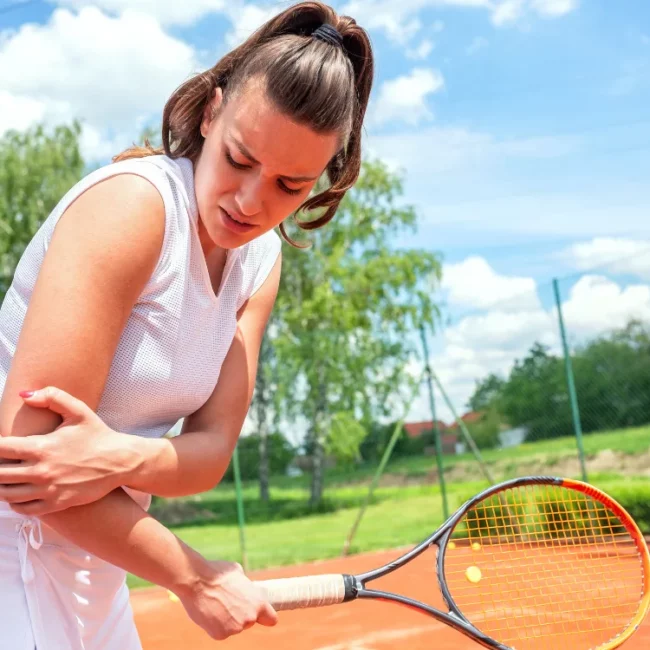
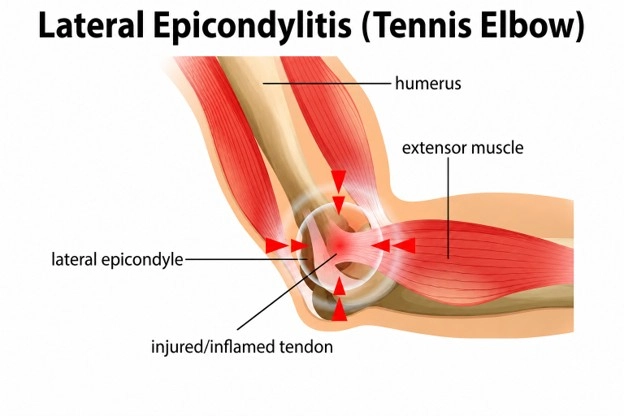
Tennis elbow is the common name for a condition called lateral epicondylitis or lateral elbow tendinopathy. It affects the tendons that attach to the outer part of the elbow.
These tendons are connected to the forearm muscles that help you lift your wrist, extend your fingers and grip objects. When the tendon is repeatedly overloaded, tiny tissue changes can develop. Over time, this may lead to pain, sensitivity and weakness around the outer elbow.
Many patients describe tennis elbow as a sharp, burning or pulling pain. It may be mild in the beginning, but it can become more persistent if the tendon continues to be stressed.
You may notice pain while:
- Lifting a bag or suitcase
- Holding a coffee cup
- Opening a jar or bottle
- Shaking hands
- Typing or using a mouse for long hours
- Playing racket sports
- Training with weights
- Using tools repeatedly
- Carrying groceries
- Twisting the wrist or forearm
The difficult part is that tennis elbow can slowly build up. There may not be one dramatic injury. Instead, the pain often comes from repeated small stresses that the tendon is no longer tolerating well.
Why Does Tennis Elbow Become So Stubborn?
Tendons heal differently from muscles. They have a slower blood supply and often need the right balance of rest, loading and rehabilitation to recover.
In the early stage, tennis elbow may settle with activity modification, physiotherapy, stretching, strengthening and better movement habits. But when pain continues for months, the tendon may develop more chronic changes.
This is where the condition becomes frustrating for patients. They may rest for a few weeks and feel better, but the pain returns as soon as they resume work, sport or gym activity.
This happens because rest alone may calm symptoms temporarily, but it does not always improve the strength and quality of the tendon. Once the same load returns, the pain can come back.
Some patients also rely on repeated painkillers, elbow straps or quick fixes without addressing the actual tendon problem. These may help in the short term, but they may not support long-term healing.
That is why a proper diagnosis and structured treatment plan are so important.
What Is PRP Therapy?
PRP Therapy stands for Platelet-Rich Plasma Therapy. It is a regenerative treatment that uses a concentrated part of your own blood to support the body’s healing response.
Your blood contains platelets. These platelets are known for their role in clotting, but they also contain growth factors and healing signals that are involved in tissue repair.
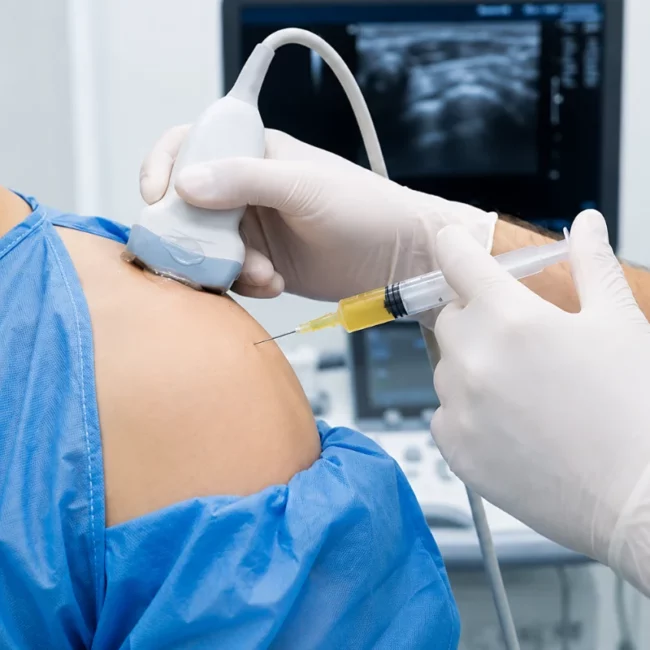
During PRP Therapy, a small sample of your blood is taken and placed into a centrifuge. This machine spins the blood to separate and concentrate the platelet-rich portion. That concentrated plasma is then injected into the target area, such as the painful tendon around the elbow.
The idea is to deliver a higher concentration of healing-supportive platelets to the area that needs help.
PRP Therapy does not work like a painkiller. It does not simply numb the pain. It aims to support the biological healing environment of the tendon.
How Does PRP for Tennis Elbow Work?
PRP for Tennis Elbow is usually considered when the tendon pain is persistent and has not improved enough with conservative treatment.
The outer elbow tendon can become irritated, overloaded or degenerated over time. PRP is injected into or around the affected tendon area to stimulate a healing response.
The growth factors in PRP may help support:
- Tendon repair activity
- Local healing response
- Tissue recovery
- Reduction in ongoing irritation
- Improvement in tendon strength over time
- Better function with rehabilitation
It is important to understand that PRP for Tennis Elbow is not an instant solution. It works with the body’s natural healing process, and that process takes time.
Some patients expect the pain to disappear immediately after the injection. That is not the usual goal of PRP. The goal is gradual improvement in pain, grip strength and function over several weeks to months.
Who Can Consider PRP for Tennis Elbow?
PRP Therapy may be considered for patients who have ongoing tennis elbow symptoms despite initial care.
You may be a possible candidate if:
- Your elbow pain has lasted for several weeks or months
- Pain returns whenever you grip, lift or train
- Physiotherapy has helped only partially
- You want to avoid repeated temporary pain-relief approaches
- Imaging or examination suggests tendon-related pain
- Your daily activities are being affected
- You are willing to follow a proper rehabilitation plan after treatment
However, PRP is not for everyone. It should only be advised after a detailed medical assessment.
A painful elbow may not always be tennis elbow. Sometimes, symptoms may come from nerve irritation, joint stiffness, referred pain, ligament injury, muscle overload or another condition. If the diagnosis is wrong, PRP may not give the expected result.
That is why the first step should always be a proper consultation, not simply choosing an injection.
When Is PRP Therapy Usually Not the First Step?
In many cases, tennis elbow improves with non-invasive treatment. This may include rest from aggravating activities, physiotherapy, tendon-loading exercises, posture correction, ergonomic changes and activity modification.
PRP Therapy is usually not the first thing every patient needs.
For example, if someone has had elbow pain for only a few days after a new workout, the first step may be rest, assessment and guided rehabilitation. The tendon may simply need time and load correction.
PRP may be considered when symptoms become persistent or when the tendon is not responding well to standard treatment.
This is why patient selection matters. The best use of PRP Therapy is not “inject everyone with elbow pain.” The best use is to identify the right patient at the right stage of the condition.
PRP Therapy Dubai: Why Patients Are Asking About It
Many patients searching for PRP Therapy Dubai are looking for a treatment that feels more advanced and less dependent on repeated medication. They want something that supports recovery, especially when elbow pain is affecting sport, work or day-to-day comfort.
In Dubai, a large number of patients are active professionals, fitness-focused individuals and people who use their hands intensively in daily life. For them, persistent elbow pain is not a small issue. It can affect confidence, productivity and independence.
PRP Therapy Dubai has gained attention because it fits into a more modern approach to orthopaedic care. The aim is not only to reduce pain, but to support tissue healing and restore function.
But the treatment should still be evidence-informed and personalised. PRP should not be presented as a guaranteed cure. It should be explained clearly, with realistic expectations.
What Happens During PRP Treatment for Tennis Elbow?
The process is usually simple, but it should be done carefully.
1. Clinical assessment
Before PRP, the doctor examines your elbow, checks your pain pattern, grip strength, range of movement and activity history. The aim is to confirm whether the pain is truly coming from the tendon.
2. Imaging if needed
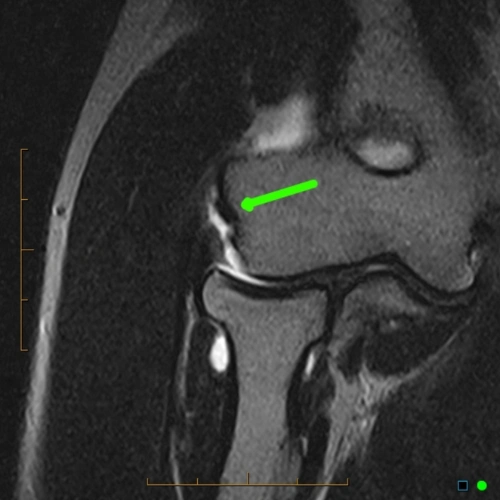
In some cases, ultrasound or MRI may be advised. Imaging can help understand tendon quality, inflammation, partial tearing or other causes of pain.
3. Blood sample collection
A small amount of blood is taken from your arm.
4. Platelet preparation
The blood is processed in a centrifuge to separate the platelet-rich plasma.
5. Injection into the target area
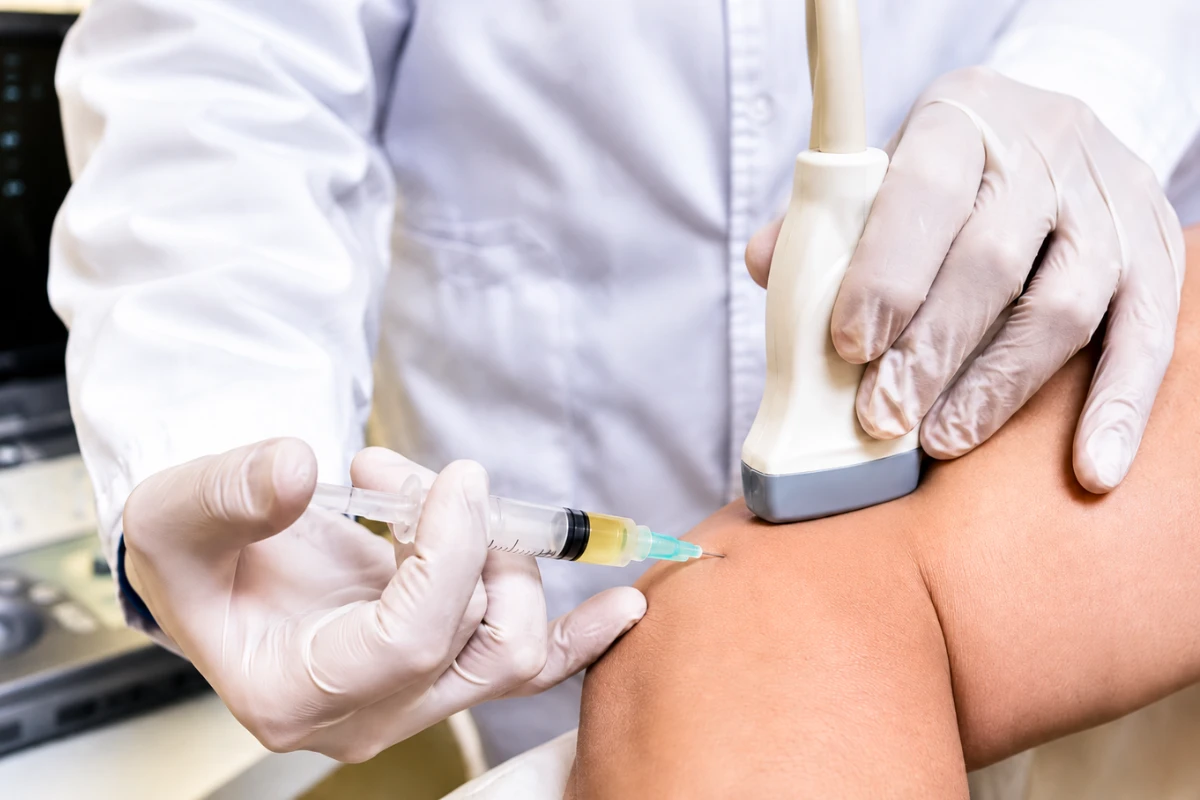
The PRP is injected around the affected tendon area. In many cases, ultrasound guidance may be used to improve accuracy.
6. Recovery instructions
After the injection, you will receive advice about rest, activity modification, medications to avoid, and when to start rehabilitation.
The injection itself is only one part of the treatment. The recovery plan after PRP is equally important.
Is PRP for Tennis Elbow Painful?
Some discomfort during the injection is possible. After the procedure, the elbow may feel sore, heavy or more sensitive for a few days.
This can happen because PRP is designed to stimulate a healing response. Mild post-injection discomfort does not always mean something is wrong.
Your doctor may advise you to avoid heavy lifting, intense gripping, gym training or repetitive strain for a short period. The exact instructions depend on your condition and the treatment plan.
You should not rush back into full activity just because the injection is done. The tendon needs time to respond.
Expected Results After PRP Therapy
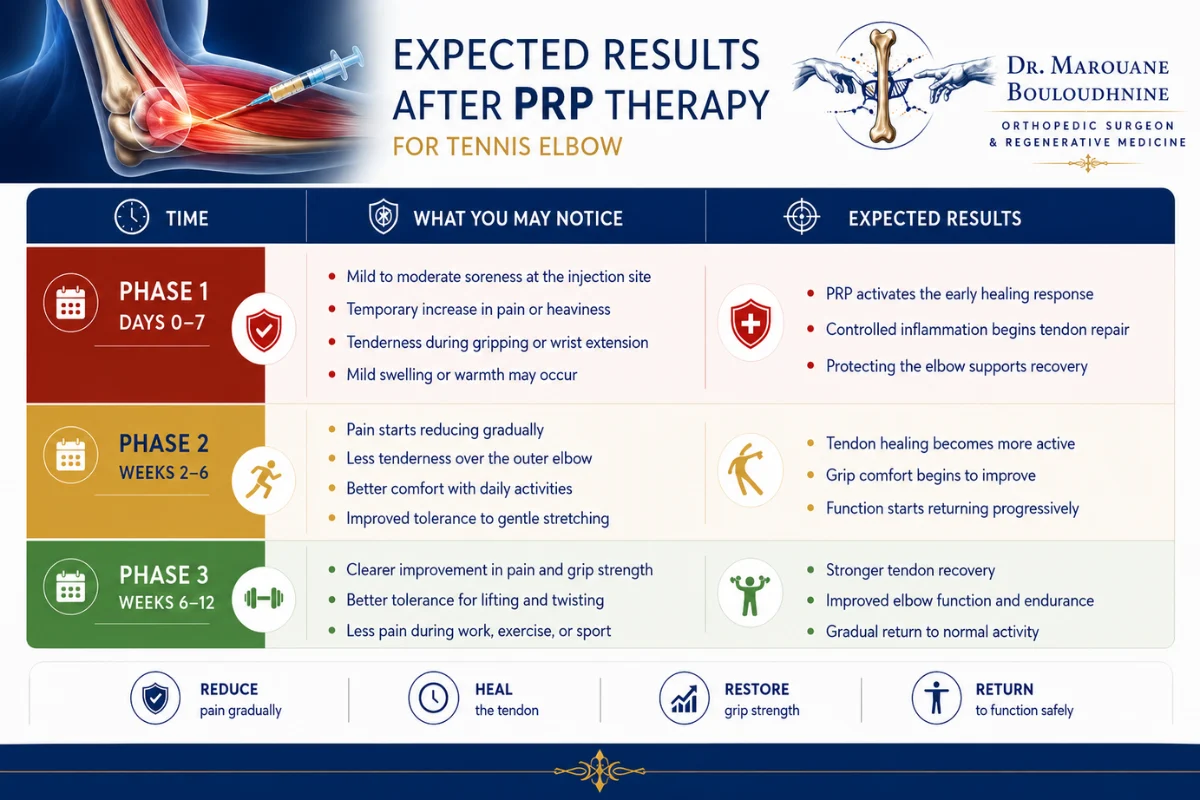
The results of PRP Therapy vary from patient to patient. Some people notice gradual improvement within a few weeks, while others take longer.
A realistic timeline may look like this:
First few days
You may feel soreness or temporary discomfort around the elbow. Rest and basic care are usually advised.
1 to 2 weeks
The elbow may begin to settle. You may still need to avoid strong gripping, heavy lifting or repetitive movements.
4 to 6 weeks
Some patients start noticing reduced pain during daily activities. Grip may feel slightly more comfortable.
8 to 12 weeks
This is often when improvement becomes more noticeable. Patients may feel better function, improved comfort and more confidence using the arm.
3 months and beyond
Tendon healing can continue over time, especially when PRP is combined with the right strengthening and rehabilitation programme.
It is important to remember that PRP for Tennis Elbow is not only about pain reduction. The goal is also better tendon function, better load tolerance and reduced recurrence.
What Benefits Can PRP Offer for Tennis Elbow?
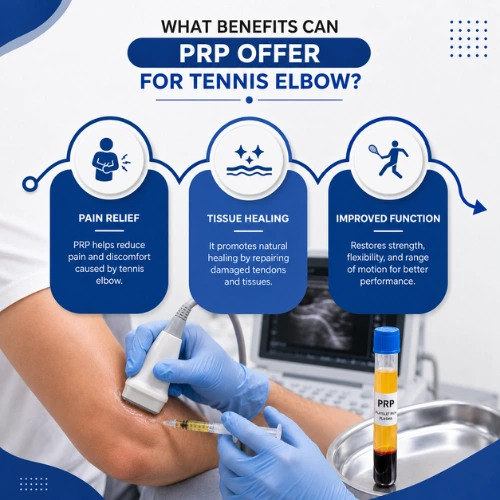
When used for the right patient, PRP Therapy may offer several potential benefits.
It uses your own blood
PRP is prepared from your own blood, which makes it a biological treatment. No synthetic substance is used as the main healing component.
It supports natural healing
PRP aims to stimulate the tendon’s repair response rather than only hiding pain.
It may reduce long-term discomfort
For chronic tennis elbow, PRP may help reduce pain over time and improve daily comfort.
It may improve grip strength
As pain reduces and tendon function improves, patients may find it easier to grip, lift and use the arm.
It can support a return to activity
For active patients, PRP may be part of a structured plan to return to work, gym, sport or daily tasks.
It may reduce dependence on repeated temporary measures
Some patients do not want repeated pain medication or short-term symptom relief. PRP may offer a more healing-focused approach in selected cases.
PRP Works Best With Rehabilitation
This point is very important. PRP is not a replacement for rehabilitation.
If the tendon has become weak, sensitive or overloaded, it needs to be gradually strengthened again. Otherwise, symptoms may return when the patient goes back to the same activities.
A rehabilitation plan may include:
- Gentle mobility exercises
- Progressive tendon-loading exercises
- Grip strengthening
- Forearm strengthening
- Shoulder and upper-limb control work
- Ergonomic correction
- Sport-specific return planning
- Advice on avoiding sudden overload
For example, a patient who gets PRP and then immediately returns to heavy lifting may irritate the tendon again. On the other hand, a patient who follows a guided plan may give the tendon a better chance to recover properly.
Healing needs both biology and behaviour. PRP supports the biology. Rehabilitation supports the function.
What Should You Avoid After PRP Therapy?
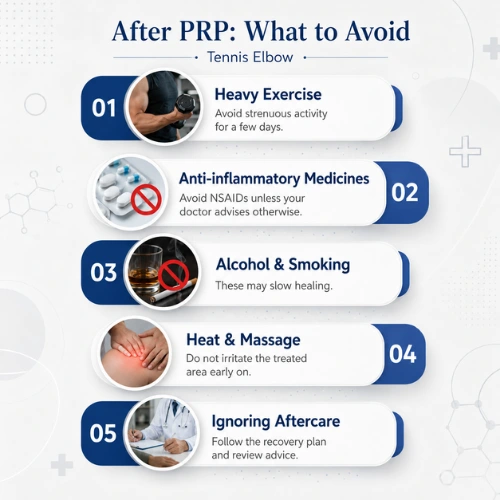
Your doctor will give personalised instructions, but common advice may include avoiding:
- Heavy lifting for a short period
- Repetitive gripping activities
- Intense gym training too soon
- Sudden return to racket sports
- Ignoring post-injection soreness
- Self-medicating without guidance
- Skipping physiotherapy if advised
Some anti-inflammatory medications may be avoided for a period after PRP because the treatment aims to stimulate a controlled healing response. Always follow your doctor’s advice, especially if you are already taking regular medication.
How Many PRP Sessions Are Needed?
Some patients may need only one PRP session, while others may require more than one, depending on the severity and chronicity of the condition.
No fixed number applies to everyone.
The decision depends on:
- Duration of symptoms
- Tendon condition
- Pain severity
- Functional limitation
- Response to previous treatment
- Imaging findings
- Patient goals
- Response after the first session
A good doctor will not simply recommend multiple sessions without reassessment. The treatment plan should be reviewed based on progress.
Is PRP Better Than Other Treatments?
This depends on the patient and the stage of the condition.
For early or mild tennis elbow, physiotherapy and activity modification may be enough. For more persistent tendon pain, PRP may be considered as part of the treatment plan.
Some treatments focus mainly on reducing inflammation or pain. PRP focuses more on supporting tendon healing. That is why it may be useful in chronic tendon conditions.
However, it is not about saying one treatment is always better than another. The right question is: what does this specific patient need?
For one patient, the answer may be physiotherapy. For another, it may be PRP Therapy. For someone else, the doctor may need to investigate further before deciding.
Personalised care matters.
Why Specialist Assessment Matters
The elbow may look like a simple joint, but the causes of elbow pain can be quite varied. Pain around the outer elbow may come from tendons, muscles, nerves, ligaments or joint structures.
For this reason, PRP should be performed only after careful diagnosis.
In hand-to-shoulder care, the whole upper limb needs to be assessed. Sometimes, elbow pain is influenced by wrist movement, shoulder mechanics, training technique or work posture.
A specialist can look at the complete picture and decide whether PRP Therapy is truly the right option.
This is especially important for patients who have already tried multiple treatments without lasting improvement. The issue may not be that treatment failed. The issue may be that the main cause was not fully identified.
Final Thoughts
PRP for Tennis Elbow may be a helpful option for selected patients with persistent outer elbow pain, especially when the goal is to support tendon healing, improve grip strength and return to daily activities with more confidence. At Dr Marouane’s Orthopedic clinic, patients can receive expert assessment and personalised guidance for PRP treatment. If you are experiencing persistent pain or recurring injuries, call +971 544 226 123 to book a consultation and take the first step toward an effective recovery plan with one of the leading orthopedic surgeon in Dubai.