

Are Umbilical Cord Stem Cells Safe for Treating Knee Osteoarthritis?
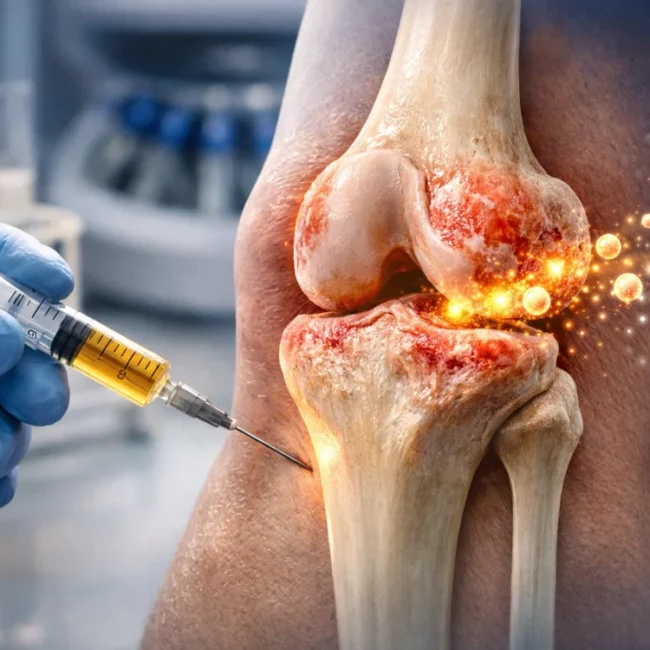
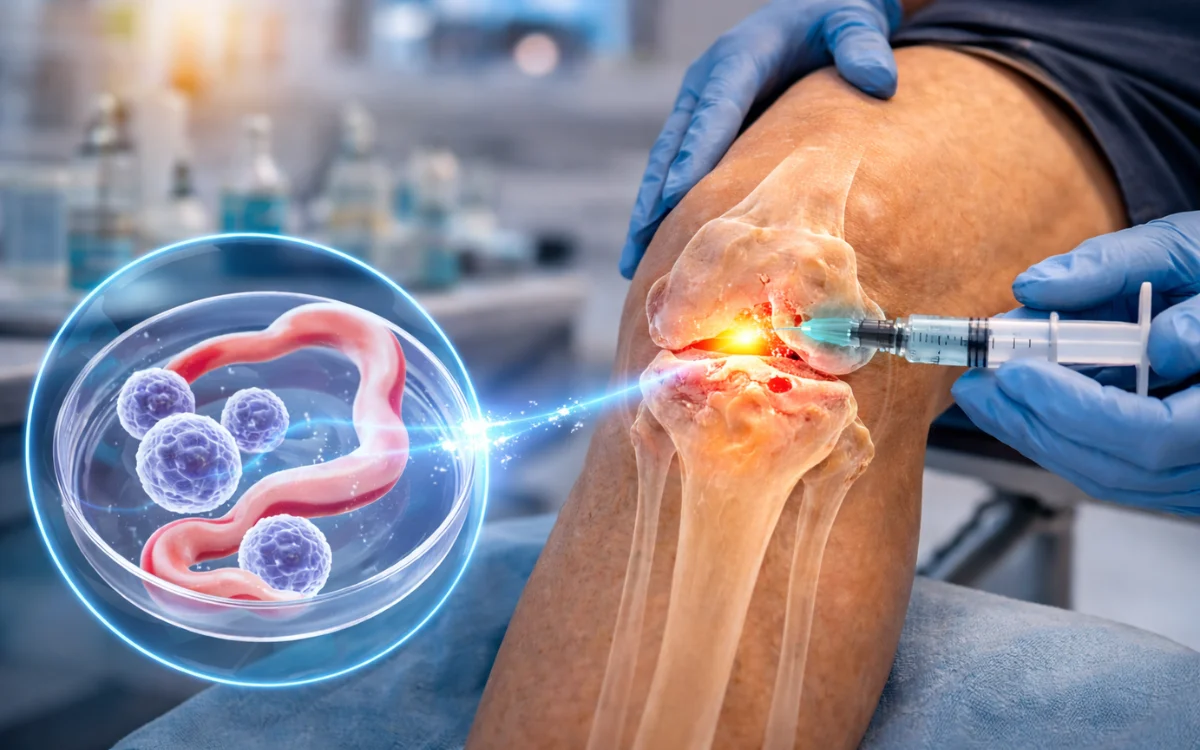
Umbilical cord–derived stem cells, most commonly mesenchymal stem cells (UC-MSCs) obtained from Wharton’s jelly, are increasingly investigated as a regenerative treatment for knee osteoarthritis (OA). Overall, available clinical studies suggest that they have a favorable safety profile when produced and administered under proper medical and regulatory standards. However, they remain investigational in many countries.
What Are Umbilical Cord Stem Cells?
Umbilical cord tissue contains *mesenchymal stem cells (MSCs)* that have strong regenerative and anti-inflammatory properties.
Key characteristics:
- High proliferative capacity
- Strong immunomodulatory effects
- Low immunogenicity (rarely provokes immune rejection)
- Ability to release growth factors and exosomes that stimulate tissue repair
These cells are typically allogeneic (from a donor cord after birth) and processed in
GMP-certified laboratories.
Safety Profile in Clinical Studies
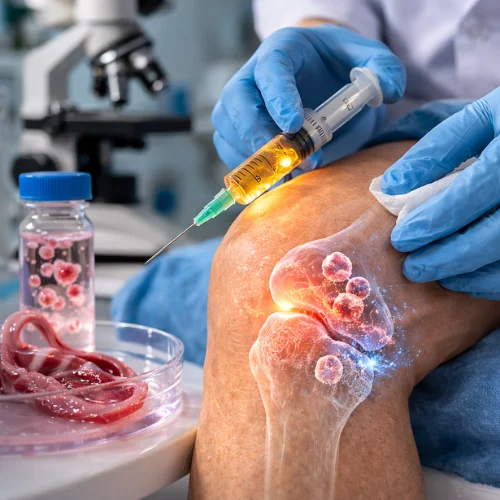
Most published studies report good safety outcomes, with few serious complications.
Commonly Reported Mild Side Effects
- Temporary joint pain or swelling
- Mild inflammatory reaction for 24–72 hours
- Injection site discomfort
These effects are similar to those seen with PRP or hyaluronic acid injections.
Serious Adverse Events
Large clinical series report very low rates of serious complications when cells are properly prepared and screened.
Potential risks include:
- Infection if sterility is compromised
- Immune reaction if poorly processed cells are used
- Theoretical tumor risk (very rare and not observed in clinical MSC trials for OA)
Importantly, MSCs are not pluripotent, so they do not form teratomas, unlike embryonic stem cells.
Evidence in Knee Osteoarthritis
Several clinical trials have evaluated UC-MSCs in knee OA.
Selected Studies
Samara et al., Regenerative Medicine (2022)
- Intra-articular UC-MSC injections
- Significant improvement in pain and knee function
- MRI showed improved cartilage characteristics
- No major safety concerns
Wang et al., Stem Cell Research & Therapy (2016)
- UC-MSC injections in knee OA patients
- Improved WOMAC scores and cartilage quality
- No serious adverse events reported
Systematic reviews (2023–2024)
- MSC therapy consistently shows a good safety profile
- Moderate evidence of pain reduction and functional improvement
Why Umbilical Cord MSCs Are Attractive
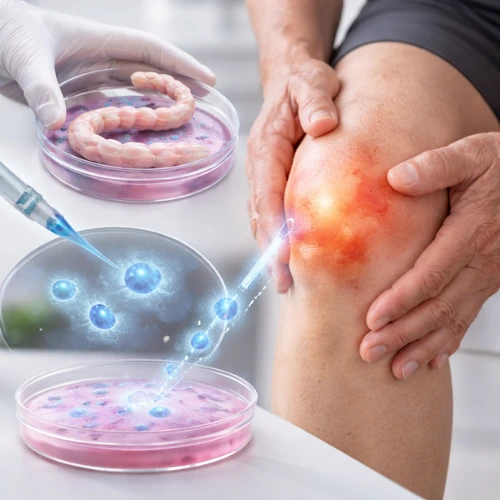
Compared with bone marrow or adipose stem cells, UC-MSCs have several advantages:
| Feature | Umbilical Cord MSCs |
| Cell age | Very young biologically |
| Proliferation | High expansion capacity |
| Immunogenicity | Very low |
| Anti-inflammatory effect | Strong |
| Harvesting | Non-invasive (no donor surgery |
These properties make them particularly interesting for degenerative joint diseases like osteoarthritis.
Regulatory Status
Safety also depends on regulatory oversight and product quality.
| Region | Status |
| FDA (USA) | Mostly investigational (clinical trials) |
| Europe (EMA) | Advanced therapy medicinal product (ATMP) regulation |
| UAE / GCC | Allowed in some centers under strict licensing |
| Asia / Latin America | Widely used, but regulatory standards vary |
The key safety factor is GMP manufacturing and rigorous donor screening.
Limitations and Considerations
Even though safety appears good, some limitations exist:
- Long-term data beyond 5–10 years are still limited
- Clinical outcomes vary between patients
- Standardization of cell dose and preparation is still evolving
- Severe “bone-on-bone” OA may respond less well
Stem cell therapy should therefore be considered part of a broader regenerative strategy, often combined with:
- PRP
- Physiotherapy
- Mechanical alignment correction
- Weight optimization
Key Takeaways
- Umbilical cord–derived MSCs appear generally safe when produced under strict laboratory standards.
- Most studies report only mild and temporary side effects.
- They do not carry the teratoma risk associated with embryonic stem cells
- Early clinical data show promising improvements in pain and function in knee osteoarthritis.
- However, they remain a developing regenerative therapy, and proper medical supervision is essential.
Bottom line:
When sourced from certified laboratories and used by experienced physicians, umbilical cord MSC therapy appears safe and promising for knee osteoarthritis, but ongoing research continues to refine its indications and long-term effectiveness.