
Deep Cuts to the Hand: When Is a Cut an Orthopaedic Emergency?
A cut to the hand may look small on the surface but still injure an important structure underneath.
A deep cut becomes an orthopaedic or hand-surgery emergency when there is concern about damage to a tendon, nerve, blood vessel, joint or bone, or when bleeding cannot be controlled. Loss of finger movement, new numbness, poor circulation, a deep contaminated wound and severe crush injuries all deserve prompt medical assessment.
The British Society for Surgery of the Hand guidance on hand wounds explains that hand lacerations range from superficial skin injuries to complex wounds involving tendons, nerves, muscles and bones. Deep wounds and wounds with skin loss may require surgery.
This distinction is important because being able to see only a small cut does not tell us how far the object travelled beneath the skin.
When Is A Hand Cut An Emergency?
Not every cut requires an emergency department or surgery. A shallow skin cut that stops bleeding, has normal finger movement, normal sensation and no significant contamination can often be managed as a minor wound.
A deeper injury needs more urgent assessment when any of the following are present:
- bleeding that does not stop with firm direct pressure
- inability to bend or straighten a finger normally
- new numbness or loss of feeling
- a finger that becomes pale, blue, unusually cold or poorly perfused
- visible tendon, bone or deeper tissue
- a wound directly over a joint that may extend into the joint
- significant loss of skin
- a deep glass, knife, machine or power-tool injury
- a crush injury
- an animal or human bite to the hand
- a retained foreign object
- a partial or complete finger amputation
- increasing redness, swelling, pus, fever or worsening pain suggesting infection
Some of these problems require immediate emergency care, while others require urgent same-day or early specialist hand assessment rather than an ambulance.
The key point is that the depth and function of the injury matter more than the length of the skin cut alone.
Why Are Deep Hand Cuts Different From Cuts Elsewhere?
The hand contains many important structures packed into a relatively small area.
Just beneath the skin are:
- flexor and extensor tendons
- digital nerves
- arteries and smaller blood vessels
- joints
- ligaments
- bones
A sharp object may pass through several of these structures within a short distance. This is particularly relevant around the fingers, where tendons and nerves can sit very close to the skin.
For Dr. Marouane, assessing a hand laceration therefore involves more than deciding whether the skin needs stitches. Finger movement, tendon function, sensation, circulation and the possibility of joint or bone injury all need to be checked.
What If I Cannot Bend My Finger After The Cut?
Inability to bend a finger after a cut is a major warning sign for a flexor tendon injury. The flexor tendons run along the palm side of the hand and fingers and allow the fingers and thumb to bend.
The BSSH guidance on flexor tendon injuries explains that these tendons are particularly vulnerable to cuts across the palm or palmar side of the fingers. Typical signs include a wound, partial or complete inability to bend the finger and pain when trying to bend it. Numbness may occur if a nearby nerve has also been damaged.
A finger may also sit straighter than the neighbouring fingers if a flexor tendon has been fully divided.
Can I Still Move The Finger If The Tendon Is Partially Cut?
Yes. This is an important point.
A partially divided tendon may still allow movement, meaning being able to bend a finger does not completely rule out a tendon injury. There may instead be pain, weakness or altered movement.
That is one reason a deep cut over the course of a tendon should be assessed even if the finger appears to move reasonably well.
What If I Cannot Straighten My Finger?
A cut across the back of the hand or finger can damage an extensor tendon. These tendons straighten the fingers and sit very close to the skin, particularly over the finger joints.
The BSSH information on extensor tendon injuries explains that warning signs include an inability to fully straighten the affected finger or thumb, drooping of the digit and pain when attempting to straighten it.
Many completely divided extensor tendons require repair, while selected partial injuries may be managed differently depending on their extent and location.
The treatment cannot be decided simply from how large the skin wound appears.
Is Numbness After A Hand Cut Serious?
New numbness immediately after a cut raises concern about nerve injury. Digital nerves run along the sides of the fingers and provide sensation to the fingertips. A sharp cut can partly or completely divide one.
The BSSH guidance on nerve injuries describes loss or alteration of sensation, muscle weakness and sometimes pain as important signs of nerve damage. When a wound is accompanied by signs of nerve injury, surgical exploration and repair may be required if the nerve has been partly or completely divided.
Patients may notice:
- one side of a finger feels numb
- the fingertip has reduced sensation
- touch feels different compared with the opposite hand
- grip feels clumsy
- a finger or thumb feels weak
Do not assume that numbness is simply due to swelling, particularly when it started immediately after the injury.
What If The Finger Is Pale, Blue Or Cold?
This is more concerning because it can indicate impaired blood flow. A deep cut can damage the arteries that supply a finger.
If blood supply is significantly compromised, the finger may become unusually pale, blue or dusky, colder than neighbouring fingers or associated with altered sensation.
That requires urgent medical assessment. Likewise, heavy bleeding that continues despite firm direct pressure may indicate a more significant blood-vessel injury.
Do not repeatedly remove the dressing to check whether the bleeding has stopped. Constantly lifting pressure can disrupt forming clots.
If bleeding is severe or cannot be controlled, emergency care is appropriate.
Does Every Deep Cut Need Stitches?
No, but many full-thickness lacerations need formal wound assessment and closure. Superficial wounds as injuries where deeper skin layers remain intact. These may heal without medical intervention.
By contrast, deeper wounds extend through the full thickness of the skin and expose the underlying tissues. BSSH guidance notes that these wounds commonly benefit from closure, while injuries involving significant skin loss may require a skin graft or flap.
The important issue is that stitches only close the skin. They do not treat a divided tendon, a cut nerve, arterial damage, a fracture or an injured joint.
Closing a deep hand laceration without checking these structures can therefore miss the more important injury underneath.
What If The Cut Is Directly Over A Finger Joint?
A deep wound over a joint deserves particular attention. The wound may have penetrated the joint capsule and introduced bacteria into the joint.
Deep puncture wounds near joints carry a higher risk of infection and should be evaluated by a healthcare professional, especially if the wound may be deep.
A joint infection can damage cartilage and requires prompt treatment. This is why a small wound over a knuckle or finger joint should not be judged simply by its appearance.
The mechanism matters too.
A cut over a knuckle caused by contact with another person’s teeth, for example, has a very different infection risk from a clean superficial paper cut.
Are Glass Cuts More Concerning?
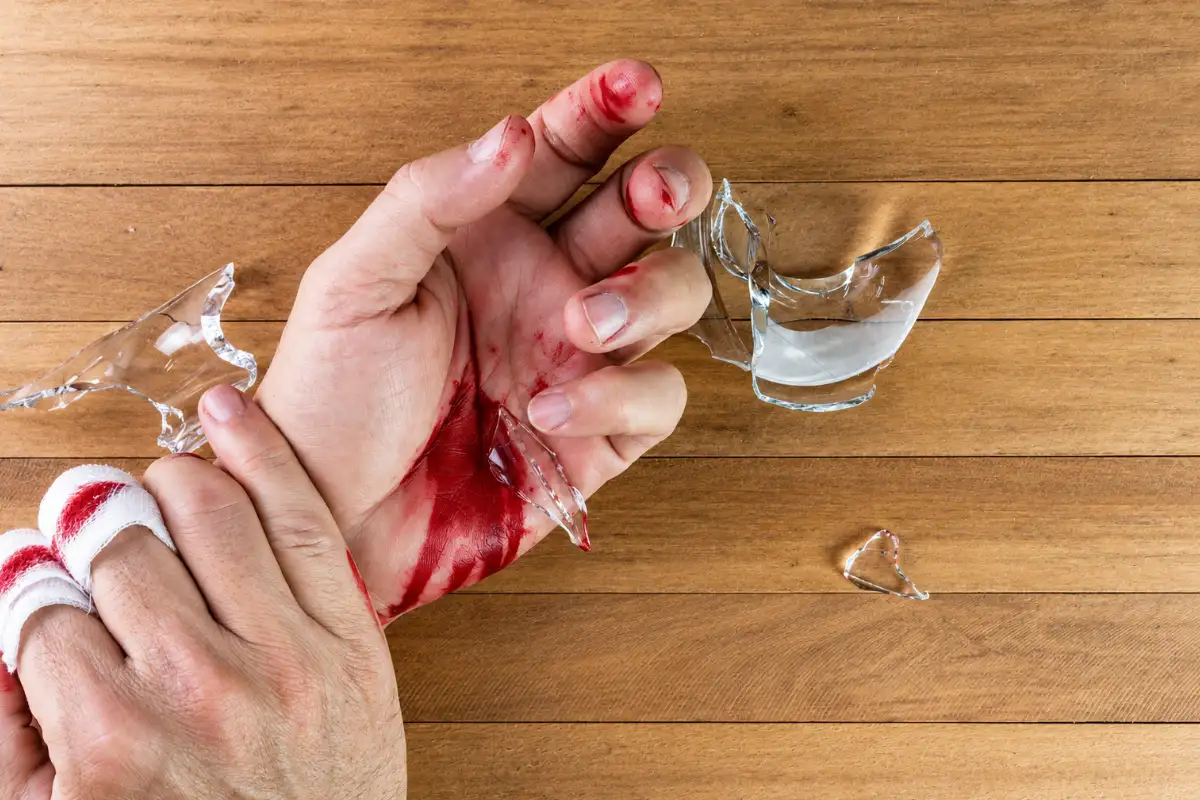
Glass can produce clean-looking but unexpectedly deep wounds and may leave fragments behind. A deep glass injury may damage tendons, nerves or vessels.
X-rays may sometimes be taken when tendon injuries have been caused by glass or when joint damage is suspected.
Not every type of glass is equally visible on every imaging test, so the assessment depends on the injury and examination.
Do not probe deeply into a wound yourself trying to find a fragment. A retained foreign body should be assessed and removed appropriately.
What About Knife Cuts?
A knife can produce a narrow wound that penetrates significantly deeper than it appears. The direction of the blade matters because a relatively small laceration may cross a tendon, nerve or vessel beneath the skin.
If a knife wound is deep, associated with numbness, weakness, abnormal finger movement or ongoing bleeding, it requires urgent assessment.
The skin opening should not be used to estimate how much underlying damage occurred.
Are Human Or Animal Bites To The Hand Urgent?
They deserve early medical assessment because infection risk can be significant. Even a relatively small tooth puncture can introduce bacteria deep into the tissues.
The current NHS guidance on animal and human bites specifically advises medical assessment for bites involving the hand and emergency care when a bite wound is large, deep or bleeding cannot be controlled.
Depending on the bite, treatment may involve thorough wound cleaning, antibiotics, assessment for tendon, joint or bone involvement, tetanus review and rabies assessment where relevant.
Human bites over the knuckles can be particularly important because bacteria may enter a joint or tendon structure even through a small-looking wound.
Does A Deep Hand Cut Need Antibiotics?
Not every clean hand laceration requires antibiotics.
Whether antibiotics are appropriate depends on factors such as contamination, bite injuries, delayed treatment, open fractures, joint involvement, immune status and infection already developing.
Antibiotics should not replace proper wound cleaning or surgical treatment when deeper structures are damaged.
A contaminated wound with a tendon injury, for example, still needs the tendon injury addressed.
What About Tetanus After A Hand Cut?
Tetanus protection should be reviewed after certain wounds. The NHS information on tetanus notes that risk is greater with large, deep or heavily contaminated wounds and when vaccination is incomplete or uncertain.
The exact need for a booster or other prophylaxis depends on the type of wound, contamination, previous vaccination history and local vaccination guidance.
A clinician can check this during the wound assessment.
What Should I Do Immediately After A Deep Hand Cut?
For a significant hand laceration, priorities are controlling bleeding, protecting the wound and obtaining appropriate medical assessment.
For initial first aid:
- Apply firm pressure with clean gauze or cloth if the wound is bleeding.
- Raise the hand if practical.
- Rinse a contaminated wound gently with clean running water when bleeding is controlled.
- Cover it with a clean dressing.
- Remove rings early if the hand is starting to swell, provided they can be removed safely.
- Seek urgent medical care if the wound is deep or there is concern about tendon, nerve, vessel, joint or bone damage.
Wash hand wounds with clean running tap water as soon as possible to help reduce contamination. For minor cuts, apply direct pressure to control bleeding.
Avoid:
- repeatedly opening the wound to look inside
- probing deeply with tweezers or another object
- trying to repair a tendon yourself
- pulling out a deeply embedded object
- repeatedly testing a severely injured finger
- pouring irritating chemicals into a deep wound
Do not delay urgent care because the skin opening looks small if sensation or finger movement has changed.
Can A Tendon Or Nerve Injury Wait Until Tomorrow?
That depends on the injury, but suspected tendon or nerve damage should be assessed promptly.
Not every hand tendon injury requires emergency surgery in the middle of the night, but delay in recognising the injury can complicate treatment.
BSSH guidance states that penetrating tendon injuries can result in substantial functional loss if not appropriately treated, while early repair of hand nerve injuries offers the best opportunity for recovery depending on the nature and location of the injury.
The appropriate timing is determined by the structure injured, contamination, circulation, associated fracture or joint injury, skin condition and patient factors.
The safest approach is therefore early specialist assessment rather than deciding at home that the injury can wait.
What Happens When A Deep Hand Cut Is Assessed?
The clinician will usually want to know what caused the cut, when it happened, whether glass or another foreign body may remain, whether the wound was contaminated, tetanus status and whether movement or sensation changed immediately.
The hand is then assessed systematically.
This may include checking:
- ability to bend each finger
- ability to straighten each finger
- thumb movement
- sensation on different sides of each finger
- circulation
- joint stability
- wound depth and location
X-rays may be needed when fracture, joint injury or certain foreign bodies are suspected. Ultrasound or other imaging is occasionally useful, but examination remains essential.
For Dr. Marouane, the goal is to establish what was damaged beneath the skin, not simply whether the wound can be stitched.
What Happens If A Tendon Has Been Cut?
A completely divided tendon generally cannot function normally because the two ends are no longer connected. Surgical repair may be needed to bring the ends back together.
After repair, protecting the tendon while preventing excessive stiffness becomes important. This usually involves a specific splint and structured hand therapy.
Tendon repair is therefore not simply an operation followed by waiting for the wound to heal. Rehabilitation is a major part of restoring useful hand function.
Recovery also varies with the tendon involved, location and associated injuries.
What Happens If A Nerve Has Been Cut?
When a nerve has been fully divided, surgery may be needed to repair the ends. Nerve recovery is much slower than skin healing.
BSSH explains that nerve fibres recover gradually and final outcome can take many months. This means a healed skin scar does not necessarily mean sensation has already returned.
The final result depends on the location of the injury, extent of nerve damage, age, associated tendon or vascular injury, quality of repair and rehabilitation.
Recovery cannot be guaranteed even with technically successful repair.
What Are The Signs That A Hand Wound Has Become Infected?
Increasing pain after the initial injury deserves attention, particularly when accompanied by:
- increasing swelling
- warmth
- spreading redness or darker discoloration
- pus or unpleasant-smelling discharge
- fever
- chills or feeling unwell
- increasing difficulty moving the fingers
It is advised to medical review when a wound develops increasing pain, drainage, swelling, fever or spreading skin changes.
Hand infections can spread into tendon sheaths, joints and deeper spaces, so worsening symptoms should not simply be treated with home dressings indefinitely.
Frequently Asked Questions Hand Deep Cuts
1. How do I know whether a hand cut is deep?
A cut may be deep if the full thickness of the skin has been divided, deeper tissue is visible, the edges gape apart or the injury affects movement, sensation or circulation. The apparent length of the cut does not reliably indicate depth.
2. Can a small cut sever a tendon?
Yes. Tendons run close to the skin in several parts of the hand and fingers. A small sharp wound can penetrate deeply enough to damage one.
3. If I can move my finger, is the tendon definitely intact?
No. Partial tendon injuries may still allow movement. Pain or weakness with movement after a deep cut can still justify specialist assessment.
4. Why is my fingertip numb after a cut?
A digital nerve may have been partly or completely injured. New numbness directly after a laceration should be evaluated rather than automatically attributed to swelling.
5. What does a cut flexor tendon look like?
Patients may be unable to bend part or all of the finger, and the injured finger may rest straighter than neighbouring fingers. A formal tendon examination is required.
6. What does an extensor tendon injury look like?
A finger or thumb may droop or be unable to straighten fully following a cut across the back of the hand or digit.
7. Do I need an X-ray after cutting my hand with glass?
Not every glass cut needs an X-ray, but imaging may be considered when retained glass, bone injury or joint involvement is suspected.
8. Is a dog or cat bite to the hand serious?
It can be. Bites to the hand have an important infection risk and should be medically assessed. Deep bites or uncontrolled bleeding require more urgent care.
9. How quickly does a cut nerve recover?
Recovery depends on the injury and repair. Nerves recover much more slowly than skin wounds and meaningful recovery may take many months.
10. Can a deep hand wound become infected even after stitches?
Yes. Infection can still develop, especially in contaminated wounds, bites or injuries involving deeper structures. Increasing pain, swelling, discharge or fever should be assessed.
A Hand Cut Should Be Judged By Function, Not Just By Its Appearance
A small-looking cut can sometimes be more important than a much larger superficial wound.
The question is not simply, “How many stitches does this need?”
It is whether the injury has affected the structures that allow the hand to move, feel and maintain circulation.
For Dr. Marouane, Senior Orthopaedic Surgeon – Hand to Shoulder in Dubai, a deep hand laceration is assessed by looking at tendon function, nerve sensation, blood supply, joint involvement and possible bone injury in addition to the skin wound itself.
Many superficial hand cuts heal uneventfully. But if a cut is followed by loss of finger movement, numbness, uncontrolled bleeding, altered finger colour, a deep wound over a joint or another significant functional change, prompt assessment can help identify an injury before it leads to avoidable loss of hand function.
Medical Disclaimer
This article provides general educational information and does not replace individual medical advice, emergency assessment, diagnosis or treatment. Deep or contaminated hand injuries may involve structures that cannot be assessed safely at home. Treatment depends on the mechanism of injury, structures involved, examination findings, imaging where required, vaccination history and individual clinical circumstances.