
Thumb Base Arthritis: When Is Surgery Necessary and Modern Treatment Options?
Thumb base arthritis does not automatically mean surgery. Many patients can manage the condition successfully with activity modification, hand therapy, splinting, appropriate medication or an injection. Surgery is usually considered when pain and loss of function remain significant despite a reasonable trial of non-surgical treatment.
This distinction matters because arthritis on an X-ray is extremely common and does not always cause symptoms. The British Society for Surgery of the Hand guidance on basal thumb arthritis notes that radiographic thumb-base arthritis is common, particularly with increasing age, yet many people with these changes experience little or no significant pain.
The decision to operate should therefore be based on the patient’s pain, pinch strength, ability to use the hand and response to non-surgical treatment, not simply on how advanced the arthritis looks on an X-ray.
The latest BSSH evidence-based guideline recommends a stepwise approach, beginning with supported self-management and progressing through splinting and, where appropriate, corticosteroid injection before surgery is considered for persistent symptoms.
What Is Thumb Base Arthritis?
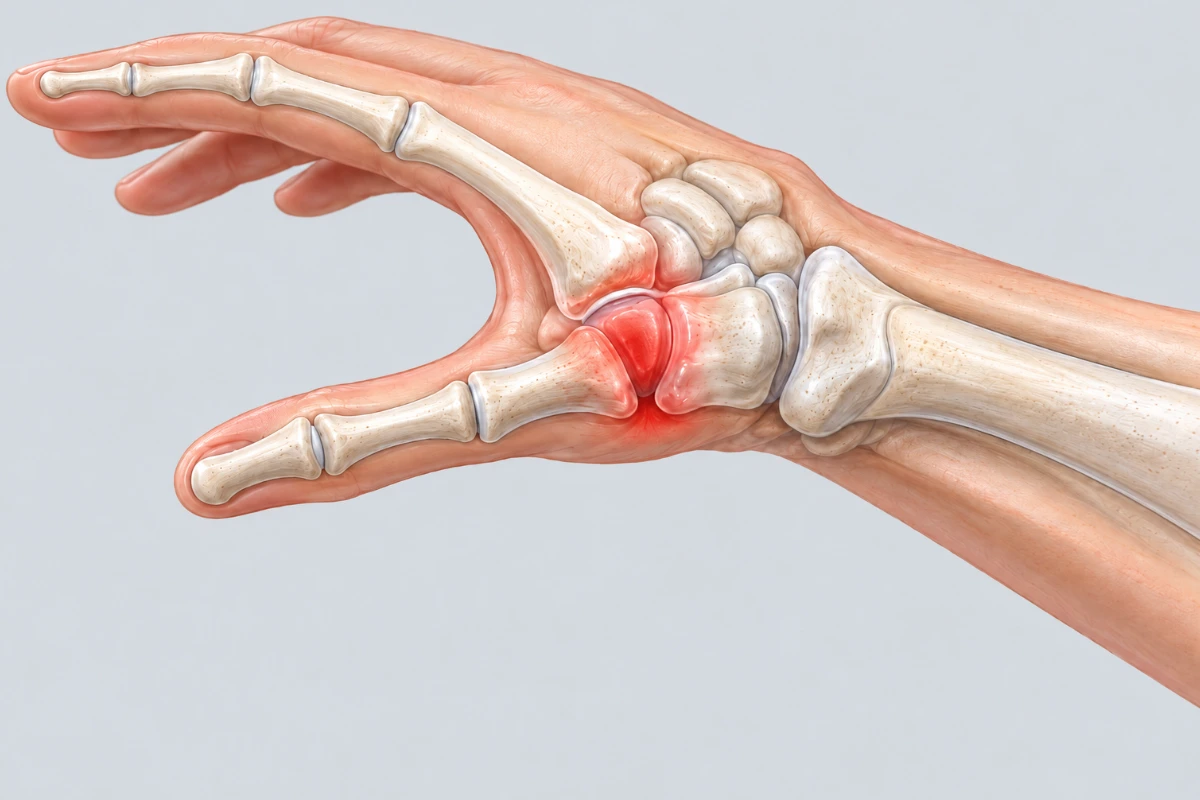
Thumb base arthritis is osteoarthritis affecting the joint where the thumb meets the wrist. This joint is called the carpometacarpal joint, or CMC joint, and is formed between the first metacarpal bone and a small wrist bone called the trapezium.
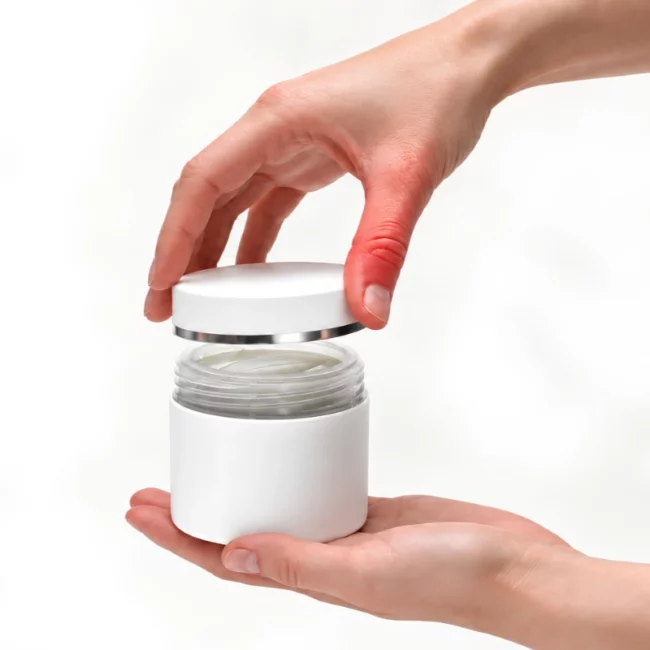
The joint gives the thumb much of its remarkable mobility. It allows the thumb to move across the palm, oppose the fingers and generate the pinch needed for tasks such as opening a jar or turning a key.
The trade-off is that significant force passes through a relatively small joint.
As the cartilage covering the joint surfaces becomes thinner and rougher, loaded thumb movements can become increasingly painful.
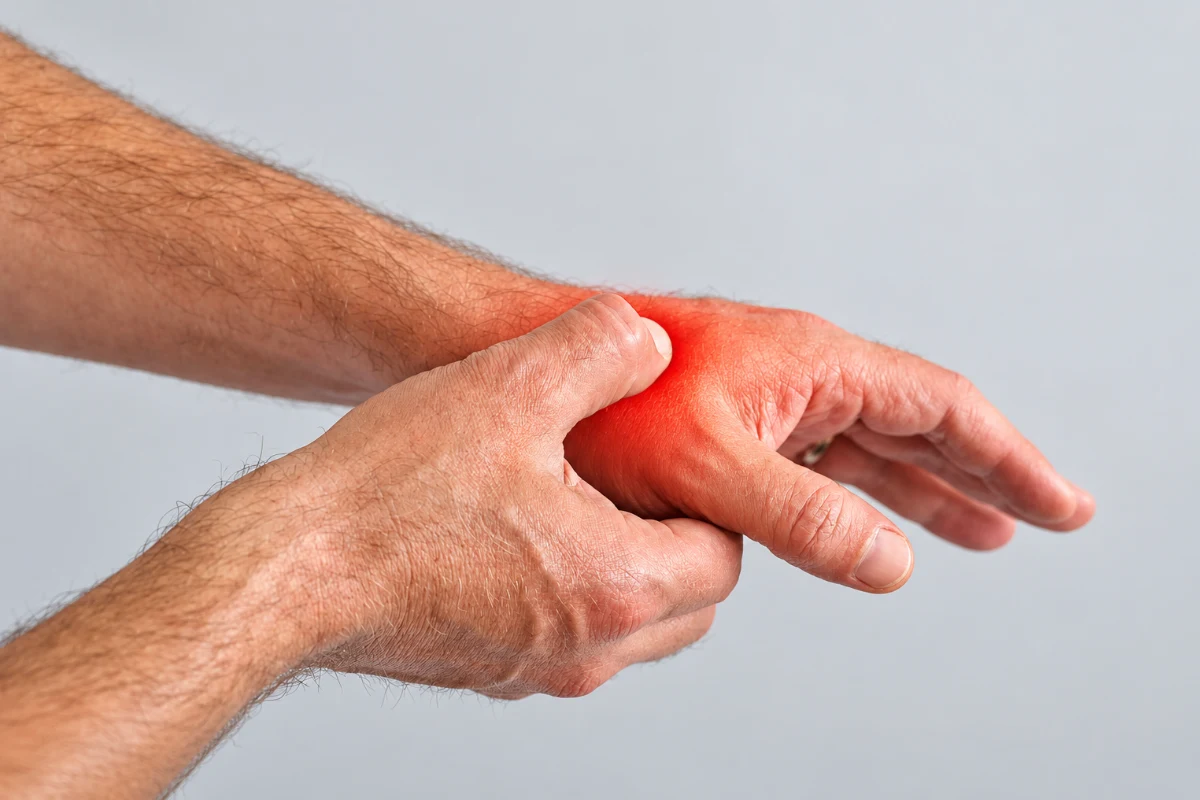
Typical symptoms include pain at the base of the thumb, tenderness, reduced pinch strength, difficulty opening jars or turning keys, stiffness and, in more advanced disease, visible change in thumb alignment.
Does Severe Arthritis On An X-Ray Mean You Need Surgery?
No. The severity of arthritis on an X-ray does not determine treatment by itself.
Some patients have relatively advanced radiographic arthritis but surprisingly little discomfort. Others have more modest X-ray changes yet find gripping and pinching extremely painful.
This is why treating the X-ray rather than the patient can lead to unnecessary intervention.
For Dr. Marouane, the more relevant questions are whether the arthritis explains the location of the pain, how much hand function has been lost, whether pinch and grip are affected, and what has happened after appropriate conservative treatment.
A hand examination may also look for other conditions that can coexist with thumb arthritis, such as De Quervain’s syndrome, carpal tunnel syndrome, trigger thumb or arthritis in neighbouring joints.
When Is Surgery For Thumb Base Arthritis Actually Necessary?
Surgery becomes reasonable when the arthritis is producing persistent, meaningful pain and functional limitation despite appropriate non-surgical treatment.
There is no universal pain score or X-ray grade at which surgery suddenly becomes mandatory.
A patient who has occasional discomfort opening a tight jar but otherwise uses the hand normally has a very different problem from someone who cannot turn a key, hold a cup, write comfortably or perform their work because every pinch movement hurts.
The BSSH BEST guideline recommends considering surgery when symptoms fail to resolve after supported self-management, with splinting and corticosteroid injection added where appropriate.
Surgery may therefore become more appropriate when everyday hand function remains substantially limited, pain persists despite reasonable non-operative care, the diagnosis is clear, and the expected benefit of an operation outweighs the risks and recovery involved.
It is equally reasonable not to have surgery when symptoms remain manageable.
What Should Be Tried Before Surgery?
Modern treatment for thumb CMC arthritis starts with managing the hand rather than immediately replacing or removing part of the joint.
The BSSH guideline recommends a comprehensive self-management programme first. This includes education about the condition, exercise, modification of painful tasks, pacing and strategies for managing pain. Splinting can then be considered when symptoms remain troublesome, followed by an intra-articular corticosteroid injection in selected patients who have not responded sufficiently.
This staged approach is important because many patients never progress to surgery.
1. Activity and Grip Modification
Patients often learn that relatively small changes can substantially reduce load through the thumb joint.
Jar-opening aids, larger handles, avoiding prolonged forceful pinching and changing how heavy objects are held can reduce symptoms without requiring the hand to become inactive.
The aim is not complete avoidance of thumb use. It is reducing unnecessary high-load pinch while maintaining useful movement.
2. Hand Therapy and Exercises
Hand therapy can help maintain movement, improve supporting muscle function and teach joint-protection strategies.
Exercises should be appropriate to the individual joint rather than performed aggressively through pain.
3. Thumb splints
A thumb CMC splint can support the painful joint during activities that place high load through it.
Some patients prefer flexible supports that preserve more movement, while others benefit from a more rigid brace during particularly painful tasks.
The BSSH includes splinting as part of the treatment pathway, particularly when supported self-management alone has not provided adequate relief.
4. Medication
Simple analgesic or anti-inflammatory medication may be appropriate for selected patients. Suitability depends on other health conditions, medications and individual risk factors.
Medication treats symptoms rather than reversing the underlying cartilage loss.
5. Corticosteroid Injection
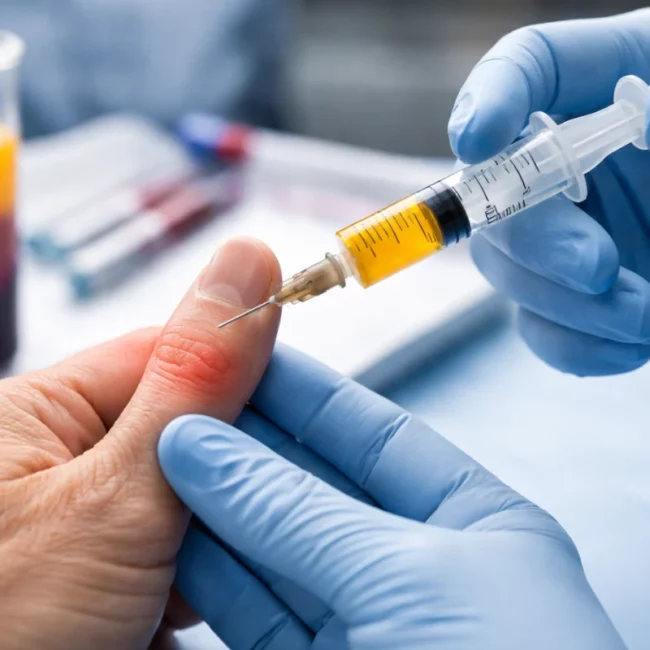
A corticosteroid injection into the CMC joint can reduce pain in some patients, particularly when conservative treatment has not provided enough relief.
The BSSH notes that injections can improve pain, although the benefit may wear off over time. Its evidence-based guideline characterises corticosteroid injection mainly as an option for short-term symptom relief, not as a cure for the arthritis.
Repeated injections are therefore not necessarily the right long-term strategy for every patient.
What About PRP For Thumb Arthritis?
Platelet-rich plasma, or PRP, is increasingly discussed as an injection option for osteoarthritis, including arthritis at the base of the thumb.
Current evidence is interesting but not yet strong enough to describe PRP as a replacement for established treatments or as a way to regenerate the joint.
A systematic review comparing injections and surgical treatments reported potentially favourable outcomes for PRP compared with corticosteroid injections in some studies. However, the review also concluded that there was no clearly superior surgical intervention overall, and further evidence remains important.
The current BSSH treatment pathway continues to centre on supported self-management, splinting, corticosteroid injection when appropriate and surgery for persistent symptoms.
PRP for thumb arthritis may therefore be discussed in selected cases, but patients should understand that the evidence is still developing and an injection should not be described as rebuilding lost thumb cartilage.
What Are The Surgical Options For Thumb Base Arthritis?
Several operations exist, but more complex does not automatically mean better.
- Simple Trapeziectomy: removes the arthritic trapezium bone. This is a long-established option with good evidence.
- Trapeziectomy With Ligament Reconstruction Or Tendon Interposition: removes the trapezium and adds soft-tissue reconstruction. Current evidence has not shown clear long-term benefit over simple trapeziectomy.
- Suspensionplasty: supports the thumb metacarpal after trapezium removal. Several techniques exist, but evidence of superiority remains limited.
- CMC Joint Replacement: replaces the arthritic joint with an implant. This can preserve joint mechanics but introduces implant-related complications and revision considerations.
- Arthrodesis: fuses the arthritic joint. This removes movement at that joint and may suit selected high-demand patients.
- Denervation: interrupts small pain-transmitting nerve branches while preserving the joint. It does not remove the arthritis.
- Osteotomy: changes alignment or load through the metacarpal and is used selectively.
The appropriate operation depends on age, occupation, activity level, pattern of arthritis, condition of neighbouring joints and the patient’s priorities.
What Is A Trapeziectomy?
A trapeziectomy removes the trapezium; the small wrist bone that forms the lower side of the arthritic thumb CMC joint.
Once that painful bone-on-bone articulation has been removed, the thumb metacarpal is no longer rubbing against the same arthritic surface.
Trapeziectomy has been performed for many years and remains one of the most established surgical treatments for symptomatic thumb-base arthritis.
Removal of the trapezium as the most commonly performed operation for this condition. Importantly, modern evidence has also questioned whether routinely adding increasingly complex reconstruction improves the patient’s long-term result.
Is LRTI Better Than Simple Trapeziectomy?
Current evidence does not show a clear long-term advantage from routinely adding ligament reconstruction and tendon interposition to trapeziectomy.
LRTI stands for ligament reconstruction and tendon interposition. After the trapezium is removed, part of a tendon is traditionally used to reconstruct support around the thumb and sometimes fill the space.
The procedure is widely performed, but the key question is whether those extra steps improve outcomes compared with simply removing the trapezium.
Additional procedures such as ligament reconstruction or interposition do not appear to provide benefit over excision of the trapezium alone.
A meta-analysis similarly found no meaningful long-term advantage in function or key pinch strength from LRTI compared with simple trapeziectomy.
That does not mean LRTI is never used. Surgeons may have specific reasons for choosing a reconstruction in an individual patient. It does mean patients should not assume that a more elaborate operation automatically produces a better result.
What Is Suspensionplasty?
Suspensionplasty refers to techniques designed to support the thumb metacarpal after the trapezium has been removed. Some use tendon tissue, while others use suture-based devices or other constructs.
These techniques can provide mechanical support, but there are several versions and no single suspension technique has been established as universally superior.
The operation should therefore be selected according to the individual thumb rather than because a technique is newer.
What About Thumb Joint Replacement?
Thumb CMC joint replacement is a surgical option for treating advanced thumb base arthritis. Unlike trapeziectomy, which involves removing the trapezium bone, joint replacement uses a prosthetic implant to replace the damaged joint surfaces while aiming to preserve the thumb’s anatomy and movement.
For selected patients, thumb joint replacement may offer benefits such as improved movement and functional recovery. However, the results depend on the patient’s condition, the implant used, and the surgeon’s assessment.
Joint replacement also carries specific risks, including implant loosening, dislocation, wear, and the potential need for revision surgery. These risks are important to consider when comparing joint replacement with established procedures such as trapeziectomy.
A network meta-analysis comparing surgical approaches found insufficient evidence to recommend routine thumb joint replacement, despite favourable results for some outcomes, because the risk of reoperation remains an important consideration. Similarly, a systematic review comparing joint replacement with trapeziectomy highlighted limitations and heterogeneity in the available evidence.
When Might Thumb Fusion Be Considered?
Thumb CMC arthrodesis permanently fuses the arthritic joint. Once the bones have united, the painful joint no longer moves.
The potential advantage is stability and the ability to maintain a strong thumb column, which can make fusion an option in selected younger or high-demand patients.
The trade-off is intentional loss of movement at the CMC joint. Fusion also carries risks including failure of the bones to unite and increased load through adjacent joints.
The same systematic review comparing surgical techniques found no clear superiority of arthrodesis over trapeziectomy for pain and function, while arthrodesis was associated with a higher complication rate in the studies assessed. It is therefore a selective option rather than the default operation.
What Is Thumb CMC Denervation?
Denervation is a different concept. Instead of removing or replacing the arthritic joint, the surgeon targets small sensory nerve branches that transmit pain from the joint.
The attraction is that the anatomy of the CMC joint itself can be preserved and recovery may be different from a reconstruction. However, the arthritis remains present.
This means denervation should be discussed as a pain-modifying procedure rather than a way to restore lost cartilage.
BSSH lists denervation among recognised surgical options for basal thumb arthritis, but the choice needs to be individualised because long-term evidence is less established than for traditional trapeziectomy.
Is There One “Best” Surgery For Thumb Arthritis?
No. Current evidence does not support telling every patient that one operation is universally best.
A systematic review comparing surgical techniques found no single surgical intervention clearly superior across the major outcomes studied and described trapeziectomy as one of the simplest established approaches with good long-term results.
The BSSH guideline recommends trapeziectomy without routine additional reconstruction when surgery is indicated because extra procedures have not demonstrated clear benefit.
This is an important example of evidence-based surgery: a technically more complicated operation does not necessarily produce a better patient outcome.
How Does Dr. Marouane Decide Which Operation Is Appropriate?
The decision starts with confirming that the thumb CMC joint is actually the main source of pain.
For Dr. Marouane, the assessment considers where the pain is located, which activities reproduce it, pinch and grip function, thumb stability, neighbouring joints, X-rays and the response to previous treatment.
Patient priorities matter as well. A manual worker who relies heavily on pinch strength may value different aspects of treatment from someone whose main concern is pain during everyday household tasks.
Age alone does not determine the operation, and neither does the X-ray grade.
The goal is to choose the least invasive treatment that has a reasonable chance of addressing the patient’s actual problem.
How Long Does It Take to Recover From Thumb Arthritis Surgery?
Recovery varies considerably according to the operation. After trapeziectomy, the thumb generally needs a period of protection followed by progressive hand therapy. Movement and function return gradually, and strength often continues improving after the initial healing phase.
Fusion requires sufficient time for the bones to unite before heavy loading is permitted.
Joint replacement has a different rehabilitation pathway because the implant needs protection while the surrounding soft tissues recover.
Recovery also depends on hand dominance, occupation, other joint problems, overall health and whether additional procedures were performed.
Patients should therefore be cautious about advertisements promising one fixed “rapid recovery” period after thumb arthritis surgery.
Wound healing, return to desk work, comfortable everyday use and return to heavy manual work are different milestones.
Can Arthritis Come Back After Surgery?
It depends on the operation.
- After trapeziectomy, the removed trapezium cannot become arthritic again, but patients can still develop symptoms from neighbouring joints or other structures in the hand.
- After joint replacement, the artificial joint can develop implant-related problems over time.
- After denervation, the arthritic joint remains anatomically present, so pain can potentially return.
- After fusion, the treated joint no longer moves, but adjacent joints continue to carry load.
No operation should therefore be described as a guaranteed permanent cure for every source of future thumb pain.
What Happens If I Choose Not To Have Surgery?
Choosing not to have surgery is often reasonable when symptoms are tolerable. Thumb-base osteoarthritis usually develops gradually, and patients do not need an operation merely because an X-ray demonstrates arthritis.
The BSSH notes that symptoms can stabilise over time and may remain manageable with conservative treatment.
Continuing non-surgical treatment does not mean you have “missed the window” for surgery in most routine cases. The decision can usually be revisited if pain and hand function later deteriorate.
What Should Patients In Dubai Know About Thumb Surgery?
Thumb-base surgery in Dubai should be performed within an appropriately licensed healthcare facility and within the permitted scope of that facility and treating professional.
The Dubai Health Authority’s current standards require facilities providing day-surgical services to comply with UAE law, Dubai regulations and DHA licensing requirements.
The exact setting for surgery depends on the procedure, anaesthesia requirements, patient’s medical history and current facility permissions. These requirements can change, so they should be confirmed with the treating surgeon and licensed facility when surgery is being planned.
Frequently Asked Questions On Thumb Base Arthritis
1. Does thumb-base arthritis always get worse?
Structural arthritis may progress over time, but symptoms do not necessarily worsen at the same rate. Some patients with substantial X-ray changes have relatively little pain.
2. How do I know when it is time for surgery?
Surgery becomes more reasonable when pain and functional limitation remain significant despite appropriate non-surgical treatment. The decision should be based on what you can and cannot do with the hand, not X-rays alone.
3. Should I try an injection before surgery?
A corticosteroid injection may be appropriate in selected patients who remain symptomatic after self-management and splinting. Current BSSH guidance places injection before surgery in its stepwise treatment pathway.
4. Can an injection rebuild cartilage?
No. Steroid injections can reduce pain but do not restore the lost cartilage of osteoarthritis. PRP is being studied, but it should not currently be described as proven cartilage regeneration.
5. Is trapeziectomy outdated?
No. Despite being a long-established procedure, trapeziectomy remains strongly supported by current evidence and is central to contemporary BSSH surgical guidance.
6. Is a thumb joint replacement better because it is newer?
Not necessarily. Joint replacement can be appropriate for selected patients, but implant-specific complications and revision risk need to be considered. Current evidence does not support routine replacement for everyone.
7. Can I still use my thumb normally after trapeziectomy?
Most patients can return to everyday activities after trapeziectomy with less pain. However, recovery takes time, and hand therapy helps restore thumb movement, pinch, and grip strength. Full strength and movement may not return to pre-arthritis levels.
8. Will surgery restore completely normal pinch strength?
Not necessarily. Surgery is primarily intended to reduce pain and improve useful function. Strength outcomes vary with the procedure, preoperative condition and rehabilitation.
9. Can both thumbs develop arthritis?
Yes. Thumb-base osteoarthritis can affect one or both hands, although symptom severity may differ.
10. Which thumb arthritis operation would Dr. Marouane recommend?
There is no single operation for every patient. The recommendation depends on symptoms, examination, imaging, hand demands, previous treatment and the balance between expected benefit, risks and recovery.
Surgery Should Be Driven By Symptoms, Not The X-Ray
Thumb-base arthritis is common, but an arthritic joint does not automatically need to be operated on.
Current evidence supports starting with low-risk non-surgical management and escalating treatment only when pain and loss of function remain significant. If surgery becomes appropriate, simple trapeziectomy remains an important evidence-supported option, while reconstruction, joint replacement, fusion and denervation have more selective roles.
For Dr. Marouane, Senior Orthopaedic Surgeon – Hand to Shoulder in Dubai, the decision is therefore not simply “How bad does the arthritis look?” It is whether the joint is genuinely preventing the patient from using the hand comfortably and whether an operation offers enough expected benefit to justify its risks and recovery.
If thumb-base pain is making gripping, pinching, writing, opening jars or everyday hand use increasingly difficult, a detailed assessment can help clarify whether further conservative treatment is still reasonable or whether surgery should now be considered.
Medical Disclaimer
This article provides general educational information and does not replace individual medical advice, diagnosis or treatment. Treatment suitability depends on the patient’s symptoms, examination findings, investigations, medical history, occupational requirements and individual clinical circumstances.