
Tennis Elbow Treatment: Physiotherapy vs PRP vs Surgery – Which Is Right for You?
If tennis elbow has been painful for weeks or months, it is understandable to start comparing treatments. One person may recommend physiotherapy, another may suggest platelet-rich plasma, and someone else may say surgery is the definitive solution.
The evidence is more nuanced.
For most patients, structured physiotherapy and load modification remain the first treatment to prioritise. PRP may be discussed in selected persistent cases, but its benefit over placebo remains uncertain. Surgery is generally reserved for a small group with prolonged symptoms after non-surgical treatment, and even there the evidence for superiority over placebo is limited.
The British Elbow & Shoulder Society’s tennis elbow patient care pathway gives physiotherapy the strongest support among these options. Its guideline also advises that patients considering PRP or surgery should be told that current evidence has not established a clear benefit over placebo.
That does not mean every patient must simply wait. It means the treatment decision should start with a correct diagnosis, symptom duration, work and sport demands, previous rehabilitation and the level of functional limitation.
What Is Tennis Elbow?
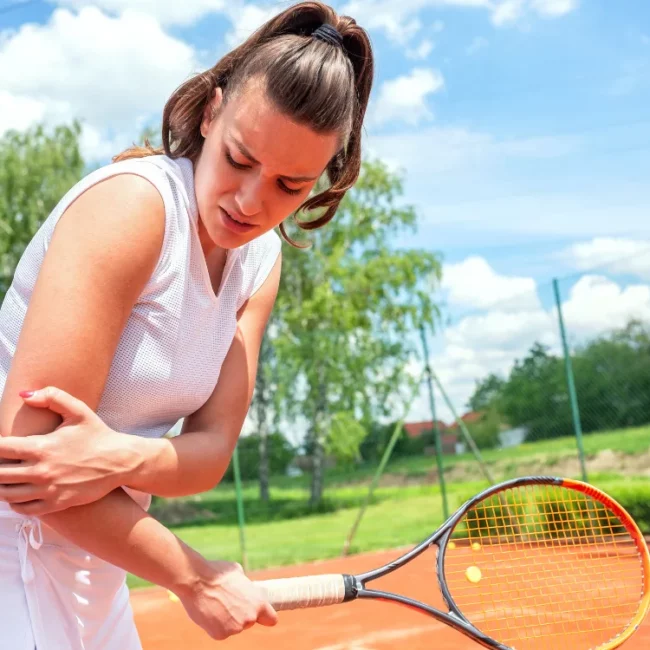
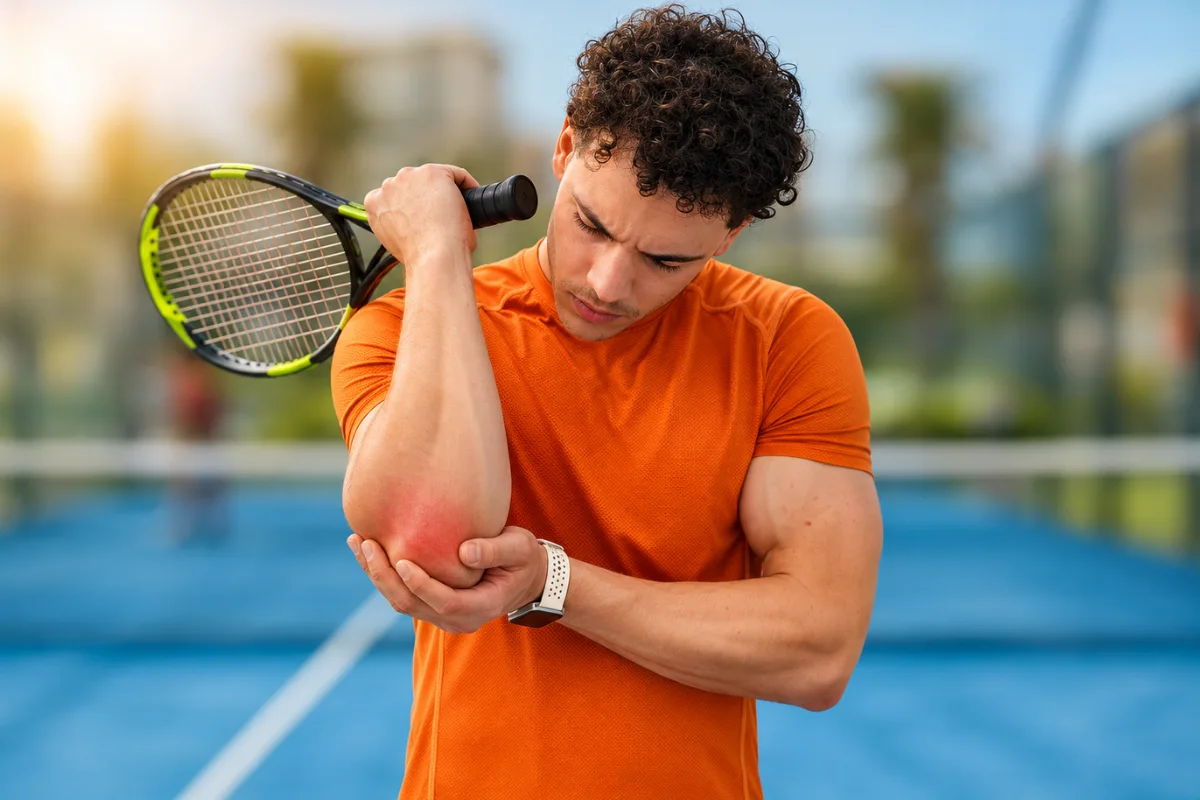
Tennis elbow is the common name for lateral elbow tendinopathy, a painful condition involving the common extensor tendon where it attaches to the outside of the elbow.
Despite the name, many patients have never played tennis.
Symptoms are commonly triggered by activities involving repeated gripping, wrist extension or forearm rotation, such as:
- lifting a kettle or pan
- carrying shopping bags
- using a screwdriver
- gym exercises
- racket sports
- lifting a child
- repetitive manual work
- prolonged mouse or keyboard use in some patients
Pain is usually felt around the bony prominence on the outside of the elbow and may spread down the upper forearm.
The BESS patient information on tennis elbow explains that gripping activities commonly reproduce the pain and that recovery may take longer when symptoms have been present for longer.
Is Tennis Elbow Actually An Inflammatory Condition?
The name “epicondylitis” historically suggested inflammation, but persistent tennis elbow is better understood as a tendinopathy involving changes in the tendon and its response to load.
This matters because the treatment goal is not simply to “remove inflammation.”
For many patients, the more useful strategy is to reduce excessive load temporarily and then progressively restore the tendon’s ability to tolerate gripping, lifting and sport.
That is one reason exercise-based rehabilitation plays such an important role.
Physiotherapy vs PRP vs Surgery
Physiotherapy
Usually the first choice for most patients.
Best suited to:
- newly diagnosed or persistent tennis elbow
- pain during gripping without major structural injury
- patients who have not yet completed a progressive rehabilitation programme
- people who want to improve tendon capacity and return gradually to activity
Main limitation:
- improvement is usually gradual rather than immediate
- adherence and appropriate load progression matter
PRP
A possible option in selected chronic cases, but not a proven first-line treatment.
Best considered when:
- the diagnosis is clear
- symptoms remain troublesome despite appropriate rehabilitation
- the patient understands the evidence is mixed
- cost and temporary post-injection discomfort are acceptable
Main limitation:
- preparation methods vary
- clinical studies are inconsistent
- guideline-level evidence has not established a reliable benefit over placebo
Surgery
Usually reserved for a small minority with prolonged, function-limiting symptoms.
May be discussed when:
- symptoms have persisted for many months
- a structured non-surgical programme has not provided acceptable improvement
- the diagnosis has been reconsidered and confirmed
- the patient understands that evidence for surgery is also limited
Main limitation:
- surgery has recovery time and procedural risks
- current evidence does not prove that surgery is superior to placebo for every patient with chronic tennis elbow
Why Is Physiotherapy Usually Recommended First?
The strongest current guideline support is for physiotherapy.
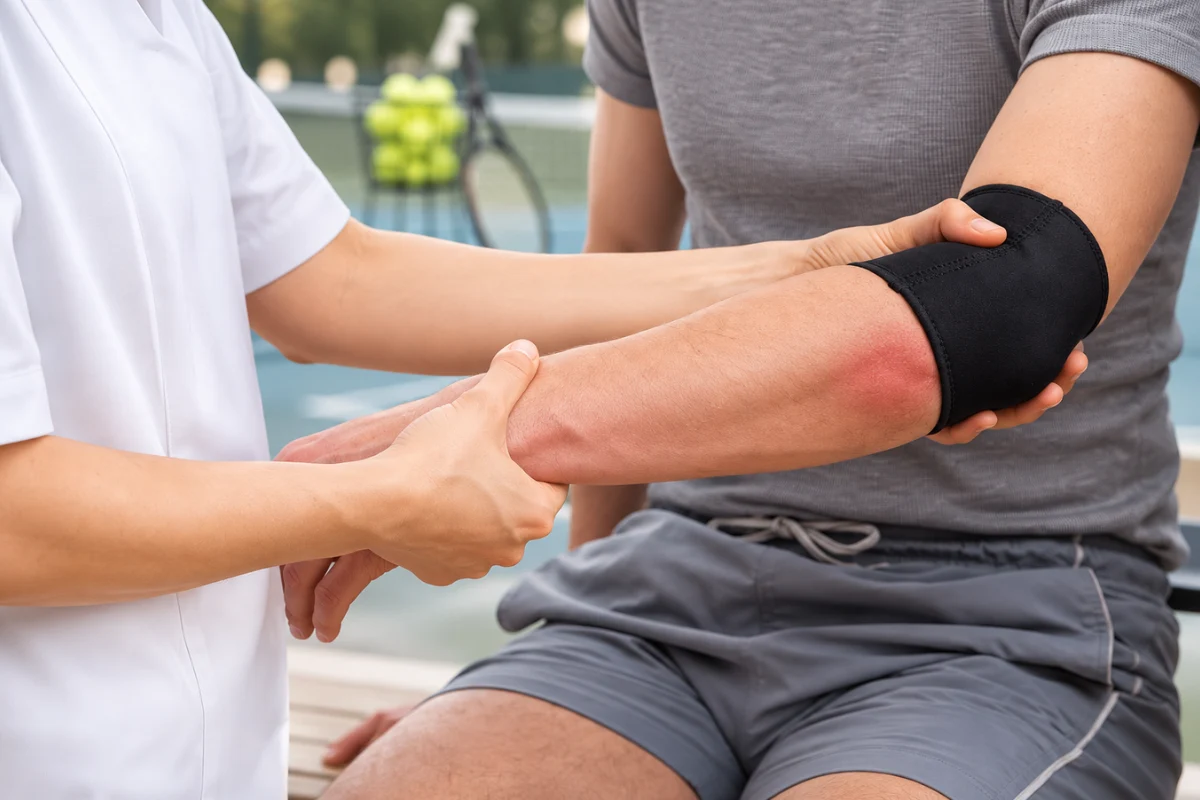
The BESS tennis elbow guideline recommends that patients with lateral elbow tendinopathy should be offered physiotherapy. The guideline found short-term improvement in overall outcome, while longer-term evidence is less certain.
Physiotherapy is not simply massage or passive treatment.
A useful programme often includes:
- education about tendon load
- temporary modification of aggravating activities
- progressive wrist-extensor strengthening
- gradual reintroduction of gripping
- forearm mobility where needed
- shoulder and scapular conditioning when relevant
- planning a return to work, gym or sport
The AAOS therapeutic exercise programme for epicondylitis also focuses on progressive stretching and strengthening of the forearm musculature to improve tolerance to repetitive stress.
Does Physiotherapy Mean I Have To Stop Using My Arm?
Usually not. Complete rest can reduce symptoms temporarily, but the tendon eventually needs to tolerate load again. The goal is therefore load modification rather than permanent avoidance.
For example, a patient may temporarily reduce:
- heavy gripping
- repeated wrist extension
- high-volume racket play
- painful pulling exercises at the gym
- repetitive tool use
At the same time, comfortable daily movement and a structured strengthening programme can continue. The exact load depends on symptom severity and the patient’s occupation or sport.
How Long Should Physiotherapy Take?
There is no single recovery timeline. The NHS guidance on tennis elbow notes that physiotherapy may be considered when symptoms have not improved after initial self-care, and that surgery is generally only considered after prolonged symptoms.
Some patients begin improving within several weeks. Others with long-standing tendinopathy need several months of progressive rehabilitation.
A programme should not be judged after only a few exercises or a handful of days. The important question is whether pain, grip function and load tolerance are moving in the right direction over time.
What Is PRP And How Is It Used For Tennis Elbow?
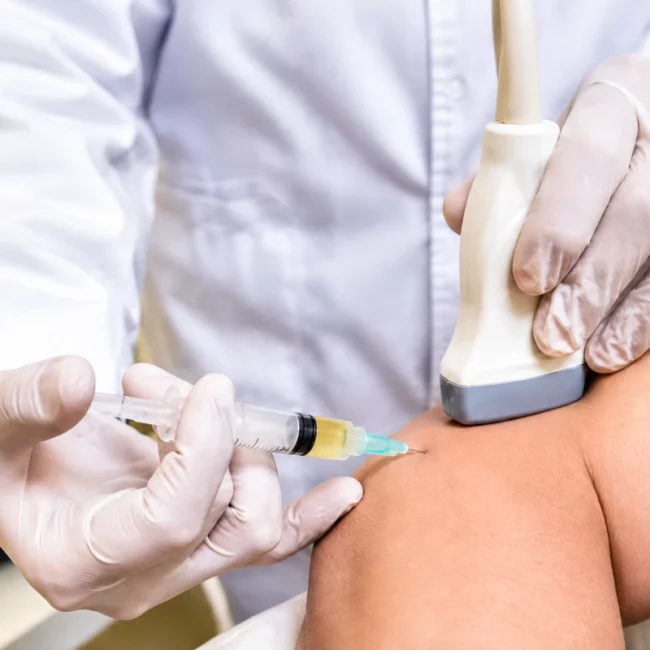
PRP stands for platelet-rich plasma. A sample of the patient’s blood is taken and processed to produce plasma containing a higher concentration of platelets. The preparation is then injected into or around the affected tendon.
Platelets contain signalling molecules involved in healing and tissue response, which is why PRP has been studied for chronic tendinopathy.
PRP is not a stem cell treatment. The biological rationale is plausible, but clinical outcomes depend on more than the presence of platelets.
Studies vary in:
- platelet concentration
- leukocyte concentration
- injection technique
- use of ultrasound guidance
- number of injections
- rehabilitation after injection
- duration of symptoms
This variation partly explains why PRP studies do not all reach the same conclusion.
Does PRP Work For Tennis Elbow?
The most accurate answer is: the evidence remains mixed.
The BESS guideline states that patients offered PRP should be told it may provide no benefit over placebo because available placebo-controlled evidence was low quality and did not establish a reliable difference in pain or function.
However, newer studies continue to produce different results.
For example, a 2026 randomised trial comparing PRP with corticosteroid injection found better short-term outcomes with corticosteroid but a trend toward better longer-term outcomes with PRP. Other recent trials have also suggested that PRP formulation may influence results.
These newer findings are scientifically interesting, but they do not yet justify saying that PRP is reliably superior to structured rehabilitation or placebo for every patient.
That is why shared decision-making is important.
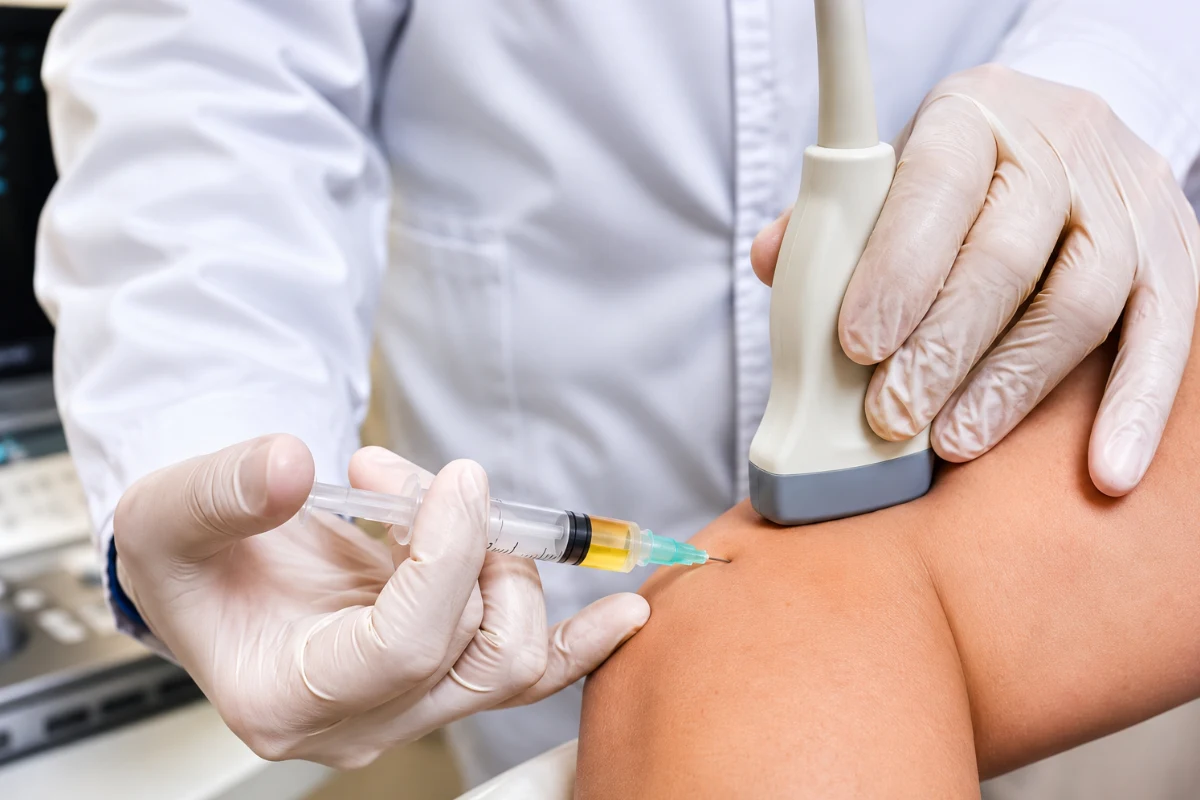
Who Might Reasonably Consider PRP?
PRP may be discussed when:
- symptoms have become chronic
- the diagnosis is clinically convincing
- appropriate load modification and physiotherapy have been attempted
- symptoms continue to interfere with work, sport or daily function
- the patient understands that benefit is not guaranteed
- the patient understands that evidence remains uncertain
PRP should not be used simply because the tendon “looks abnormal” on ultrasound. Tendon changes can be present without being the main cause of symptoms.
For Dr. Marouane, the injection decision therefore starts with whether the clinical diagnosis fits the patient’s pain and functional problem.
What Should I Expect After PRP?
Patients commonly experience temporary soreness after injection.
The rehabilitation plan after PRP varies according to the clinician and the exact tendon condition, but most programmes involve an initial reduction in provocative loading followed by progressive rehabilitation.
An injection should not replace the work of restoring tendon capacity.
Even if PRP provides symptom relief, the forearm still needs to regain the strength and endurance required for gripping, lifting or sport.
What About Corticosteroid Injections?
Corticosteroid injections can produce short-term pain relief, which is one reason they were used frequently in the past.
However, short-term relief does not necessarily mean better long-term tendon outcome.
The BESS guideline gives a strong recommendation against routine corticosteroid injection for lateral elbow tendinopathy, noting that any early improvement may not persist and later outcomes can be less favourable.
This is relevant when comparing PRP with steroid injection.
If a study shows that steroid improves pain faster over the first few weeks while PRP performs differently later, that does not automatically make either injection the right first treatment.
The comparison needs to include the natural history of tennis elbow and the role of rehabilitation.
When Is Surgery Considered For Tennis Elbow?
Surgery is generally considered only after prolonged symptoms that remain functionally limiting despite appropriate non-surgical treatment.
The NHS tennis elbow guidance states that surgery may be considered when symptoms continue after approximately 6 to 12 months.
Before surgery, the diagnosis should be reconsidered.
Persistent outer-elbow pain can sometimes come from other problems, including:
- radial tunnel syndrome or another nerve problem
- elbow arthritis
- instability
- referred pain from the neck
- an osteochondral problem
- another tendon disorder
Operating on the common extensor tendon will not solve pain whose main source lies elsewhere.
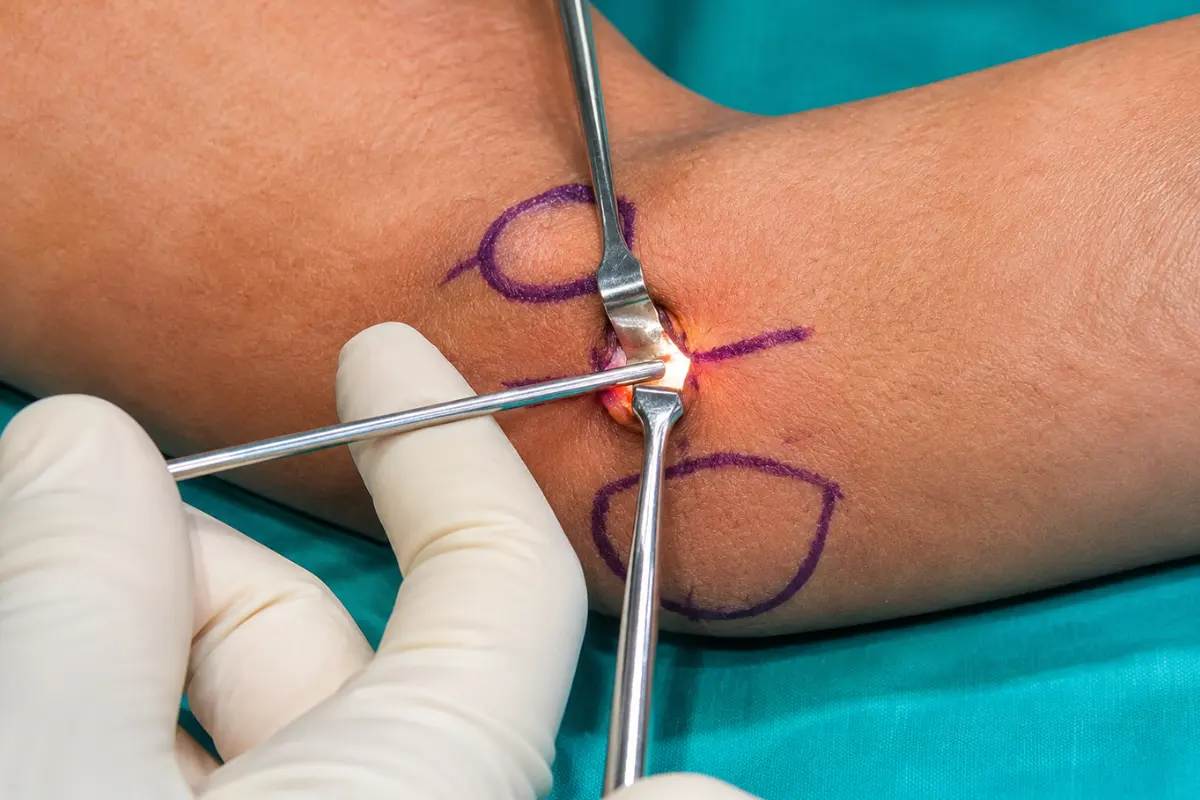 What Does Tennis Elbow Surgery Involve?
Surgery generally aims to address degenerative or abnormal tissue at the common extensor tendon origin.
Depending on the surgeon and individual case, this may be done using:
- an open approach
- an arthroscopic approach
The BESS guideline states that, when surgery is chosen, either open or arthroscopic treatment may be used because current evidence has not established a clear difference in outcome between them.
The technique is therefore less important than selecting the right patient.
Does Surgery Definitely Work?
No treatment should be presented as guaranteed. This is especially important for tennis elbow because the evidence for surgery is weaker than many patients expect.
The BESS guideline advises that patients considering surgery should be informed that current evidence has not shown clear benefit over placebo.
A Cochrane review of surgery for lateral elbow pain similarly found insufficient evidence to confirm or refute the effectiveness of surgery compared with non-surgical treatment or no treatment.
This does not mean surgery never helps an individual patient. It means the expected benefit should be discussed honestly and weighed against recovery and risks.
What Are The Risks Of Surgery?
Potential risks can include:
- infection
- stiffness
- nerve irritation or injury
- persistent pain
- weakness
- scar sensitivity
- incomplete return to previous activity
- need for further treatment
Recovery is also not instant. Patients need time for wound healing and progressive rehabilitation before returning to heavy gripping, manual work or racket sport.
Do I Need An MRI Before Choosing Treatment?
Usually not for a straightforward clinical presentation. Tennis elbow is primarily diagnosed from the history and examination.
The BESS guideline recommends imaging mainly when the diagnosis is uncertain.
Ultrasound or MRI may become useful when:
- symptoms are atypical
- there is significant loss of movement
- neurological symptoms are present
- there was substantial trauma
- another diagnosis is suspected
- surgery is being considered and imaging would change planning
An abnormal MRI does not automatically mean surgery is required.
What If My Ultrasound Says There Is A Tendon Tear?
Partial degenerative changes can be seen in chronic tendinopathy.
The clinical importance depends on the size and location of the abnormality, tendon function, strength and symptoms.
The word “tear” on a report can sound alarming, but it should not automatically move the patient from physiotherapy to surgery.
Imaging needs to match the clinical picture.
Which Treatment Is Right For You?
For most patients, the sequence is not “physiotherapy failed, therefore PRP, then surgery.”
A more useful approach is:
If symptoms are relatively recent
Prioritise:
- education
- load modification
- progressive exercise
- short-term symptom management when needed
If symptoms have persisted despite good rehabilitation
Reassess:
- whether the diagnosis is correct
- whether the exercise programme was appropriately progressed
- whether work or sport continues to overload the tendon
- whether another condition is contributing
PRP can then be discussed as an optional treatment with uncertain evidence rather than as an inevitable next step.
If symptoms remain severe and function-limiting for many months
A specialist discussion may include surgery, but only after:
- confirming the diagnosis
- reviewing non-surgical treatment
- discussing the limited evidence
- explaining recovery and risks
- considering the patient’s occupation and sport
Can Tennis Elbow Heal Without PRP or Surgery?
Yes. Tennis elbow often improves with time.
The BESS pathway describes the condition as commonly self-limiting, although recovery can be slow.
This is why patients should not assume that improvement following an injection necessarily proves the injection caused the recovery.
At the same time, “self-limiting” should not mean ignoring months of pain.
Rehabilitation can help maintain function and guide a safer return to load while the tendon recovers.
When Should Another Diagnosis Be Considered?
Seek reassessment when the presentation does not fit typical tennis elbow.
Features that deserve more attention include:
- a significant traumatic injury
- marked swelling
- loss of elbow movement
- persistent numbness or tingling
- pain radiating from the neck
- locking or catching
- unexplained fever or systemic illness
- a lump or swelling
- progressive weakness not explained by pain
These findings may require a different investigation or treatment pathway.
Frequently Asked Questions
Is physiotherapy better than PRP for tennis elbow?
Current guideline evidence supports physiotherapy as the first treatment for most patients. PRP may be considered in selected persistent cases, but reliable superiority over placebo or rehabilitation has not been established.
How long should I try physiotherapy before PRP?
There is no fixed number of sessions. A reasonable trial should include progressive loading over several weeks rather than passive treatment alone. If symptoms remain limiting, the diagnosis and programme should be reassessed before deciding on an injection.
Does PRP heal the tendon?
PRP may influence the biological environment around the tendon, but it should not be described as guaranteed tendon regeneration. Clinical studies primarily measure pain and function rather than proving restoration of normal tendon tissue.
Is PRP better than a steroid injection?
Steroid can provide stronger short-term relief, while some studies suggest PRP may perform better later. However, guideline evidence remains uncertain and routine steroid injection is not favoured because of poorer longer-term outcomes.
How many PRP injections are needed?
There is no universally accepted protocol. Studies use different preparations and numbers of injections, which is one reason the evidence is difficult to compare.
Can I exercise after PRP?
Rehabilitation is usually still required. The exact timing and load progression should be planned by the treating clinician or physiotherapist.
When should I consider surgery?
Surgery is generally considered only when symptoms remain significantly limiting after many months of appropriate non-surgical treatment and the diagnosis has been confirmed.
Is arthroscopic surgery better than open surgery?
Current BESS guidance does not show a clear outcome advantage of one approach over the other for tennis elbow.
Can surgery fail?
Yes. Persistent or recurrent pain is possible, particularly if the original diagnosis was incomplete or another source of pain is present.
Do I need imaging before physiotherapy?
Not usually when symptoms and examination are typical. Imaging is more useful when the diagnosis is uncertain or another problem is suspected.
Can I continue playing tennis or going to the gym?
Often yes, but load may need to be reduced temporarily. Painful gripping and wrist-loading exercises should be modified while strength is rebuilt progressively.
Why does tennis elbow take so long to settle?
Tendons adapt more slowly than muscles, and repeated daily loading can continue to irritate the area. Long-standing symptoms often require gradual load progression rather than a quick period of rest.
Conclusion
There is no single treatment that is automatically right for every patient with tennis elbow.
Physiotherapy remains the best-supported starting point for most patients, particularly when it includes load modification and progressive strengthening rather than passive treatment alone. PRP may be discussed in persistent cases, but patients should understand that evidence remains mixed and current guidelines do not establish a reliable benefit over placebo. Surgery has an even more selective role and should be considered only after prolonged symptoms, confirmation of the diagnosis and a careful discussion of the limited evidence.
For Dr. Marouane, Senior Orthopaedic Surgeon – Hand to Shoulder in Dubai, the key decision is not simply whether to choose physiotherapy, PRP or surgery. It is to identify why the tendon remains painful, whether the diagnosis is correct and what has already been done to restore its capacity.
If outer-elbow pain continues to affect gripping, work, gym training or sport despite appropriate rehabilitation, a detailed assessment can help determine whether the next step should be better load management, a selected injection option or, much less commonly, surgical treatment.
Medical Disclaimer
This article provides general educational information and does not replace individual medical advice, diagnosis or treatment. The suitability of physiotherapy, PRP, medication, injection or surgery depends on the patient’s symptoms, examination findings, duration of symptoms, previous treatment, medical history and individual functional requirements.