
Tennis Elbow Treatment in Dubai: Causes, Symptoms, and Recovery Guide
Elbow pain is one of those problems people often ignore in the beginning. It may start as a small ache while lifting a bag, holding a cup, opening a bottle or using a laptop for long hours. But when the pain keeps returning every time you grip, twist or lift something, it becomes difficult to treat it as just a little strain.
Tennis elbow is a common reason for pain on the outer side of the elbow, but the name can be misleading. You do not need to play tennis to develop it. Many people in Dubai experience it because of repetitive work, gym training, racket sports, computer use, manual tasks or repeated wrist and forearm strain. The good news is that with the right diagnosis and elbow treatment plan, most patients can recover well and return to daily activities with better comfort and confidence.
What Is Tennis Elbow?
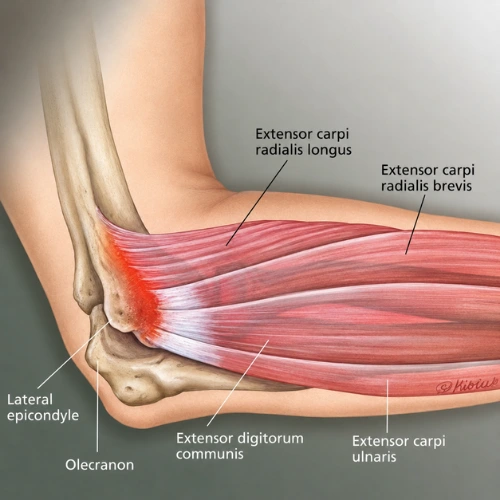
Tennis elbow is a painful tendon condition affecting the outer side of the elbow. Medically, it is often called lateral epicondylitis or lateral elbow tendinopathy.
The tendons involved are connected to the forearm muscles that help you lift your wrist, extend your fingers and grip objects. When these tendons are repeatedly overloaded, they can become irritated, painful and weaker over time.
In many cases, tennis elbow does not happen because of one sudden injury. It builds slowly. A patient may first notice discomfort after exercise, long working hours, repeated lifting or a new activity. Then, gradually, the pain starts appearing during everyday movements.
That is why many people delay seeing a doctor. They expect it to settle on its own, and sometimes it does. But when pain continues for weeks or months, it may need proper assessment.
Why Is It Called Tennis Elbow?
The name comes from the fact that tennis players can develop this condition because of repeated gripping and swinging movements. However, tennis is only one possible trigger.
In real life, tennis elbow is just as common in people who do not play tennis at all.
It may affect:
- Office workers who use a mouse and keyboard for long hours
- Gym-goers lifting weights with poor load control
- People who play paddle, badminton, squash or other racket sports
- Dentists, surgeons and professionals using repetitive hand movements
- Chefs, hairstylists, mechanics and technicians
- Parents lifting children repeatedly
- People doing home repairs, gardening or repeated tool work
- Anyone who performs repeated gripping, twisting or lifting movements
So, if a patient says, “But doctor, I do not play tennis,” that does not rule out tennis elbow. The condition is more about tendon overload than tennis itself.
Tennis Elbow Symptoms: What Should You Look For?
Tennis elbow symptoms usually develop gradually. In the early stage, the pain may appear only during certain activities. Later, it may become more frequent and start affecting simple daily tasks.
Common Tennis Elbow Symptoms include:
- Pain on the outer side of the elbow
- Burning or aching discomfort around the elbow
- Pain that increases with gripping
- Weak grip strength
- Pain when lifting a bag, kettle or water bottle
- Discomfort while opening jars or turning door handles
- Pain during gym exercises or racket sports
- Tenderness when pressing the outer elbow
- Pain is spreading slightly down the forearm
- Difficulty using a mouse or typing for long hours
- Pain that returns after rest when activity is resumed
Some patients also notice stiffness or discomfort in the morning, especially after a day of heavy use. Others may feel fine at rest but experience sharp pain when gripping or lifting.
The key sign is pain around the outer elbow that gets worse when the forearm and wrist muscles are used.
Why Does Tennis Elbow Happen?
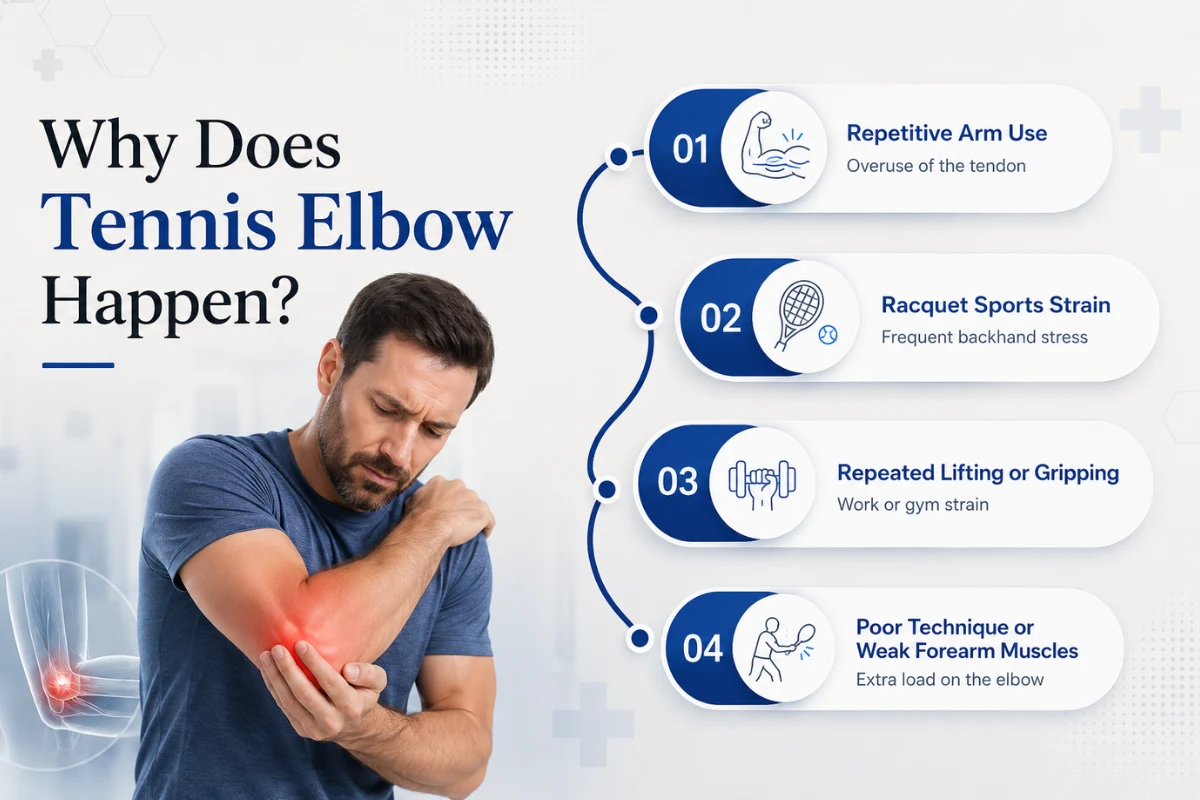
Tennis elbow usually happens because of repeated stress on the tendon attachment at the outer elbow.
The tendon is not just inflamed. In long-standing cases, the tendon may show small degenerative changes, meaning the tissue quality has become weaker or less organised. This is why the pain can become stubborn.
Common causes and risk factors include:
Repetitive wrist and forearm use
Repeated gripping, twisting, lifting or pulling can overload the tendon over time.
Sudden increase in activity
Starting a new gym routine, increasing weights too quickly or returning to sport after a long break can irritate the tendon.
Poor technique
In racket sports or strength training, poor wrist position and repeated strain can increase pressure on the elbow.
Weak forearm muscles
If the muscles are not strong enough to handle the load, the tendon may take more stress.
Long working hours
Typing, mouse use, phone use and repetitive professional tasks can contribute to symptoms.
Poor recovery
If the tendon does not get enough time to recover between repeated activities, irritation may continue.
Age-related tendon changes
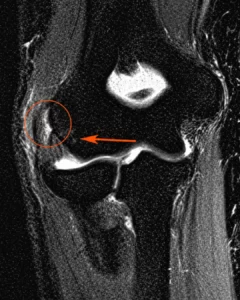
Tendon quality naturally changes with age, making some people more prone to overuse pain.
Tennis elbow is not always caused by one obvious mistake. Often, it is a combination of repeated stress, poor recovery and gradual tendon sensitivity.
When Should You See a Doctor?
Mild elbow pain after a new activity may settle with rest and simple care. But if the pain keeps returning or starts affecting daily life, it is better to get it assessed.
You should consider seeing a specialist if:
- Pain has lasted more than a few weeks
- You feel weakness while gripping
- Pain is affecting work, sport or gym training
- You struggle to lift daily objects
- Rest helps only temporarily
- Pain returns every time you resume activity
- You have tried basic treatment without proper improvement
- Pain is spreading into the forearm
- You are unsure whether it is tennis elbow or another condition
A proper diagnosis helps avoid months of trial and error. Many elbow problems can look similar from the outside, but the treatment may be different.
Why Diagnosis Matters Before Tennis Elbow Treatment
Not every outer-elbow pain is Tennis Elbow.
Pain around the elbow can sometimes come from:
- Nerve irritation
- Joint stiffness
- Ligament injury
- Neck-related referred pain
- Muscle strain
- Tendon tear
- Previous trauma
- Wrist or shoulder mechanics affecting elbow load
This is why examination is important. The doctor will usually ask when the pain started, what movements trigger it, what treatments you have already tried and how the pain affects your work or sport.
A clinical examination may include checking:
- Tenderness around the outer elbow
- Grip strength
- Wrist and forearm movement
- Pain with resisted wrist extension
- Elbow range of movement
- Nerve-related symptoms
- Shoulder, wrist and hand function if needed
In some cases, imaging such as ultrasound, X-ray or MRI may be advised. Imaging is not always necessary, but it can help when symptoms are persistent, severe or not matching a typical pattern.
Good Tennis Elbow Treatment Dubai should always begin with clarity. Treating without understanding the exact cause can lead to poor results.
Tennis Elbow Treatment Dubai: What Are the Options?
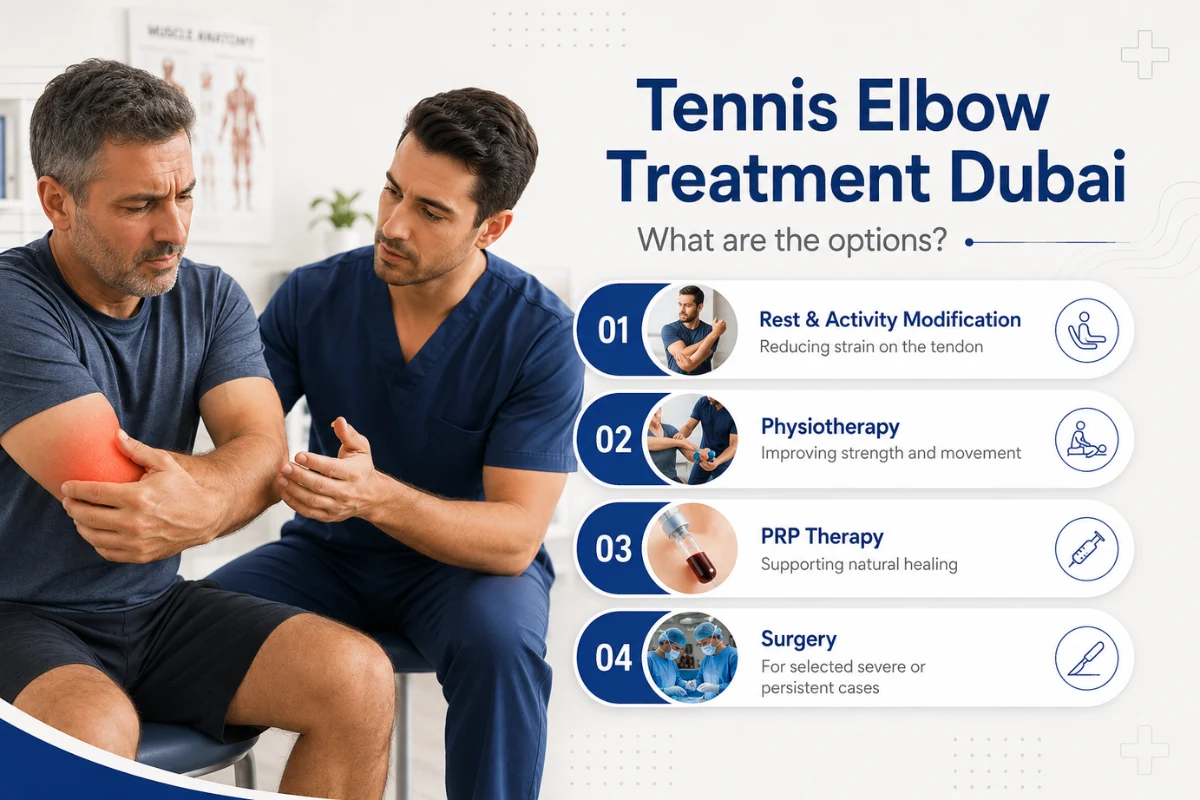
Treatment depends on the stage of the condition, severity of symptoms, tendon quality, activity demands and previous treatment history.
Most patients do not need surgery. The first approach is usually conservative and focused on reducing pain, correcting overload and rebuilding tendon strength.
1. Activity Modification
This does not mean complete rest forever. It means identifying and reducing the specific activities that irritate the tendon.
For example, a patient may need to temporarily reduce:
- Heavy gripping
- Repetitive lifting
- Pulling movements
- Certain gym exercises
- Long mouse use without breaks
- Racket sports
- Repeated twisting movements
The aim is to calm the tendon while keeping the arm moving safely.
Complete rest may reduce pain temporarily, but it does not always solve the underlying problem. The tendon needs gradual reloading once symptoms settle.
2. Ice and Pain Management
Ice may help reduce pain after activities that trigger symptoms. Some patients may also be advised short-term pain relief depending on their medical history.
However, medication should not become the only plan. Pain relief can make daily life easier, but it does not rebuild tendon strength.
If the tendon keeps getting overloaded, symptoms can return once the medication stops.
3. Bracing or Elbow Strap
Some patients benefit from an elbow brace or counterforce strap. This type of support may reduce strain on the painful tendon during activity.
A brace can be useful for work, sport or daily tasks, but it should not replace treatment. It is a support tool, not a complete cure.
If a patient uses a brace for months but does not improve tendon strength or movement habits, the pain may continue.
4. Physiotherapy and Rehabilitation
Physiotherapy is one of the most important parts of Tennis Elbow Treatment.
A good rehabilitation programme may include:
- Stretching exercises
- Forearm strengthening
- Grip strengthening
- Eccentric tendon loading
- Shoulder and upper-limb control exercises
- Manual therapy when needed
- Posture and ergonomic correction
- Return-to-sport or return-to-work planning
The goal is to gradually improve the tendon’s ability to tolerate load again.
This is where many patients go wrong. They stop using the arm completely, then return suddenly to full activity when the pain feels better. The tendon is not ready, so the pain comes back.
Rehabilitation should be gradual and structured.
5. Ergonomic and Lifestyle Changes
For many people in Dubai, tennis elbow is linked to work habits as much as sport.
Small changes can make a big difference, such as:
- Adjusting desk height
- Using a better mouse position
- Taking regular breaks from typing
- Avoiding prolonged gripping of the phone
- Reducing unnecessary wrist strain
- Changing lifting technique
- Spreading heavy tasks across both hands when possible
- Avoiding sudden increases in gym load
These changes may seem simple, but they reduce repeated stress on the tendon.
6. Injection-Based Treatments
In some cases, injection treatment may be discussed if pain is persistent and not improving with standard care.
The type of injection depends on the diagnosis, severity and treatment goals. Some injections aim mainly to reduce pain, while regenerative options such as PRP may be considered to support tendon healing in selected patients.
PRP, or Platelet-Rich Plasma, uses a concentrated part of the patient’s own blood and is injected around the affected tendon area. It is usually considered when the tendon problem is more chronic and the goal is to stimulate a healing response.
However, not every patient with tennis elbow needs PRP. It should be recommended only after proper assessment.
7. Surgery in Rare Cases
Surgery is rarely the first choice for tennis elbow. It may be considered only when symptoms are severe, long-standing and have not improved after a proper period of non-surgical treatment.
The decision depends on clinical findings, imaging, function, pain level and how much the condition is affecting the patient’s life.
For most patients, the focus remains on accurate diagnosis, rehabilitation, activity correction and non-surgical care.
How Long Does Tennis Elbow Take to Recover?
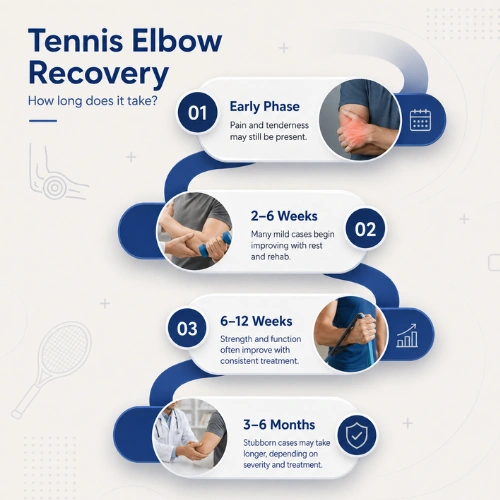
Recovery varies from person to person.
Some mild cases improve within a few weeks with early care and activity modification. More persistent cases may take several months. Chronic tennis elbow can take longer, especially if the tendon has been irritated for a long time.
A realistic recovery pattern may look like this:
First few weeks
Pain is reduced by avoiding aggravating activities, using simple pain-control measures and starting gentle movement.
4 to 8 weeks
Rehabilitation becomes more active. Strengthening exercises are introduced gradually, depending on pain levels.
8 to 12 weeks
Many patients start noticing improved grip, better function and reduced pain during daily tasks.
3 to 6 months
More chronic cases may need a longer recovery plan. Return to the gym, sport or repetitive work should be gradual.
The biggest mistake is expecting the tendon to heal in a few days. Tendons are slow-healing tissues. They need patience, consistency and the right amount of loading.
Can Tennis Elbow Come Back?
Yes, tennis elbow can return if the original cause is not corrected.
This may happen if a patient:
- Returns to heavy activity too quickly
- Stops exercises once pain improves
- Continues poor technique
- Does not correct work habits
- Keeps overloading the same tendon
- Ignores early warning signs
- Relies only on temporary pain relief
Prevention is an important part of recovery. Once the pain settles, the goal is to keep the tendon strong enough to handle daily and sporting demands.
Tips to Prevent Tennis Elbow From Getting Worse
Here are a few practical steps that may help:
- Avoid pushing through sharp elbow pain
- Reduce repeated gripping when symptoms flare
- Take breaks during long periods of computer work
- Warm up before sport or gym training
- Increase weights gradually
- Use the correct technique during exercises
- Stretch and strengthen the forearm regularly
- Avoid a sudden return to full activity after rest
- Get persistent pain assessed early
The earlier the condition is managed, the easier it is to prevent it from becoming chronic.
Why Specialist Care Matters
Elbow pain may look simple, but it can be more complex than patients expect. The elbow works closely with the wrist, hand and shoulder. A problem in one area can affect how the rest of the upper limb moves.
For example, poor shoulder control may increase strain through the forearm. Wrist stiffness may change gripping mechanics. Repetitive hand use may overload the elbow tendon.
This is why seeing a hand-to-shoulder specialist can be valuable. The assessment is not limited to the painful spot. It looks at the full upper-limb function and how the pain affects daily movement.
For patients looking for Tennis Elbow Treatment Dubai, this approach can help create a more personalised and practical recovery plan.
What to Expect During a Specialist Consultation
During a consultation, the doctor will usually begin by understanding your story.
You may be asked:
- When did the pain start?
- Was there any injury, or did it come gradually?
- What movements make it worse?
- Does it affect work, sport or sleep?
- Have you tried physiotherapy, braces or medication?
- Does the pain spread into the forearm or hand?
- Do you feel numbness, tingling or weakness?
Then, the elbow and surrounding areas are examined. The doctor may check strength, movement, tenderness and pain response during specific tests.
Based on the findings, a treatment plan may include rehabilitation, activity modification, bracing, imaging, injection options or further care if required.
A good consultation should give the patient a clear answer: what is causing the pain, what should be done now, what should be avoided and what recovery may realistically look like.
Final Thoughts
Tennis Elbow Treatment Dubai should focus on more than short-term pain relief; it should begin with accurate diagnosis, clear explanation and a recovery plan that helps the tendon regain strength and function. At Dr Marouane’s Orthopedic Clinic, patients can receive specialized assessments for tennis elbow symptoms, along with personalised treatment guidance. If your tennis elbow pain is persistent or returns during activities like gripping, lifting, or work, consider booking a consultation. Take the first step toward an effective recovery plan with one of Dubai’s leading orthopedic surgeons by contacting +971 544 226 123.