
Extensor Carpi Ulnaris (ECU) Tendon Subluxation as a Sports Injury
What is ECU tendon subluxation?
The extensor carpi ulnaris (ECU) is an important tendon located on the ulnar or little-finger side of the wrist. It contributes to:
- Wrist extension
- Ulnar deviation
- Dynamic stabilization of the ulnar wrist during gripping and forearm rotation
At the distal ulna, the tendon passes through a bony groove within the sixth dorsal compartment. A specialized fibrous structure called the ECU subsheath holds the tendon securely in this groove.
ECU subluxation occurs when the subsheath is torn or detached, allowing the tendon to move partially or sometimes completely out of its groove during forearm rotation.
It can be compared to a cable jumping out of its pulley because the retaining strap has ruptured.
Why does it occur in athletes?
The typical injury mechanism combines:
Forceful forearm supination
- wrist flexion
- ulnar deviation
- Strong ECU contraction
This places maximal stress on the ECU subsheath and may cause an acute tear or progressive attenuation.
Sports commonly associated with ECU instability include:
- Tennis and padel
- Golf
- Rugby and contact sports
- Water polo
- Hockey
- Weightlifting
- Gymnastics
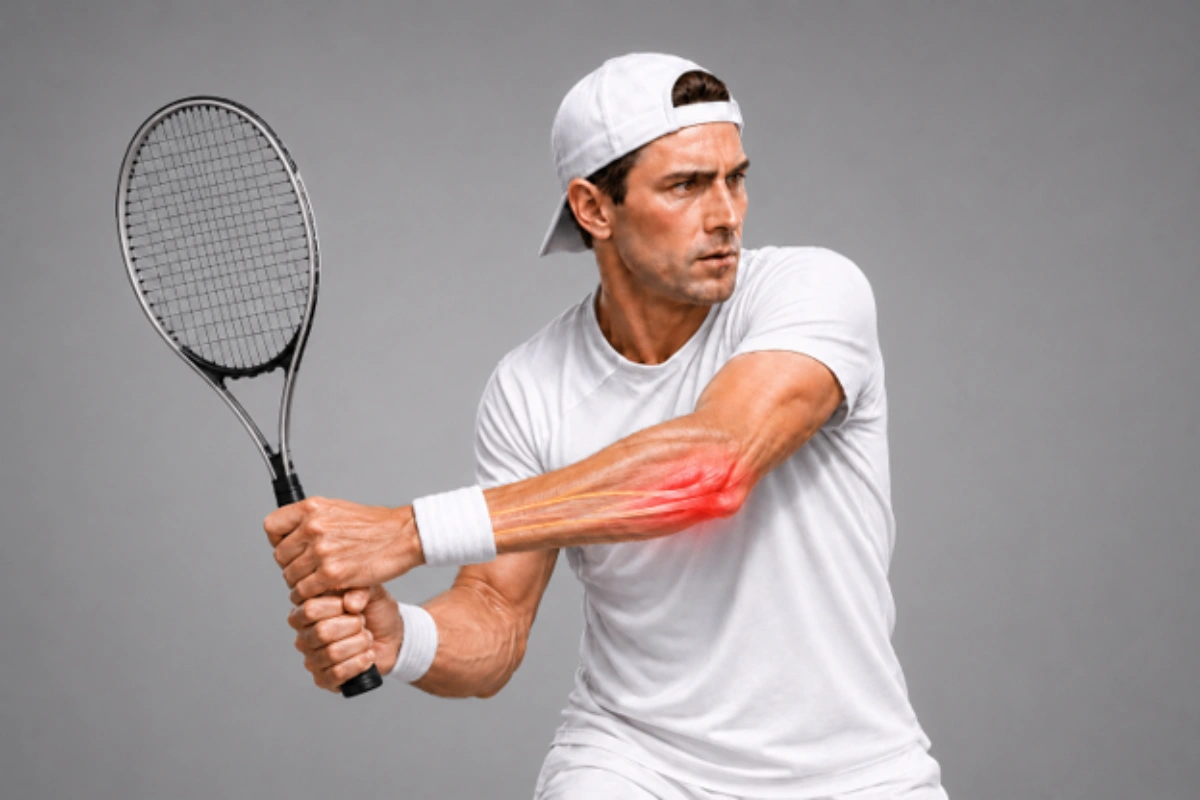
In racket sports, the injury may occur during a powerful forehand, two-handed backhand, late ball contact, or sudden deceleration of the racket.
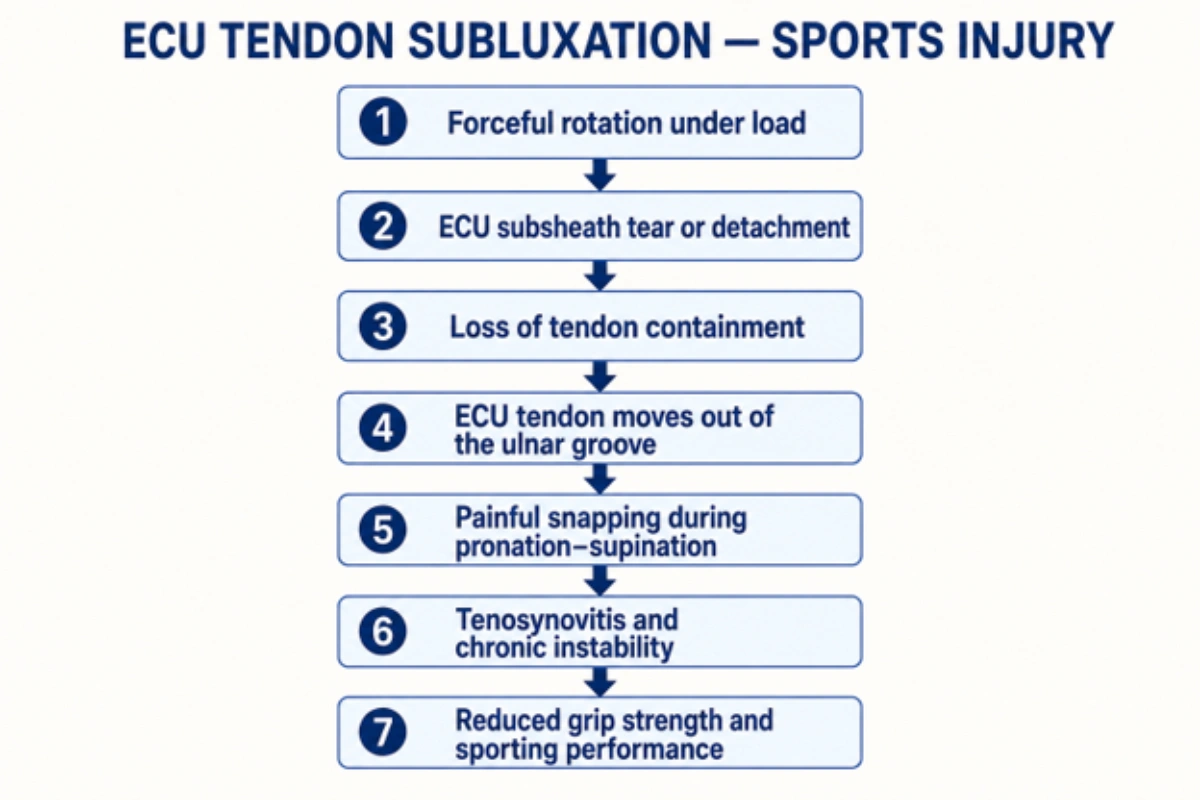
Pathological sequence
Forceful rotation under load
↓
ECU subsheath tear or detachment
↓
Loss of tendon containment
↓
ECU tendon moves out of the ulnar groove
↓
Painful snapping during pronation–supination
↓
Tenosynovitis and chronic instability
↓
Reduced grip strength and sporting performance
The tendon usually displaces toward the volar-ulnar side during supination and returns toward its groove during pronation.
Clinical presentation
The athlete commonly reports:
- Pain on the ulnar side of the wrist
- A sudden “pop” during the initial injury
- Painful snapping or clicking with forearm rotation
- A sensation that a tendon is moving over the distal ulna
- Pain with resisted wrist extension and ulnar deviation
- Reduced grip strength
- Difficulty controlling a racket, club, or weight
- Swelling and tenderness over the sixth dorsal compartment
Chronic cases may present mainly with recurrent snapping and loss of confidence during powerful sporting movements.
Clinical examination
The ECU tendon is palpated while the patient moves the forearm from pronation into supination.
Instability may become more apparent with:
- Forearm supination
- Wrist flexion and ulnar deviation
- Resisted ECU contraction
- The ECU subluxation test
- The ECU synergy test, although this is more commonly used to identify ECU-related pain and tendinopathy
The opposite wrist should always be examined because a degree of painless ECU translation can be physiological. The diagnosis therefore requires correlation between the observed movement and the patient’s symptoms.
Imaging
Dynamic ultrasound
Dynamic ultrasound is particularly useful because it shows the tendon moving while the athlete performs the provocative maneuver.
It can demonstrate:
- Volar displacement of the tendon
- Subluxation or complete dislocation
- Tendon splitting or degeneration
- Tenosynovitis
- Reduction of the tendon during pronation
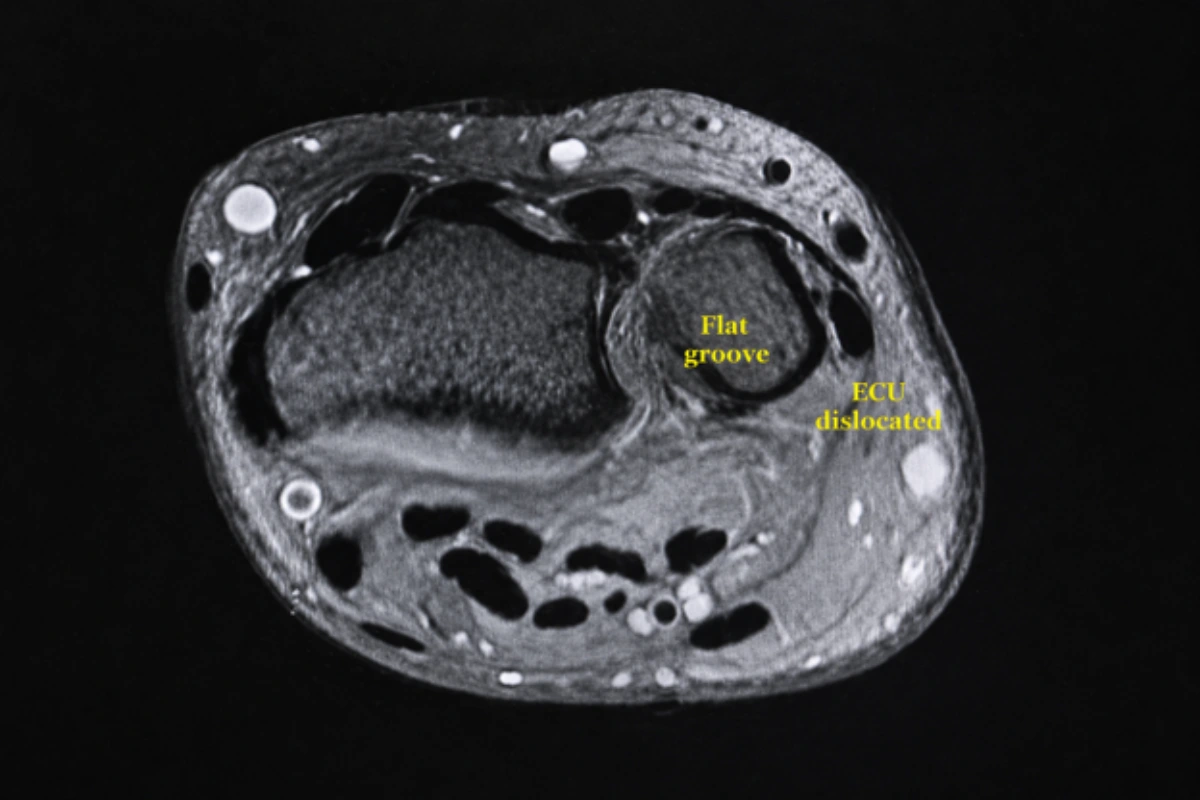
MRI
MRI evaluates:
- The ECU tendon
- The subsheath and extensor retinaculum
- Tendon degeneration or longitudinal splitting
- Associated TFCC injury
- Distal radioulnar joint pathology
- Other causes of ulnar-sided wrist pain
Static MRI can occasionally miss dynamic instability; therefore, the clinical examination and dynamic ultrasound remain important.
Differential diagnosis
Other causes of ulnar-sided wrist pain must be considered:
- ECU tendinopathy without instability
- TFCC tear
- Distal radioulnar joint instability
- Ulnocarpal impaction
- Lunotriquetral ligament injury
- Ulnar styloid pathology
- Pisotriquetral pathology
ECU subsheath and TFCC injuries may coexist.
Treatment
Acute injury
Early recognition offers the best opportunity for subsheath healing.
Initial management usually includes:
- Immediate cessation of sport
- Ice and swelling control
- Anti-inflammatory treatment when appropriate
- Immobilization for approximately six weeks
- Subsequent progressive rehabilitation
Immobilization is generally designed to keep the ECU tendon reduced, commonly with the forearm in pronation and the wrist in slight extension and radial deviation. A long-arm or Muenster-type construct may be required when forearm rotation must be controlled.
The exact position should be confirmed clinically or with dynamic ultrasound.
Rehabilitation
After immobilization:
- Restore pain-free wrist and forearm motion.
- Begin isometric ECU and grip exercises.
- Progress to controlled concentric strengthening.
- Introduce eccentric tendon loading.
- Restore proprioception and rotational control.
- Add sport-specific drills.
- Resume full-speed strokes or impact only after stability has been demonstrated.
Repeated provocative snapping should not be accepted during rehabilitation.
Surgical treatment
Tendon Surgery is considered when there is:
- Persistent painful subluxation
- Chronic symptomatic instability
- Failure of appropriate immobilization
- High athletic demand
- A tendon trapped outside the subsheath
- Associated tendon tearing or other ulnar-sided pathology
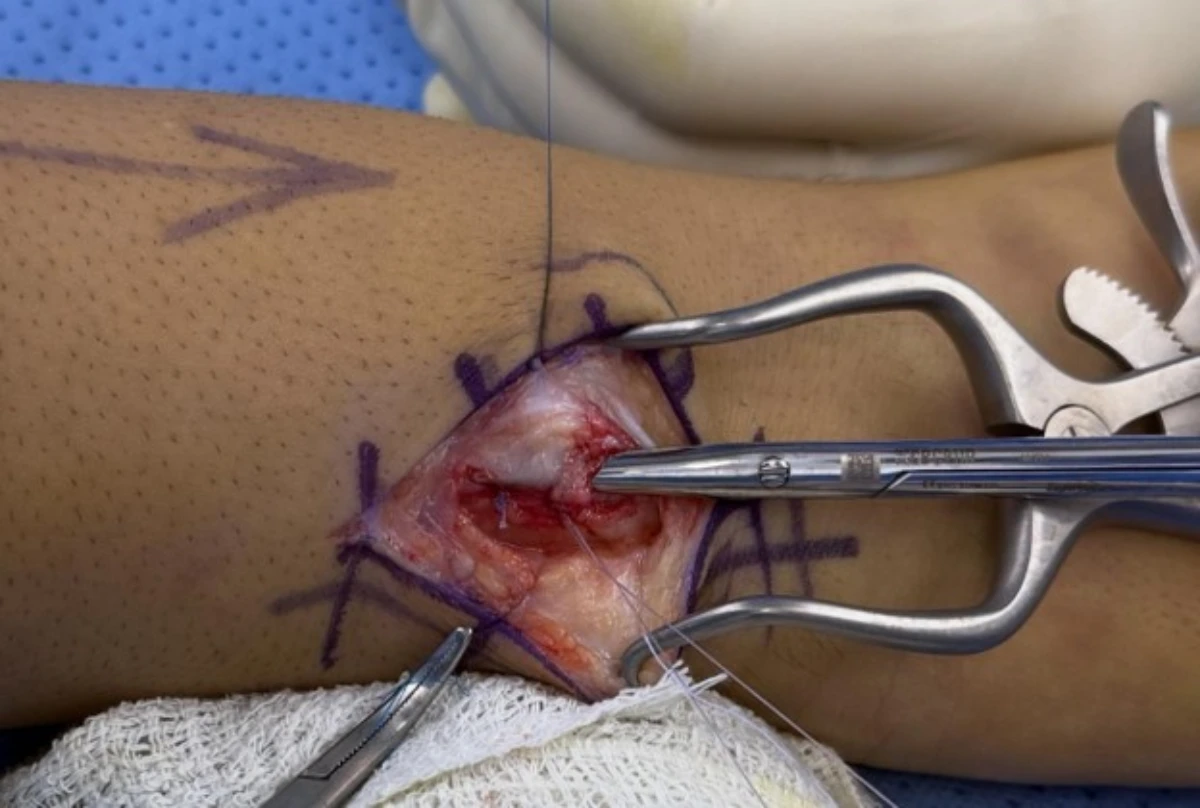
Surgical options include:
- Direct repair of an acute repairable subsheath tear
- Reattachment of the subsheath
- Reconstruction using an extensor-retinacular sling
- Treatment of associated ECU tendon degeneration
- Selective correction of an abnormal ulnar groove when indicated
The reconstruction must stabilize the tendon without making the compartment excessively tight, which could produce stenosis or impaired tendon gliding.
Return to sport
Return is based on function rather than time alone. The athlete should have:
- No pain or swelling
- No painful snapping
- Stable ECU tendon during rotation
- Full wrist and forearm motion
- Grip strength close to the opposite side
- Painless resisted ECU contraction
- Successful completion of sport-specific testing
Following surgical reconstruction, one athletic series reported unrestricted return to sport at approximately three months on average, but the timeline must be individualized according to tissue healing, associated injuries, and sporting demands.
Key message
ECU tendon subluxation is an important and frequently overlooked cause of ulnar-sided wrist pain in athletes. The essential lesion is a tear of the ECU subsheath, not simply inflammation of the tendon. Dynamic ultrasound is particularly valuable, acute injuries may heal with correctly positioned immobilization, and persistent symptomatic instability may require subsheath repair or reconstruction.
Sources: Comprehensive review of ECU instability, Sports-related ECU pathology review, Operative management systematic review, Athletic outcomes after retinacular sling reconstruction.