
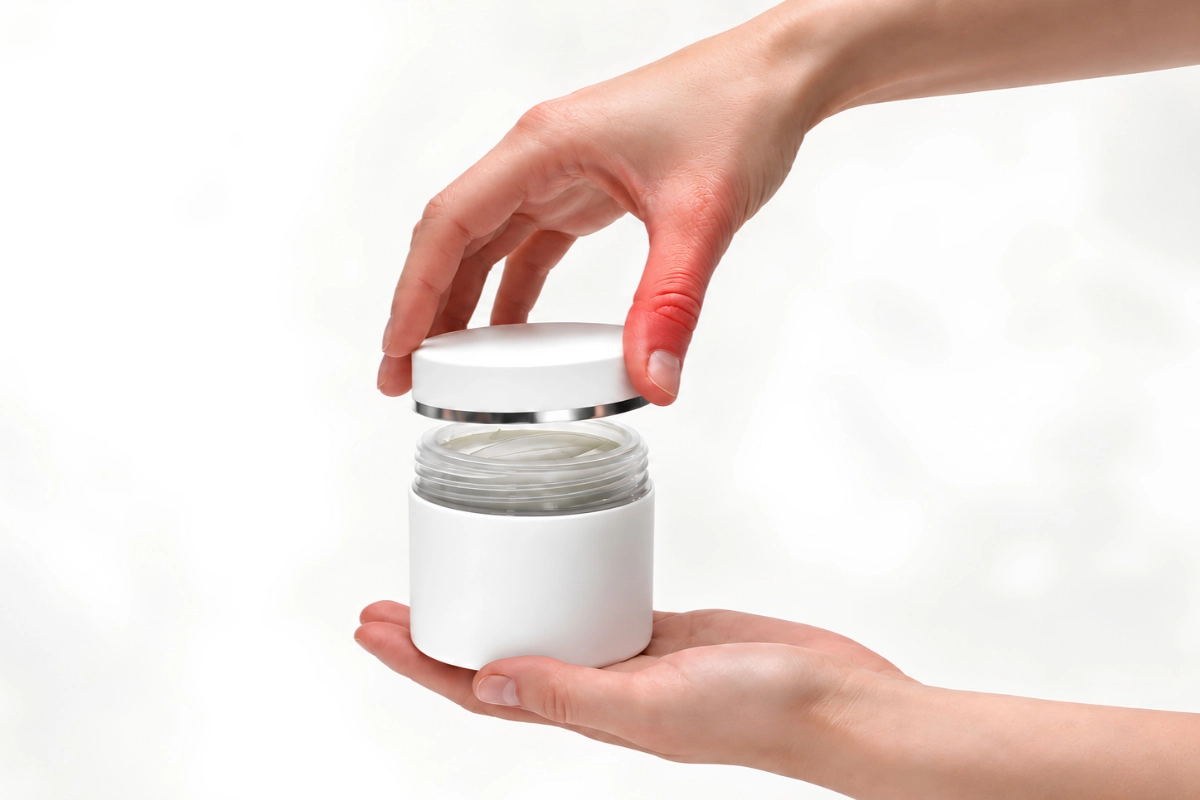
Why Does My Thumb Hurt When I Grip or Open a Jar?
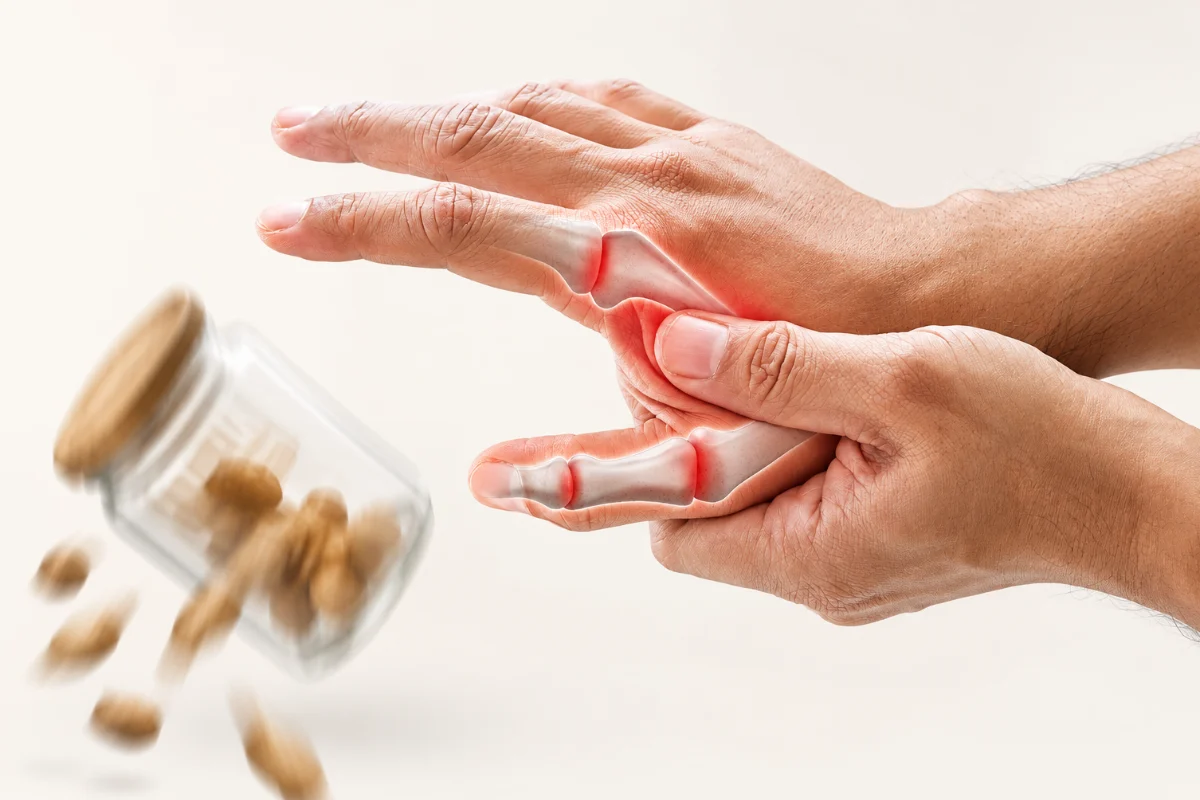
If opening a jar, turning a key or gripping a bottle causes thumb pain, the movement itself can provide an important clue about the underlying cause.
Pain during gripping, pinching and twisting is commonly associated with arthritis at the base of the thumb, but it can also come from irritated thumb tendons, trigger thumb, a ligament injury or, in some cases, a nerve problem.
The location of the pain matters. Pain directly at the base of the thumb is different from pain running along the thumb side of the wrist. Clicking or locking suggests a different problem again, while pain and weakness following an injury raise concern about a ligament or fracture.
In fact, the British Society for Surgery of the Hand guidance on basal thumb arthritis specifically identifies difficulty opening jars and turning keys as characteristic symptoms of arthritis at the base of the thumb.
That does not mean everyone whose thumb hurts opening a jar has arthritis. It means the pattern deserves to be interpreted alongside the exact location of pain, the patient’s age, thumb movement, strength and whether there has been an injury.
Why does opening a jar put so much pressure on the thumb?
The thumb does much more than simply move back and forth.
When you open a jar, turn a key or twist a bottle cap, the thumb must oppose the fingers while maintaining a strong pinch or grip. The joint at the base of the thumb also needs to remain stable while force is transferred through it.
This places substantial demand on a relatively small joint.
The basal joint, also called the thumb carpometacarpal or CMC joint, is where the first metacarpal bone of the thumb meets a small wrist bone called the trapezium. Its shape gives the thumb a wide range of movement, including the opposition that allows us to pinch and grip.
That mobility is extremely useful, but it also means the joint is exposed to repeated loading during everyday activities.
If the cartilage in this joint has become worn, or if the tendons or ligaments surrounding the thumb are painful, tasks involving twisting and pinching may become some of the first activities to cause symptoms.
1. Thumb base arthritis is a common cause
If your pain is located directly at the base of the thumb and is particularly noticeable when opening jars, turning keys or gripping strongly, thumb base osteoarthritis is one of the most important possibilities.
Osteoarthritis develops when the smooth cartilage covering the surfaces of a joint becomes thinner and rougher.
At the thumb base, this can gradually make loaded movement painful.
The BSSH patient guidance on basal thumb arthritis describes the typical symptoms as pain and tenderness at the base of the thumb, difficulty with tasks such as opening jars or turning a key, stiffness and some loss of thumb movement.
Patients may describe seemingly simple activities becoming surprisingly uncomfortable, including opening a tight lid, using scissors, twisting a door handle, holding a heavy pan or squeezing something between the thumb and fingers.
Does pain at the base of the thumb always mean arthritis?
No.
The location makes thumb-base arthritis more likely, particularly in middle age and later life, but imaging and examination may be necessary to separate arthritis from tendon problems, ligament injuries or other causes.
Another important point is that arthritis on an X-ray does not automatically mean the arthritis is causing the pain.
The BSSH notes that many people have radiographic thumb-base arthritis without significant symptoms.
That distinction is important for Dr. Marouane’s approach to hand pain: the X-ray needs to match where the patient hurts, which movements reproduce the symptoms and how much function has actually been lost.
How is thumb arthritis treated?
Treatment usually begins without surgery.
The BSSH recommendations for patients with basal thumb arthritis include modifying painful activities, appropriate pain or anti-inflammatory medication, and splinting to support the thumb. A corticosteroid injection may also provide relief in selected patients, although the effect can wear off with time.
Hand therapy can also be helpful, particularly when patients need advice on joint protection, grip modification and maintaining useful thumb movement.
For example, using a jar-opening device is not simply “giving in” to arthritis. Reducing unnecessary force through a painful joint may allow a patient to continue using the hand more comfortably.
When is surgery considered for thumb arthritis?
Surgery is generally considered when symptoms remain significantly limiting despite appropriate non-surgical treatment.
Several operations are available, and the appropriate choice depends on the patient’s joint condition, age, activity demands and individual priorities.
Surgical options include trapeziectomy-based procedures, CMC fusion and, in appropriately selected patients, CMC joint replacement using a prosthesis. The choice depends on the patient’s joint condition, functional requirements, age, activity level and individual priorities.
The existence of arthritis on an X-ray alone is therefore not an indication for surgery.
CMC Prosthesis: Thumb Base Joint Replacement
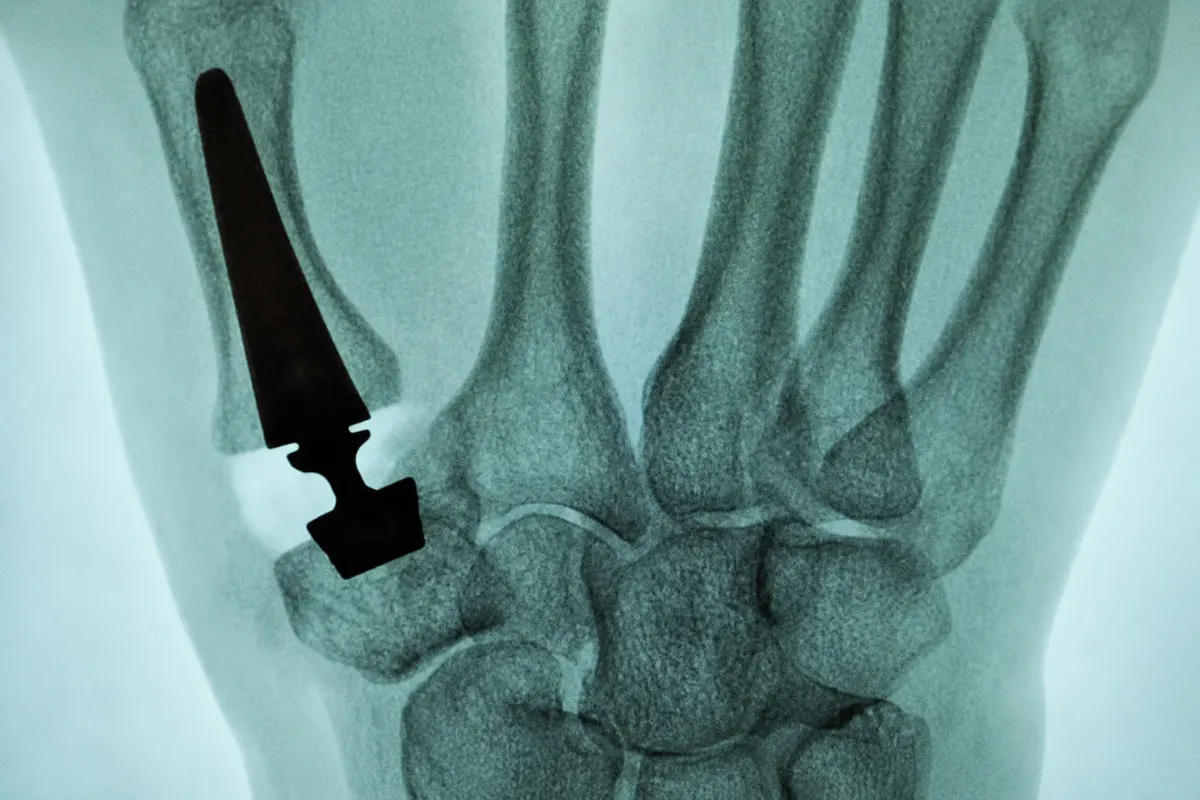
For patients with symptomatic thumb carpometacarpal (CMC) arthritis whose pain and loss of function persist despite appropriate non-surgical treatment, CMC joint replacement with a prosthesis may be considered.
A CMC prosthesis is designed to replace the damaged joint surfaces at the base of the thumb while preserving thumb movement. The procedure involves removing the damaged joint surfaces and implanting a prosthetic joint designed to restore a functional articulation between the thumb metacarpal and the trapezium.
The potential advantages of CMC joint replacement include:
- preservation of thumb movement and opposition;
- reduction of pain caused by the arthritic joint;
- restoration of useful pinch and grip function;
- earlier functional use in appropriately selected patients compared with some traditional procedures.
However, CMC prosthesis is not suitable for every patient. The choice depends on the severity and pattern of arthritis, bone quality, joint stability, thumb function, activity requirements and the patient’s expectations. A hand surgeon should assess the joint clinically and with appropriate X-rays before recommending replacement.
As with any joint replacement, potential complications include infection, implant loosening or failure, instability, fracture, persistent pain and the possibility of revision surgery. Long-term implant survival and clinical outcomes also need to be considered when choosing between prosthetic replacement and other surgical options.
CMC Prosthesis or Trapeziectomy?
Both CMC joint replacement and trapeziectomy-based procedures are established surgical approaches for symptomatic thumb-base arthritis. The choice should be individualised rather than based on the X-ray appearance alone.
For Dr. Marouane’s approach, the key consideration is whether the patient’s pain, functional limitation, joint stability, imaging findings and response to conservative treatment support joint replacement. Surgery should generally be considered when symptoms remain significantly limiting despite appropriate non-surgical management.
2. De Quervain’s syndrome can also make gripping painful
If the pain is not directly in the thumb joint but instead runs along the thumb side of the wrist, another possibility is De Quervain’s syndrome.
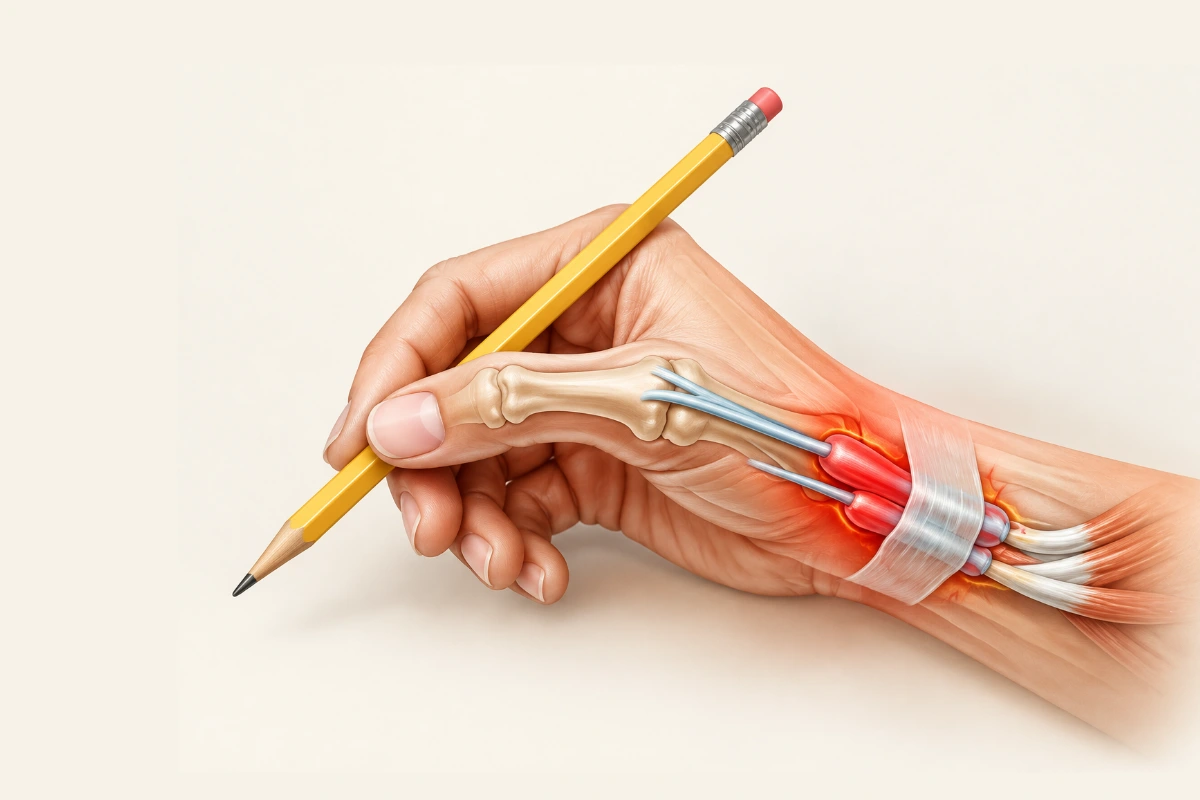
De Quervain’s affects two tendons as they travel through a narrow tunnel near the wrist.
The British Society for Surgery of the Hand explanation of De Quervain’s syndrome describes pain on the thumb side of the wrist, tenderness, possible swelling and occasional clicking or snapping of the tendons.
Gripping, twisting, lifting and repetitive thumb movements can aggravate the pain, which is why opening a jar can be particularly uncomfortable.
A patient may initially assume the thumb joint itself is painful when the actual source is several centimetres lower, close to the wrist.
Who develops De Quervain’s?
Sometimes there is no obvious cause.
It may occur after a change in hand activity, repetitive gripping or lifting, and is also commonly recognised in people caring for young babies.
The BSSH cautions against assuming it is simply an “overuse injury,” because the exact cause is not always clear, although hand activity can certainly aggravate symptoms.
 Does De Quervain’s require surgery?
Usually not initially.
The BSSH treatment guidance for De Quervain’s syndrome includes reducing activities that aggravate symptoms, using an appropriate thumb-and-wrist splint and considering a corticosteroid injection in selected patients. Surgical release of the tendon tunnel is an option when symptoms remain troublesome despite appropriate non-surgical care.
3. Trigger thumb can make gripping or squeezing painful
If the thumb clicks, catches or locks while you bend and straighten it, the problem may be trigger thumb.
Trigger thumb develops when the flexor tendon does not glide smoothly through its tendon tunnel.
Patients often feel pain or tenderness on the palm side of the thumb and may notice a clicking sensation when moving it. In more pronounced cases, the thumb can temporarily lock in a bent position.
Gripping an object can aggravate trigger thumb because the flexor tendon repeatedly moves through the narrowed area as the thumb bends.
The location is again useful: trigger thumb pain tends to be more toward the palm side of the thumb rather than deep at the basal joint or along the wrist.
Some mild cases settle without intervention. Depending on the severity, treatment may include activity modification, splinting, corticosteroid injection or surgical release when persistent triggering remains functionally limiting.
4. A thumb ligament injury can weaken your grip
Pain during gripping after an injury deserves particular attention.
The ulnar collateral ligament, or UCL, stabilises the main knuckle joint of the thumb and is particularly important when pinching and gripping.
It can be injured when the thumb is suddenly forced away from the hand, classically during a fall while holding something.
This injury is often called skier’s thumb when it occurs suddenly and gamekeeper’s thumb when instability develops more gradually.
According to the British Society for Surgery of the Hand guidance on skier’s thumb, damage to the UCL can lead to pain, swelling and weakness when pinching or gripping.
Unlike gradual thumb arthritis, the patient can often identify a particular injury. You might notice pain around the inside of the thumb knuckle, bruising, swelling or a sense that the thumb feels unstable when you pinch something between the thumb and index finger.
 Does a thumb ligament tear always need surgery?
No. Treatment depends on whether the ligament is partially or completely torn and whether the joint has become unstable.
BSSH guidance states that partial injuries are commonly treated with immobilisation followed by rehabilitation, while a displaced or complete tear may require surgical repair in selected cases.
A painful thumb after trauma should therefore not simply be assumed to be a minor sprain if grip remains weak or the joint feels unstable.
5. Could it simply be a thumb strain?
Yes. Not every painful thumb represents arthritis or a tendon disorder.
A sudden increase in hand activity, strong repetitive gripping, DIY work, racket sport or an unusual lifting task can irritate muscles, tendons and soft tissues around the thumb.
Symptoms from a minor strain may improve when the aggravating activity is reduced.
The NHS guidance on thumb pain recommends reducing painful gripping activities, keeping the thumb gently mobile and considering a supportive splint where appropriate. It also advises seeking assessment if symptoms are worsening, recurrent or have not improved with initial self-care.
The challenge is knowing when persistent “strain” is actually an early presentation of arthritis, De Quervain’s syndrome or another hand condition.
Pain that repeatedly returns every time you grip something should not simply be ignored indefinitely.
6. What if my thumb feels numb or weak rather than painful?
A different pattern is weakness accompanied by tingling or numbness.
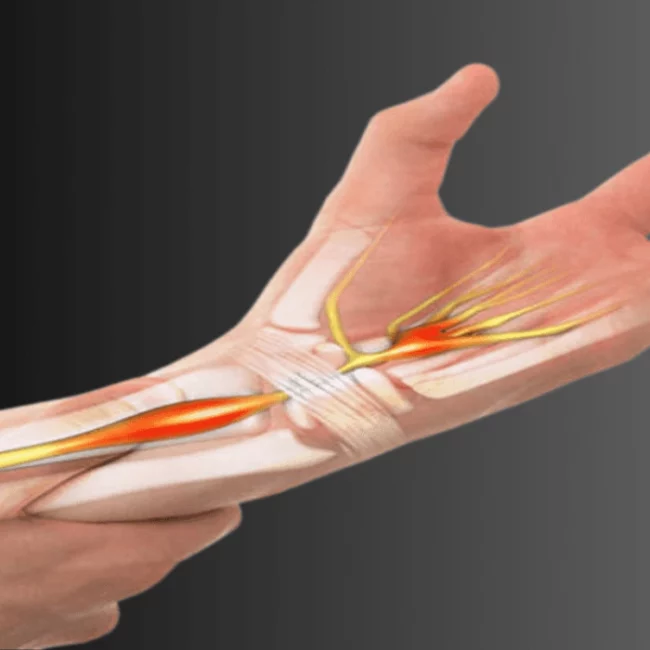
That may suggest carpal tunnel syndrome, particularly when symptoms affect the thumb, index and middle fingers and become worse at night.
Carpal tunnel syndrome occurs when the median nerve is compressed as it passes through the wrist.
The British Society for Surgery of the Hand information on carpal tunnel syndrome explains that median nerve compression can cause tingling, numbness and weakness, including difficulty gripping or dropping objects.
The patient may describe their thumb as painful or “not working properly,” when the primary issue is actually reduced nerve function rather than a painful thumb joint.
This is especially relevant when grip weakness is accompanied by numbness or pins and needles.
Where exactly does your thumb hurt?
Pain location can provide useful diagnostic clues.
Pain directly at the base of the thumb near the wrist may suggest basal thumb arthritis.
Pain along the thumb side of the wrist may suggest De Quervain’s syndrome.
Pain on the palm side of the thumb with clicking or locking may suggest trigger thumb.
Pain around the thumb knuckle after an injury may suggest a ligament injury.
Numbness, tingling and loss of grip strength raise the possibility of nerve compression such as carpal tunnel syndrome.
These patterns are helpful, but they are not substitutes for examination. More than one condition can also exist at the same time.
Why does pinching sometimes hurt more than making a fist?
Pinching places a particularly high demand on the thumb.
When you hold a key, twist a jar lid or grip a pen, the thumb must oppose the index finger while the basal joint absorbs force.
This is why patients with thumb-base arthritis may be able to make a fist relatively comfortably but experience significant pain trying to open a jar.
The problem is not necessarily general hand weakness. It may be that one particular joint or tendon becomes painful when subjected to pinch loading.
Do I need an X-ray or MRI for thumb pain?
Not always. The appropriate test depends on what the examination suggests.
When thumb arthritis is suspected, a plain X-ray can often provide useful information about the joint.
If a ligament injury is suspected after trauma, X-rays may be used to look for associated fractures, while ultrasound or other imaging may sometimes help assess the ligament. The BSSH guidance on thumb UCL injuries recommends assessment based on the history, physical examination and X-rays in acute injuries rather than relying on imaging alone.
Ultrasound can also be useful for certain tendon conditions.
MRI is not automatically required for every patient with thumb pain.
For Dr. Marouane, imaging is most useful when it answers a specific clinical question rather than being ordered simply because the thumb hurts.
Should I keep using my thumb if gripping hurts?
Complete avoidance of thumb movement is rarely the goal unless an injury specifically requires immobilisation.
However, repeatedly forcing a painful movement can also be unhelpful.
If opening jars is painful, temporarily using an assistive device or asking for help reduces the amount of force passing through the painful structure.
The NHS advice for managing thumb pain suggests reducing activities that aggravate symptoms, avoiding unnecessarily tight gripping and using practical aids for tasks such as opening jars when needed.
The right balance depends on the diagnosis. A painful arthritic joint, irritated tendon and unstable ligament are not managed in exactly the same way.
Will a thumb splint help?
It can, depending on the cause.
For thumb-base arthritis, a supportive splint can reduce painful movement and loading through the basal joint.
For De Quervain’s syndrome, the splint generally needs to support both the wrist and the thumb rather than only the thumb itself.
For a ligament injury, the type and duration of immobilisation depend on how much of the ligament has been damaged.
This is why selecting a splint based only on an online picture may not always provide the right support.
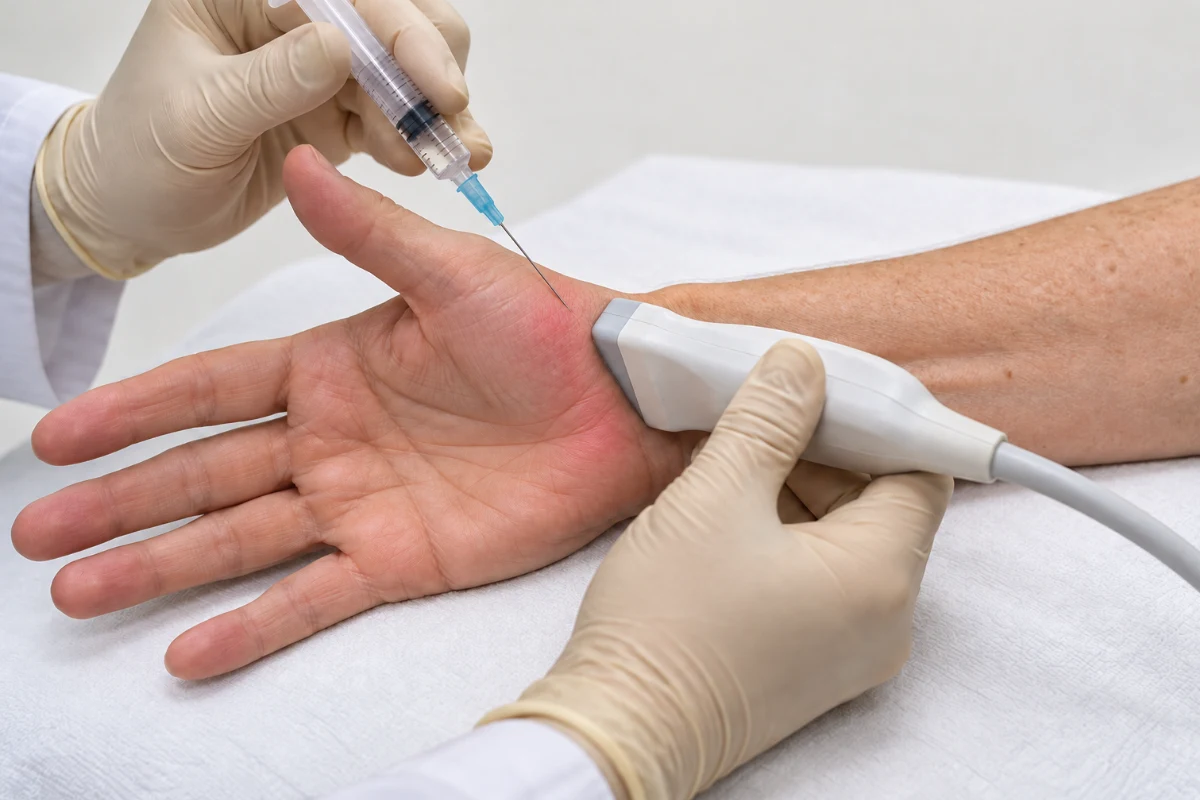
Can an injection help thumb pain?
An injection may be appropriate for selected conditions, but the diagnosis needs to come first.
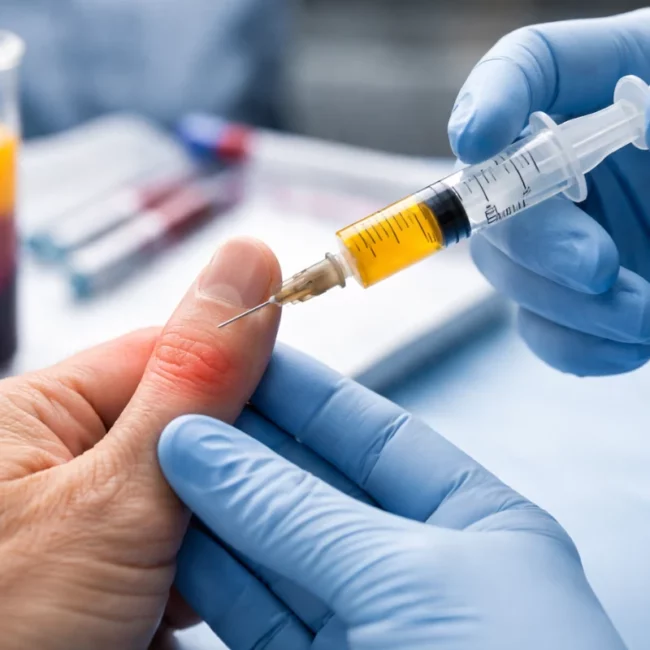
Corticosteroid injections can be considered for thumb-base arthritis, De Quervain’s syndrome and trigger thumb, depending on the patient’s symptoms and clinical findings.
An injection does not repair an unstable ligament, and it should not be used as a substitute for diagnosing an injury.
Benefits can also vary between patients, and symptom improvement may be temporary.
 When is thumb surgery considered?
Most patients with thumb pain do not begin with surgery.
Surgery may become appropriate when there is a clearly identified structural condition that remains significantly limiting despite appropriate non-surgical care.
Examples include persistent symptomatic thumb-base arthritis, ongoing De Quervain’s syndrome despite appropriate treatment, troublesome trigger thumb or certain complete thumb-ligament injuries.
The operation is determined by the diagnosis. There is no single “thumb pain surgery.”
Just as importantly, the severity of pain alone does not determine whether an operation is needed. Function, stability, examination findings, imaging and response to previous treatment all need to be considered.
When should thumb pain be assessed?
Pain from a minor strain can settle, but an assessment becomes more important when symptoms are persistent, recurrent or affecting normal hand function.
The NHS thumb pain guidance advises seeking medical assessment if pain is stopping normal activities, is getting worse or repeatedly returning, has not improved after initial self-care, or is accompanied by tingling or loss of sensation.
Earlier assessment is particularly appropriate after an injury if you develop significant swelling, bruising, grip weakness or a feeling that the thumb joint is unstable.
When is thumb pain urgent?
Seek prompt medical attention following an injury if the thumb has changed shape or colour, you cannot move it or hold objects, there has been a significant snapping or grinding sensation, or you have lost sensation.
These warning signs are included in current NHS advice on thumb pain and thumb injuries because they can be associated with fracture, dislocation or another significant injury.
A painful thumb following trauma should also be assessed sooner if swelling and grip weakness are substantial rather than gradually improving.
Frequently Asked Questions
Why does the base of my thumb hurt when I open a jar?
Thumb-base osteoarthritis is one common cause because opening a jar requires strong pinch and twisting forces through the basal thumb joint. De Quervain’s syndrome and other tendon problems can cause similar symptoms, so pain location and examination are important.
Does thumb pain when gripping mean I have arthritis?
Not necessarily. Arthritis is common, especially when pain is directly at the thumb base, but tendon disorders, trigger thumb, ligament injuries and nerve compression can also affect grip.
Can thumb arthritis occur even if I am relatively young?
Yes, although it becomes more common with age. Previous joint injury and other factors can contribute, and symptoms do not always correspond directly with the amount of arthritis seen on an X-ray.
Why does turning a key hurt my thumb?
Turning a key requires both pinch strength and rotation through the thumb base. These forces can aggravate basal thumb arthritis or painful surrounding tendons.
Is De Quervain’s pain in the thumb or wrist?
It is usually felt on the thumb side of the wrist and may extend toward the thumb or up the forearm. Tenderness near the wrist rather than directly in the thumb-base joint can help distinguish it from arthritis.
Why does my thumb click when I grip something?
Clicking or locking can be a sign of trigger thumb, particularly when tenderness is located on the palm side of the thumb.
Can a thumb ligament injury affect grip strength?
Yes. The ulnar collateral ligament helps stabilise the thumb during pinch and grip. A significant injury can make the thumb painful, weak or unstable.
Does thumb arthritis always get worse?
Not necessarily in a predictable way. Structural arthritis can progress over time, but symptoms vary considerably. Some people have noticeable X-ray changes with little pain, while others have significant functional symptoms.
Will I eventually need surgery for thumb arthritis?
Not necessarily. Many patients manage symptoms with activity modification, splinting, medication, therapy or selected injections. Surgery is generally considered when symptoms remain significantly limiting despite appropriate non-surgical treatment.
Can carpal tunnel syndrome cause thumb weakness?
Yes. The median nerve supplies muscles involved in thumb movement, and carpal tunnel syndrome can cause weakness or clumsiness alongside numbness and tingling.
Should I stop using my hand completely?
Usually not unless an acute injury requires immobilisation. It is often more appropriate to temporarily modify painful tasks and reduce heavy gripping while maintaining comfortable movement.
When should I see a hand surgeon?
Specialist assessment may be appropriate when thumb pain persists, repeatedly affects gripping or pinching, is associated with weakness or instability, follows a significant injury, or has not improved with appropriate conservative treatment.
The painful task often gives us a clue, but not the whole diagnosis
Opening a jar can look like a simple everyday task, but it places substantial force through the thumb.
For one patient, that force exposes arthritis at the base of the thumb. For another, the problem is an irritated tendon on the wrist side of the thumb. Clicking may suggest trigger thumb, while weakness following an injury raises a different concern about ligament stability.
For Dr. Marouane, Senior Orthopaedic Surgeon – Hand to Shoulder in Dubai, the aim is therefore not simply to treat “thumb pain.” The location of pain, joint stability, tendon function, grip and pinch strength, sensation and appropriate imaging need to be considered together.
Many causes of thumb pain can be treated without surgery. When gripping, pinching or opening everyday objects has become persistently painful, however, identifying the structure responsible can help determine whether simple activity changes, splinting, hand therapy, an injection or another form of treatment is appropriate.
Medical Disclaimer
This article provides general educational information and does not replace individual medical advice, diagnosis or treatment. Treatment suitability depends on the patient’s symptoms, examination findings, investigations, medical history and individual clinical circumstances.