



Carpal Tunnel Syndrome: Symptoms, Causes, and Treatment Options
Numb fingers, tingling at night, a weak grip, or a hand that keeps “falling asleep” can feel like a small inconvenience at first. Many people shake their hands, stretch their wrists, adjust their sleeping positions, and carry on. But when these symptoms keep coming back, especially during work, sleep or daily hand use, they should not be ignored.
Carpal Tunnel Syndrome is one of the most common nerve compression problems affecting the hand and wrist. It can disturb sleep, make typing uncomfortable, reduce grip strength and affect simple tasks like holding a phone, buttoning a shirt or opening a jar. The reassuring part is that Carpal Tunnel Treatment can be very effective when the condition is diagnosed early and managed properly.
What Is Carpal Tunnel Syndrome?
Carpal Tunnel Syndrome happens when the median nerve gets compressed at the wrist.
The median nerve travels from the forearm into the hand through a narrow passage called the carpal tunnel. This tunnel contains the median nerve and tendons that help move the fingers. Because the space is limited, any swelling, pressure or narrowing inside the tunnel can irritate or compress the nerve.
The median nerve gives sensation to the thumb, index finger, middle finger and part of the ring finger. It also helps control some of the muscles at the base of the thumb.
When this nerve is under pressure, the hand may develop numbness, tingling, pain or weakness.
In simple words, Carpal Tunnel Syndrome is not just “wrist pain”. It is a nerve compression condition. That is why early assessment matters.
Why Does Carpal Tunnel Syndrome Happen?
Carpal Tunnel Syndrome can develop for different reasons. Sometimes, it is linked to repeated hand and wrist use. In other cases, it may be related to health conditions, swelling, anatomy or changes inside the wrist.
Common causes and risk factors include:
- Repeated wrist and hand movements
- Long hours of typing or mouse use
- Repetitive gripping or tool use
- Wrist positions that stay bent for long periods
- Swelling around the wrist tendons
- Previous wrist injury
- Pregnancy-related fluid retention
- Diabetes
- Thyroid problems
- Inflammatory conditions
- Age-related changes
- Family tendency or naturally smaller carpal tunnel space
For many patients, there is not one single cause. It is often a combination of nerve sensitivity, wrist position, repetitive strain and individual health factors.
This is why two people may do similar work, but only one develops symptoms. The condition depends on the nerve, the tunnel space, the tissue around it and the patient’s overall risk factors.
Carpal Tunnel Symptoms: What Should You Look For?
Carpal Tunnel Symptoms usually develop slowly. They may come and go at first, then become more frequent as the nerve irritation increases.
Common symptoms include:
- Tingling in the thumb, index, middle or ring finger
- Numbness in the hand or fingers
- Pain in the wrist or hand
- Burning or electric-like sensations
- Symptoms that are worse at night
- Waking up and needing to shake the hand
- Weak grip strength
- Dropping objects more often
- Difficulty holding a phone, book or steering wheel
- Discomfort while typing or using a mouse
- Hand weakness during fine tasks
- Pain spreading into the forearm in some cases
A key point is that the little finger is usually not affected in typical Carpal Tunnel Syndrome. This is because the little finger is supplied by a different nerve.
If numbness involves the little finger, another nerve problem may also need to be considered.
Why Are Symptoms Often Worse at Night?
Many patients with Carpal Tunnel Syndrome say their symptoms are worse at night or early in the morning.
This often happens because the wrist may bend during sleep without the patient noticing. A bent wrist can increase pressure inside the carpal tunnel and irritate the median nerve.
That is why some people wake up with tingling, numbness or pain and feel the need to shake the hand to get relief.
Night symptoms are very common in Carpal Tunnel Syndrome. If they are happening repeatedly, it is usually a sign that the nerve is being irritated often enough to need medical attention.
Early vs Advanced Carpal Tunnel Syndrome
Carpal Tunnel Syndrome can range from mild to severe.
In the early stage, symptoms may appear only occasionally. The patient may feel tingling after typing, driving, using tools or sleeping with the wrist bent.
In the moderate stage, symptoms may become more frequent. Night waking may happen often. Daily tasks may become uncomfortable, and grip may start feeling weaker.
In the advanced stage, numbness may become more constant. The muscles at the base of the thumb may become weaker or smaller. Fine hand function may be affected.
Advanced nerve compression needs urgent attention because long-standing nerve pressure can sometimes lead to lasting weakness or sensory changes.
This is why waiting too long is not always safe.
When Should You See a Doctor?
You should consider seeing a specialist if symptoms are recurring, worsening or affecting daily function.
It is especially important to get assessed if you have:
- Tingling or numbness that keeps returning
- Night symptoms that disturb sleep
- Weak grip strength
- Difficulty holding objects
- Symptoms lasting more than a few weeks
- Numbness that becomes constant
- Thumb weakness
- Hand clumsiness
- Symptoms in both hands
- Pain spreading into the forearm
- No improvement with basic measures
Many people delay care because the symptoms come and go. But nerve compression should not be ignored if it becomes a pattern.
The earlier Carpal Tunnel Syndrome is diagnosed, the more options there may be for treatment.
How Is Carpal Tunnel Syndrome Diagnosed?
Diagnosis begins with a detailed consultation and examination.
The doctor will usually ask about:
- Which fingers are affected
- When symptoms started
- Whether symptoms are worse at night
- What activities trigger the tingling or numbness
- Whether grip strength has changed
- Whether objects are slipping from the hand
- Work habits and repetitive hand use
- Past wrist injuries
- Medical conditions such as diabetes or thyroid disease
- Previous treatment tried
The hand and wrist are then examined. The doctor may check sensation, thumb muscle strength, wrist movement and specific signs that reproduce nerve symptoms.
In some cases, tests may be advised.
These may include:
Nerve conduction studies
These tests measure how well the median nerve is working. They can help confirm the diagnosis and grade the severity.
Ultrasound
Ultrasound may be used to assess the median nerve and surrounding structures.
X-ray
An X-ray is not used to diagnose nerve compression directly, but it may be helpful if there is a history of wrist injury, arthritis or bony changes.
The goal is not just to label the condition. The goal is to understand how severe it is and what treatment is most appropriate.
Carpal Tunnel Treatment: What Are the Options?
Carpal Tunnel Treatment depends on the severity of symptoms, how long they have been present, whether there is weakness, and how much the condition affects daily life.
Treatment may be non-surgical or surgical.
Mild and early cases may improve with splints, activity changes and guided care. More severe or long-standing cases may need Carpal Tunnel Surgery to release pressure on the median nerve.
The right plan should always be personalised.
1. Wrist Splinting

A wrist splint is often one of the first treatment options for mild to moderate Carpal Tunnel Syndrome.
The splint helps keep the wrist in a neutral position, especially during sleep. This reduces bending at the wrist and may lower pressure on the median nerve.
Night splinting can be particularly useful for patients who wake up with tingling or numbness.
A splint should not be too tight. It should support the wrist without compressing the hand.
Splinting may help symptoms, but it does not always solve the condition if nerve compression is significant or advanced.
2. Activity Modification
Activity modification means changing the way the wrist and hand are used during daily tasks.
This may include:
- Taking breaks during typing or mouse use
- Avoiding prolonged wrist bending
- Reducing repetitive gripping
- Changing tool position
- Improving workstation ergonomics
- Keeping the wrist neutral while using devices
- Avoiding sleeping with the wrist bent
- Alternating tasks during the day
- Reducing vibration exposure when possible
Small changes can reduce repeated pressure on the nerve.
However, activity modification works best when symptoms are early. If numbness is constant or weakness is present, more active treatment may be needed.
3. Hand Therapy and Exercises
Hand therapy may help selected patients, especially when symptoms are mild or related to posture, stiffness or repetitive strain.
A therapist may guide:
- Nerve gliding exercises
- Tendon gliding exercises
- Wrist position correction
- Gentle mobility work
- Strength and function training
- Ergonomic advice
- Splint use guidance
These exercises should be done correctly. Aggressive stretching or repeated forceful wrist movement may irritate symptoms.
For Carpal Tunnel Syndrome, the goal is to reduce nerve irritation, improve movement and support safer hand use.
4. Medication and Pain Relief
Pain relief may be used for short-term comfort, especially if pain is disturbing sleep or daily activities.
However, medication does not remove pressure from the median nerve. It may reduce discomfort, but it is not a complete solution for nerve compression.
Anti-inflammatory medicines may not always help if the main problem is mechanical pressure on the nerve. They should be taken only if suitable for the patient and advised by a doctor.
5. Steroid Injection

A steroid injection may be considered in some patients with Carpal Tunnel Syndrome.
The aim is to reduce swelling or inflammation around the carpal tunnel and relieve pressure on the median nerve. It may provide symptom relief, especially in mild to moderate cases.
However, the effect may be temporary for some patients. Symptoms can return if the nerve compression continues.
Steroid injection may also be useful when symptoms are linked to temporary swelling, such as during pregnancy, although this decision should be made carefully with medical guidance.
It is not usually the best long-term solution for severe nerve compression with weakness or muscle changes.
6. Treating Underlying Conditions
Sometimes, Carpal Tunnel Syndrome is linked to another medical issue.
For example, diabetes, thyroid disease or inflammatory conditions may increase the risk of nerve compression. In such cases, managing the underlying condition is also important.
The wrist should not be treated in isolation if the patient has wider health factors contributing to nerve sensitivity or swelling.
A complete treatment plan may include both hand-focused care and medical optimisation.
When Is Carpal Tunnel Surgery Needed?
Carpal Tunnel Surgery may be recommended when symptoms are severe, persistent or not improving with non-surgical treatment.
Surgery may be considered if:
- Numbness is constant
- Symptoms are worsening
- Night pain continues despite splinting
- Grip strength is reducing
- Thumb muscles are becoming weak
- Nerve tests show significant compression
- Daily hand function is affected
- Non-surgical treatment has not helped enough
- There is risk of long-term nerve damage
Surgery is not always the first step, but it can be very effective when the nerve is clearly compressed and conservative treatment is not enough.
The purpose of surgery is to release pressure on the median nerve.
What Happens During Carpal Tunnel Surgery?

Carpal Tunnel Surgery is also called carpal tunnel release.
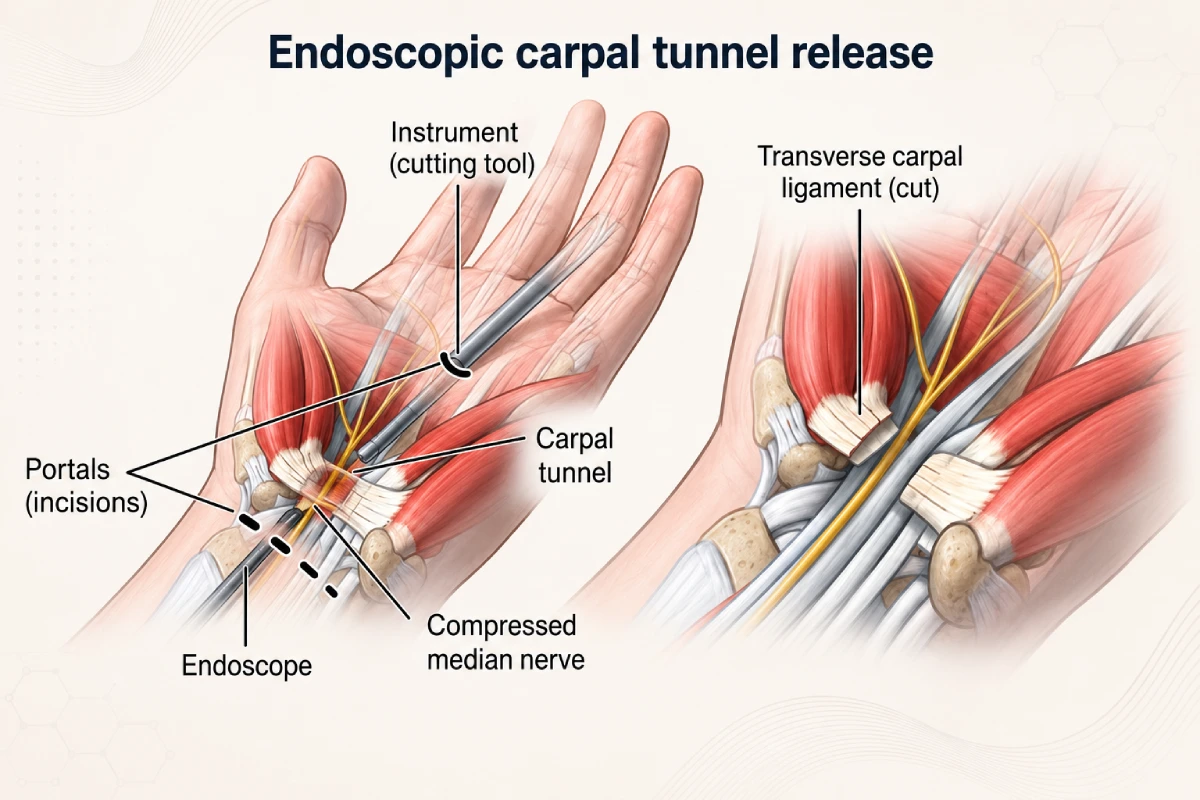
During the procedure, the surgeon cuts the tight ligament forming the roof of the carpal tunnel. This creates more space and reduces pressure on the median nerve.
The procedure may be done using different techniques.
Open carpal tunnel release
This involves a small incision in the palm or wrist area. The surgeon directly releases the ligament compressing the nerve.
Endoscopic carpal tunnel release
This is a minimally invasive technique using a small camera and specialised instruments. It may allow smaller incisions and, in selected patients, a quicker early recovery.
The best technique depends on the patient’s condition, anatomy, severity, surgeon’s assessment and clinical suitability.
The goal is the same in both approaches: to decompress the median nerve safely.
Is Carpal Tunnel Surgery Painful?
Most patients are concerned about pain after surgery. Mild discomfort, soreness or tightness can happen during the early recovery period.
Pain is usually managed with medication, wound care and hand movement guidance.
The hand may feel sensitive initially, especially around the incision area. Grip strength also takes time to return.
Patients should not expect the hand to feel completely normal immediately after surgery. Nerve recovery can take time, especially if symptoms were present for many months.
Recovery After Carpal Tunnel Surgery
Recovery varies from patient to patient. It depends on the severity of nerve compression, duration of symptoms, type of surgery, hand use demands and individual healing.
A general recovery pattern may look like this:
First few days
The hand is protected. Some swelling, soreness or stiffness may be present. Gentle finger movement is usually encouraged, depending on the surgeon’s instructions.
First few weeks
Wound healing continues. Light daily activities may gradually resume. Heavy gripping, lifting or pressure on the palm may need to be avoided.
4 to 6 weeks
Many patients notice improvement in night symptoms and tingling. Grip strength may still be recovering.
2 to 3 months
Hand comfort and function usually continue to improve. Patients with physically demanding work may need a more gradual return.
Longer-term recovery
If nerve compression was severe or long-standing, numbness or weakness may take longer to improve. In some cases, full nerve recovery may be incomplete if the nerve was compressed for too long.
This is why early treatment matters.
Can Carpal Tunnel Syndrome Come Back?
Carpal Tunnel Syndrome can return in some cases, although many patients do well after appropriate treatment.
Recurrence may be linked to:
- Ongoing repetitive strain
- Scar tissue
- Incomplete release
- Underlying medical conditions
- Continued swelling around the wrist
- Severe long-standing nerve compression
- Poor ergonomic habits
Prevention and aftercare still matter after treatment.
Patients should continue to protect wrist position, manage repetitive strain and follow medical advice.
What Happens If Carpal Tunnel Syndrome Is Left Untreated?
Mild symptoms may sometimes improve, especially if caused by temporary swelling or activity overload. But persistent Carpal Tunnel Syndrome can worsen over time.
If nerve compression continues for too long, it may lead to:
- Constant numbness
- Ongoing tingling
- Weak thumb muscles
- Loss of grip strength
- Difficulty with fine hand movements
- Dropping objects
- Reduced hand function
- Long-term nerve damage in severe cases
The concern is not only pain. The concern is nerve health.
A compressed nerve should be assessed before it reaches the stage of permanent weakness or sensory loss.
Practical Tips to Reduce Carpal Tunnel Symptoms
While waiting for assessment or during early treatment, some simple habits may help reduce irritation.
You can try:
- Wearing a wrist splint at night if advised
- Keeping the wrist neutral during work
- Taking short breaks from repetitive hand tasks
- Avoiding prolonged gripping
- Adjusting keyboard and mouse position
- Reducing pressure on the wrist while typing
- Avoiding sleeping with the wrist bent
- Gently moving the fingers during breaks
- Avoiding forceful stretching if it worsens symptoms
- Getting symptoms checked if they persist
These steps may help mild symptoms, but they should not replace specialist care when symptoms are frequent, severe or worsening.
Why Specialist Care Matters for Carpal Tunnel Syndrome
The hand is highly complex. Numbness and tingling may come from different nerves or different levels of compression.
For example, symptoms may sometimes be related to the neck, elbow, wrist or another nerve pathway. A specialist assessment helps identify where the nerve is being affected and whether the symptoms are truly due to Carpal Tunnel Syndrome.
This matters because treatment depends on the exact cause.
Dr Marouane’s hand-to-shoulder expertise is especially relevant here because nerve symptoms do not always stop at the wrist. A complete upper-limb assessment can help avoid missed diagnosis and guide the right treatment plan.
What to Expect During a Consultation
During a consultation for suspected Carpal Tunnel Syndrome, the doctor will take a detailed history and examine the hand, wrist and upper limb.
You may be asked:
- Which fingers feel numb or tingly?
- Do symptoms wake you at night?
- Do you drop objects?
- Is one hand worse than the other?
- Does work or typing make it worse?
- Do you have diabetes, thyroid disease or other medical conditions?
- Have you tried splints or injections before?
- Is there weakness in the thumb or hand?
The examination may include checking sensation, thumb strength, wrist position, nerve irritation signs and hand function.
If needed, nerve tests or imaging may be recommended.
By the end of the consultation, the aim is to understand whether the condition is mild, moderate or severe, and whether the best next step is splinting, therapy, injection, surgery or further testing.
Final Thoughts
Carpal Tunnel Syndrome is a common but important nerve compression condition, and early diagnosis can make Carpal Tunnel Treatment more effective before symptoms progress to constant numbness or weakness. At Dr Marouane’s Orthopedic Clinic, patients can receive expert assessment for carpal tunnel symptoms and personalised guidance on both non-surgical treatments and Carpal Tunnel Surgery. If tingling, numbness, or hand weakness is affecting your sleep, work, or daily activities, call +971 544 226 123 to schedule a consultation and take the first step toward effective relief with one of Dubai’s leading orthopedic surgeons.