
PRP Injections for Thumb Arthritis Joint Recovery
Pain at the base of the thumb can make even the simplest tasks surprisingly difficult. Turning a key, opening a jar, writing, or gripping a phone may suddenly feel uncomfortable. For many people, this discomfort is caused by Basal Joint Arthritis, a form of Hand Arthritis that affects the joint at the base of the thumb.
The thumb plays a unique role in hand function. It allows the hand to grip, pinch, and perform fine movements. When arthritis develops in this joint, it can significantly affect daily activities and overall hand strength. Because of the importance of thumb mobility, patients often begin exploring treatment options that help relieve pain and restore function without immediately considering surgery.
Among the emerging non-surgical approaches being discussed in orthopaedics is the use of PRP injection for thumb pain, which is part of a broader regenerative treatment strategy aimed at supporting joint recovery.
Understanding Thumb Arthritis and Basal Joint Arthritis
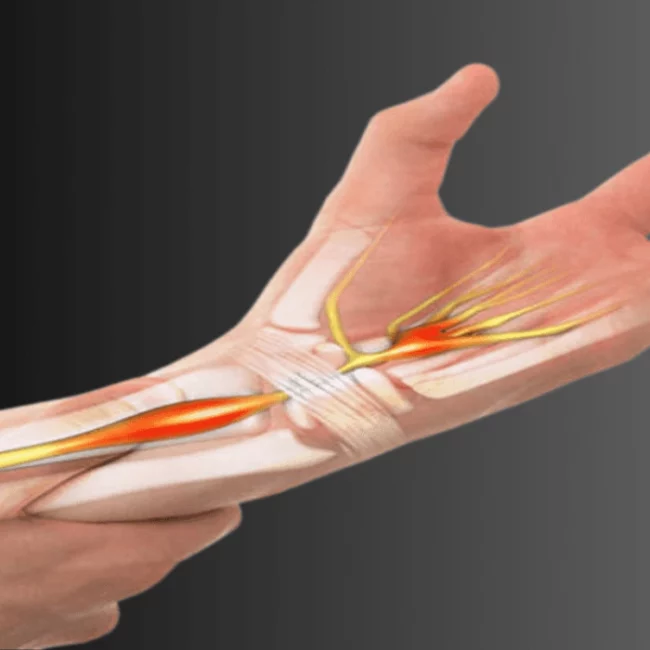
Basal Joint Arthritis occurs when the cartilage within the thumb’s carpometacarpal (CMC) joint begins to wear down. This joint is located at the base of the thumb, where the thumb meets the wrist, and it allows the thumb to move in multiple directions.
Cartilage normally acts as a cushion between bones, allowing smooth joint movement. When cartilage gradually deteriorates, the bones begin to rub against each other, leading to pain, inflammation, and stiffness.
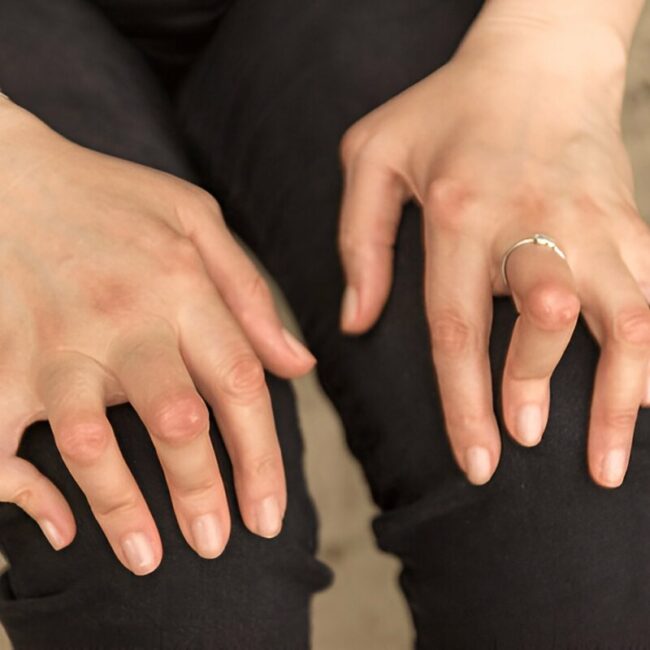
This type of arthritis is one of the most common forms of Hand Arthritis, particularly in adults over the age of forty.
Patients experiencing Thumb Arthritis often report symptoms such as:
- Pain at the base of the thumb
- Weak grip strength
- Difficulty pinching objects
- Swelling or tenderness near the thumb joint
- Reduced thumb mobility during daily tasks
Over time, these symptoms may gradually worsen if the joint continues to degenerate.
Why Thumb Arthritis Develops
Several factors contribute to the development of Basal Joint Arthritis. In many cases, the condition develops due to long-term wear and tear of the thumb joint.
Common contributing factors include:
- Age-related cartilage degeneration
- Previous thumb injuries or ligament instability
- Repetitive hand movements involving gripping or pinching
- Genetic predisposition to arthritis
- Joint laxity or weakened supporting ligaments
Because the thumb joint is used frequently throughout the day, repeated stress can gradually accelerate cartilage breakdown.
Diagnosing Hand Arthritis in the Thumb
Accurate diagnosis is essential when planning effective Thumb Arthritis Treatment. A specialist will usually begin with a detailed clinical examination of the hand.
During the assessment, doctors may evaluate:
- Tenderness at the base of the thumb
- Grip and pinch strength
- Range of thumb movement
- Pain during specific thumb motions
In some cases, imaging tests such as X-rays are used to confirm cartilage loss and evaluate the severity of Basal Joint Arthritis.
These images can show joint space narrowing, bone changes, and other signs of arthritis.
Conventional Thumb Arthritis Treatment Options
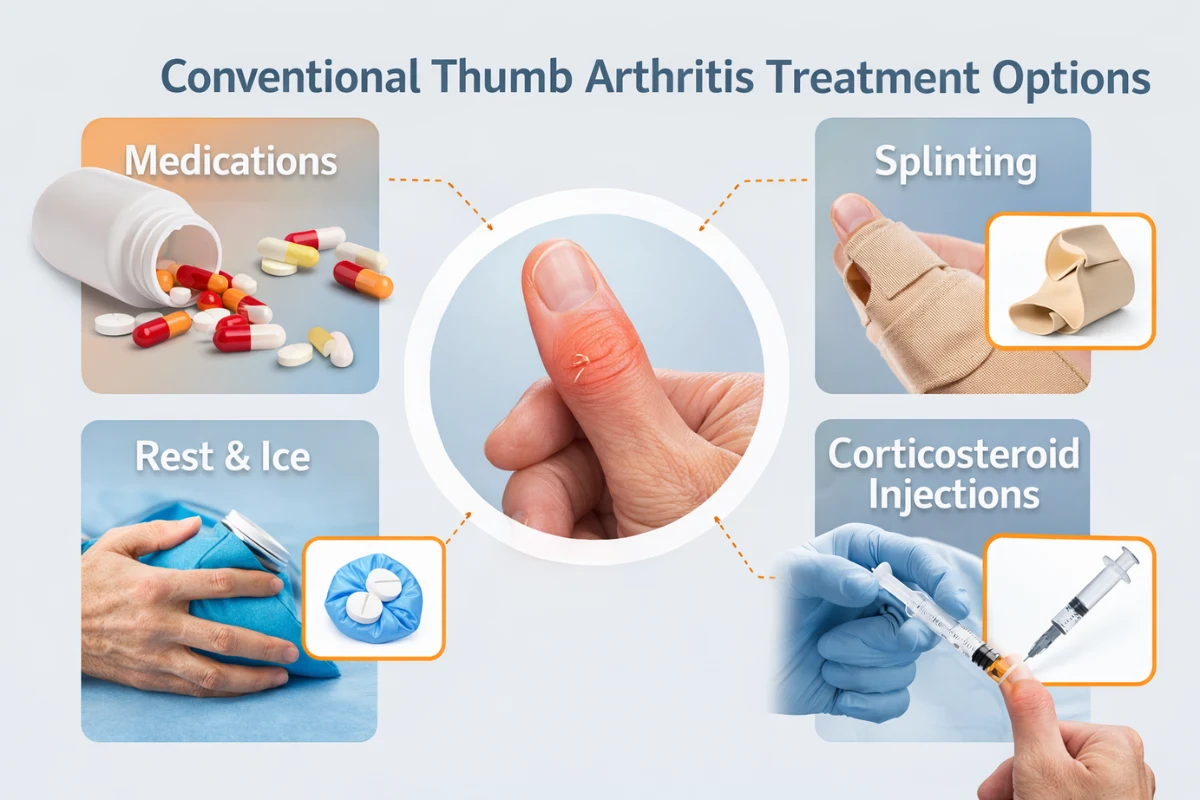
Many patients with early or moderate Thumb Arthritis can be managed with non-surgical treatment.
Common Thumb Arthritis Treatment approaches include:
- Activity modification to reduce strain on the thumb
- Splinting to support the joint and limit painful movements
- Physiotherapy to strengthen the surrounding muscles
- Anti-inflammatory medications, when appropriate
- Corticosteroid injections for temporary symptom relief
These strategies focus on reducing inflammation and improving joint stability.
However, when pain persists or symptoms return frequently, patients may begin exploring regenerative treatment approaches that aim to support joint healing.
PRP Injection for Thumb Pain: A Regenerative Approach
Platelet-rich plasma (PRP) therapy has gained attention in orthopaedic medicine as a regenerative treatment option.
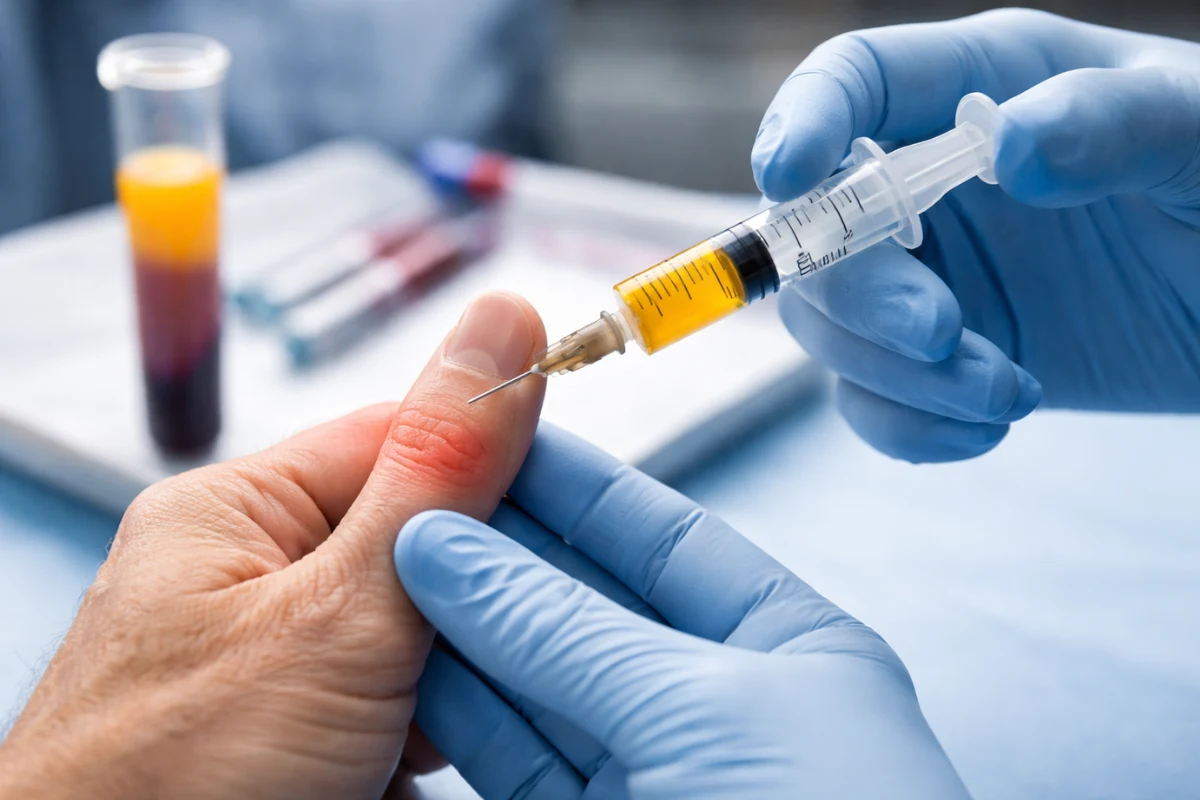
PRP injection for thumb pain involves using a concentrated portion of a patient’s own blood that contains a high number of platelets. Platelets release growth factors that play a role in tissue repair and healing.
During the procedure, a small sample of the patient’s blood is processed to separate the platelet-rich component. This concentrated plasma is then injected directly into the affected thumb joint.
The aim is to introduce growth factors that may stimulate biological repair processes within the joint.
How PRP May Support Thumb Joint Recovery
In cases of Basal Joint Arthritis, PRP therapy may help improve the environment inside the joint.
Potential benefits being studied include:
- Reduction of inflammation in the thumb joint
- Support for cartilage cell activity
- Improved lubrication within the joint space
- Relief from persistent thumb pain
While PRP does not reverse advanced arthritis, it may help reduce symptoms and improve function in certain patients.
This regenerative approach is increasingly considered as part of Thumb joint restoration in Dubai, particularly for individuals seeking alternatives to surgery.
Integrating PRP with Rehabilitation
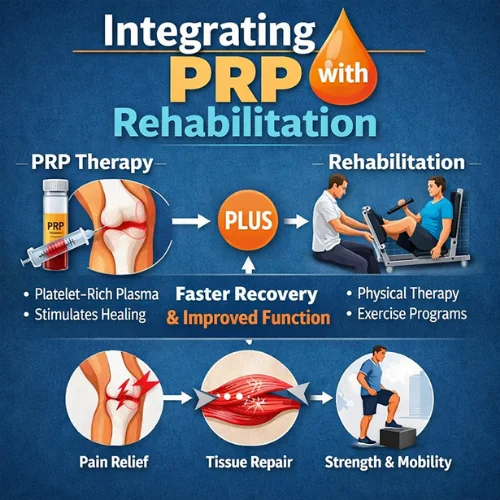
Regenerative treatments are most effective when combined with structured rehabilitation.
Following a PRP injection, patients may be advised to follow a recovery programme that includes:
Controlled rest
Allow the thumb joint time to recover immediately after treatment.
Strengthening exercises
Targeted exercises help strengthen the muscles supporting the thumb and hand.
Gradual return to activity
Patients slowly return to normal hand activities while protecting the joint from excessive strain.
This combined approach helps support both biological healing and functional recovery.
Who May Benefit from PRP for Thumb Arthritis
PRP therapy may be considered for individuals who:
- Experience persistent Hand Arthritis symptoms affecting the thumb
- Have mild to moderate Basal Joint Arthritis
- Want to explore non-surgical treatment options
- Continue experiencing pain despite conservative treatment
Each patient’s condition is unique, and the suitability of regenerative therapy depends on several clinical factors.
Protecting the Thumb Joint in Everyday Life
In addition to medical treatment, daily habits can influence the progression of thumb arthritis.
Helpful strategies include:
- Avoiding repetitive gripping when possible
- Using ergonomic tools that reduce thumb strain
- Performing hand-strengthening exercises regularly
- Maintaining flexibility in the hand and wrist muscles
- Taking breaks during activities that require prolonged hand use
These habits can help reduce stress on the thumb joint and support long-term joint health.
Common Questions About Thumb Arthritis
What causes Basal Joint Arthritis?
Basal joint arthritis usually develops due to cartilage wear within the thumb joint, often associated with age or repetitive hand use.
Can PRP injections cure Thumb Arthritis?
PRP therapy does not cure arthritis but may help reduce pain and improve joint function in some patients.
How long does it take to recover after a PRP injection?
Recovery time varies, but improvements often develop gradually over several weeks.
Is surgery always necessary for Thumb Arthritis?
No. Many patients achieve symptom relief through non-surgical treatments such as splinting, physiotherapy, or regenerative therapies.
When should someone seek specialist care?
Persistent thumb pain, reduced grip strength, or difficulty performing daily tasks should prompt evaluation by a specialist.
Conclusion
PRP injections offer a promising regenerative approach for managing Thumb Arthritis Treatment, particularly in cases of Basal Joint Arthritis and persistent Hand Arthritis symptoms. Patients seeking Thumb joint restoration in Dubai or considering PRP injection for thumb pain should consult an experienced specialist to determine the most appropriate treatment strategy for restoring comfort and function in the thumb joint.