
Regenerative Medicine for Elbow Arthritis Solutions
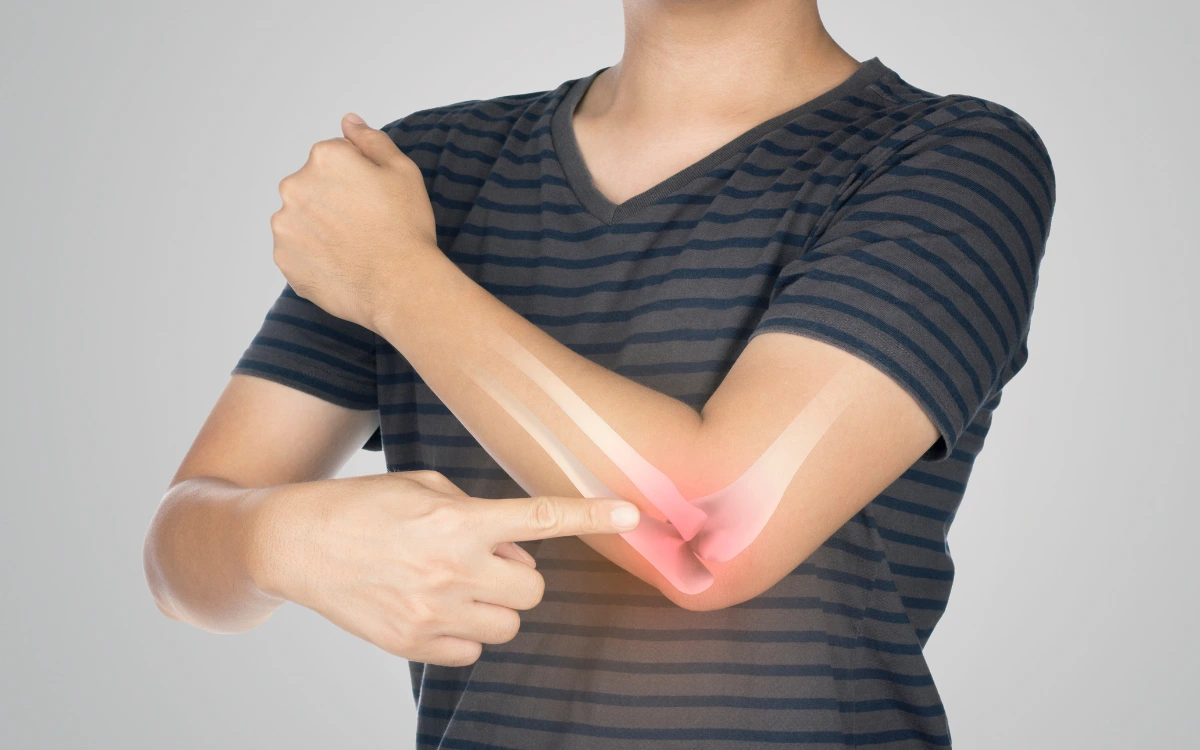
Elbow arthritis is far more disruptive than most people expect. Unlike the hip or knee, the elbow tends to be overlooked — until it starts affecting things you can no longer ignore: lifting a bag, rotating your arm to shake someone’s hand, or even getting dressed in the morning. By the time patients present to a specialist, many have already been managing the pain quietly for months, assuming it will pass on its own.
It often doesn’t. Elbow arthritis is a progressive condition, and without appropriate management, it tends to worsen over time. The good news is that surgical intervention is not always the answer — and increasingly, regenerative medicine is offering a structured, evidence-informed path to managing elbow joint pain before things reach that point.
What Is Elbow Arthritis?
The elbow is a hinge joint made up of three bones — the humerus, radius, and ulna — stabilised by a network of ligaments and moved by surrounding musculature. The joint surfaces are lined with articular cartilage, which allows smooth, low-friction movement.
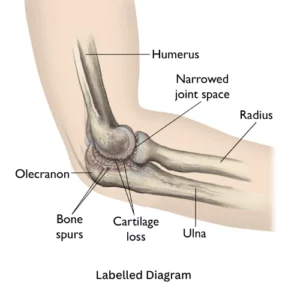
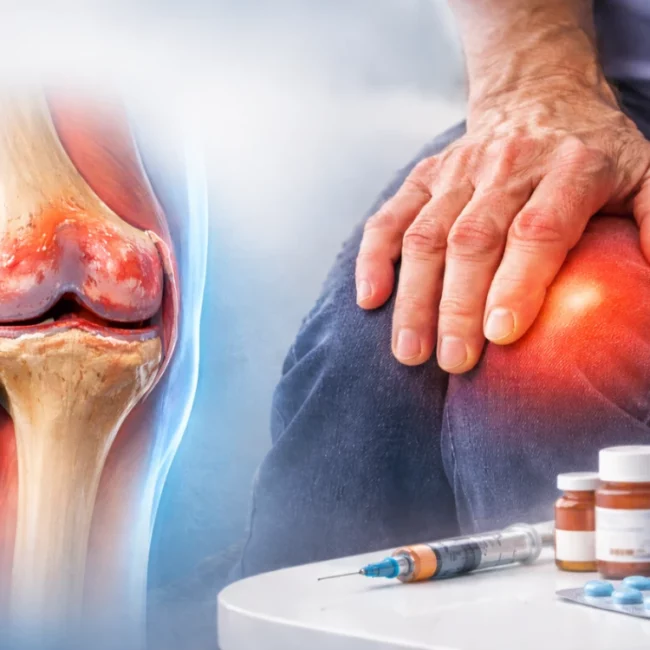
Elbow arthritis occurs when this cartilage breaks down. As it thins or deteriorates, the bones begin to contact one another more directly, generating pain, inflammation, and progressive loss of function.
There are three main types:
- Osteoarthritis — degenerative, typically from cumulative wear over years. Most common in patients over 50 or those with a history of heavy manual work.
- Rheumatoid arthritis — an autoimmune condition that attacks the joint lining (synovium), often affecting multiple joints simultaneously.
- Post-traumatic arthritis — follows a prior injury such as a fracture or dislocation. Can develop years after the original injury, even when it appeared to heal well.
Each type has a different onset and progression, but the clinical result is often the same: a stiff, painful elbow that limits daily function.
Recognising the Symptoms of Elbow Joint Pain
Elbow arthritis rarely announces itself dramatically. It tends to build gradually, which is one of the reasons patients delay seeking advice.
Common early signs include:
- Aching pain along the outer or inner elbow, particularly after use
- Morning stiffness that eases over the first hour of activity
- A reduced range of motion — difficulty fully straightening or bending the arm
- Clicking, grinding, or catching sensations during movement
- Swelling or warmth around the joint following activity
- Weakness when gripping or carrying
As the condition advances, pain can occur at rest and overnight. A stiff elbow that was once an occasional inconvenience can become a constant limitation.
Why Does the Elbow Become Stiff?
Stiffness is one of the most debilitating features of elbow arthritis and one of the most mechanically complex to address. It arises from several processes happening simultaneously:
- Cartilage loss creates irregular joint surfaces, increasing friction and limiting glide
- Chronic inflammation causes the joint capsule to thicken and contract
- The body lays down osteophytes (bone spurs) at the joint margins, physically blocking movement
- Surrounding soft tissues tighten in response to pain and disuse
This is why early intervention matters. Once capsular contracture and osteophyte formation are established, recovery of full range of motion becomes significantly more difficult — and the window for non-surgical management narrows.
Traditional Approaches to Arthritis in Elbow Treatment
Before considering regenerative options, it is worth understanding what conventional treatments offer — and where their limitations lie.
Analgesia and Anti-Inflammatory Medication
NSAIDs and analgesics can reduce pain and inflammation in the short term. They are useful for managing flare-ups but have no disease-modifying effect and carry gastrointestinal and cardiovascular risks with prolonged use.
Physiotherapy
Structured physiotherapy remains a cornerstone of elbow arthritis management. Range-of-motion exercises, strengthening programmes, and activity modification can slow deterioration and preserve function — particularly in early-stage disease.
Corticosteroid Injections
Intra-articular steroid injections offer meaningful short-term relief — often weeks to a few months. However, repeated injections over time may accelerate cartilage degradation, limiting their long-term utility.
Surgery
Elbow arthroscopy can be used to remove loose bodies and osteophytes, and to release a contracted capsule. Joint replacement (total elbow arthroplasty) is reserved for end-stage disease. Both carry recovery periods and inherent procedural risks. For many patients — particularly those who are younger, more active, or in the early-to-moderate stages — surgery is not the right first step.
Regenerative Medicine for Elbow Arthritis: The Modern Approach
Regenerative medicine takes a fundamentally different approach. Rather than managing symptoms, the goal is to support the biological processes that repair and maintain joint tissue — working with the body’s own healing mechanisms rather than bypassing them.
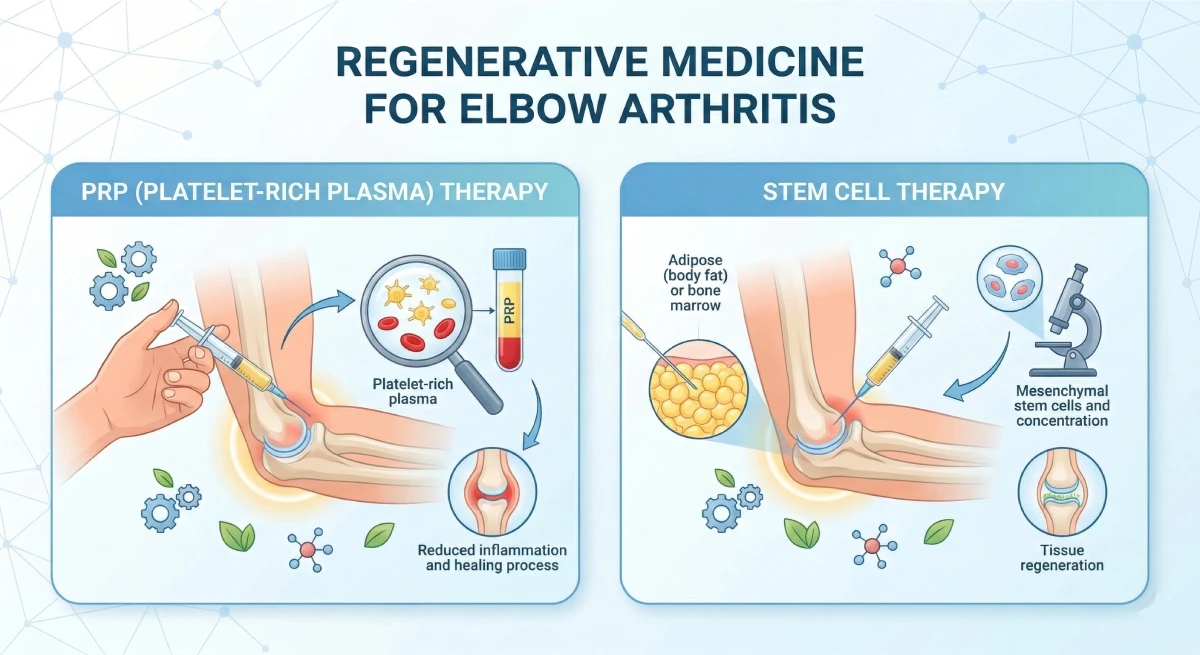
In the context of elbow arthritis, the two most clinically established regenerative options are Platelet-Rich Plasma (PRP) therapy and stem cell therapy.
PRP (Platelet-Rich Plasma) Therapy
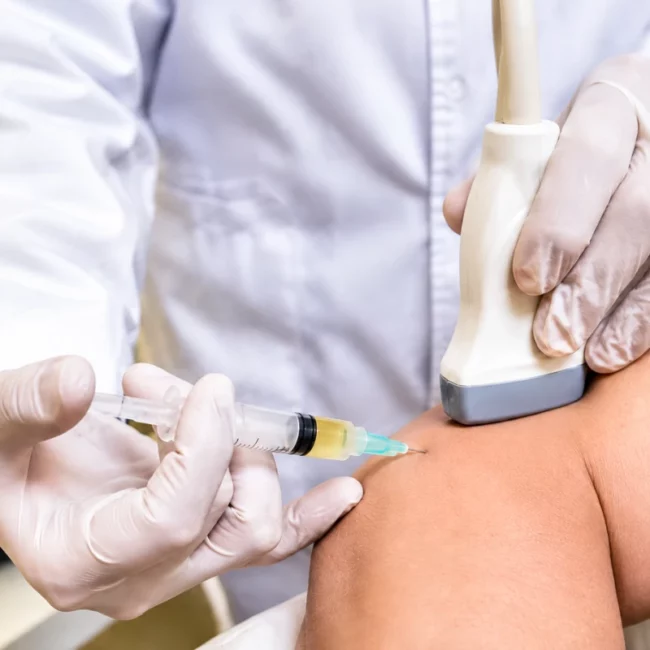
PRP is derived from the patient’s own blood. A small sample is drawn, centrifuged to concentrate the platelet fraction, and then injected directly into the affected joint under imaging guidance.
Platelets carry a dense payload of growth factors — including PDGF, TGF-β, and VEGF — that signal to local tissues to reduce inflammation, stimulate cellular repair, and support tissue remodelling.
In elbow arthritis, PRP injections aim to:
- Reduce intra-articular inflammation
- Slow the rate of cartilage degradation
- Improve pain levels and functional range of motion
- Create a more favourable joint environment for healing
Because the treatment uses the patient’s own biological material, the risk profile is low. Most patients notice gradual improvement over four to eight weeks, with effects that can last considerably longer than a corticosteroid injection.
Stem Cell Therapy
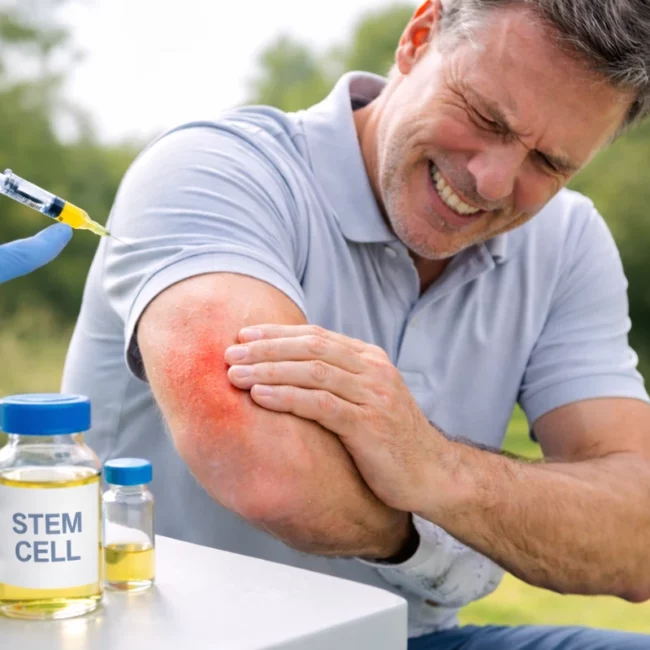
Stem cells — typically derived from bone marrow or adipose (fat) tissue — have the capacity to differentiate into multiple cell types, including chondrocytes (cartilage cells). When introduced into a damaged joint, they may contribute to cartilage repair, modulate the inflammatory environment, and release regenerative signalling molecules.
Stem cell therapy is generally considered when arthritis is moderate, cartilage damage is more significant, and PRP alone may not be sufficient. It is a more involved procedure than PRP but remains minimally invasive compared to surgery.
Research in this area continues to grow. While stem cell therapy is not a cure for arthritis, current evidence supports its role in symptom reduction and functional improvement — particularly when applied in the appropriate clinical context.
Who Is a Suitable Candidate for Regenerative Medicine?
Not every patient with elbow arthritis is the right candidate for regenerative treatment. A thorough clinical evaluation — including imaging — is essential before any decision is made.
Regenerative medicine tends to offer the most benefit when:
- The arthritis is mild to moderate in severity
- Cartilage loss is present but the joint architecture is still largely intact
- Conservative treatments (physiotherapy, medication) have provided insufficient relief
- The patient wishes to avoid or delay surgical intervention
- The patient is in reasonable general health and willing to follow post-treatment rehabilitation
Advanced arthritis with significant structural deterioration may still require surgical management. The role of an experienced elbow arthritis specialist is to identify which patients are likely to benefit and to set realistic expectations about outcomes.
What to Expect During the Procedure
Regenerative medicine procedures for the elbow are performed in an outpatient clinical setting.
A typical appointment involves:
- Clinical assessment and review of imaging (X-ray or MRI)
- Preparation of the therapeutic agent (PRP blood draw and centrifugation, or stem cell harvesting)
- Guided injection into the elbow joint — usually performed under ultrasound guidance for accuracy
- A short observation period before discharge
Most patients return home the same day. Some mild soreness or swelling at the injection site is normal for the first 48–72 hours and typically resolves without intervention.
Recovery and Post-Treatment Care
Recovery following a regenerative injection is generally straightforward compared to surgical alternatives.
Patients are typically advised to:
- Rest the elbow from heavy loading for the first one to two weeks
- Begin a guided physiotherapy programme to maximise the treatment’s effect
- Attend follow-up appointments to monitor progress
- Avoid anti-inflammatory medications in the immediate post-injection period, as these can interfere with the biological response
Improvement is gradual. Many patients begin to notice changes at four to six weeks, with continued gains over three to six months. Results vary depending on the severity of arthritis, age, lifestyle, and adherence to post-treatment rehabilitation.
What Regenerative Medicine Can — and Cannot — Do
It is important to have accurate expectations. Regenerative medicine for elbow arthritis is not a cure. It does not reverse structural damage that has already occurred, and it will not restore a joint that has been severely affected.
What it can do — when applied correctly and at the right stage — is:
- Meaningfully reduce elbow joint pain
- Improve functional range of motion
- Slow the progression of the condition
- Delay or, in some cases, avoid the need for surgery
For many patients, that represents a significant improvement in quality of life and a meaningful extension of the time before more invasive intervention becomes necessary.
When Should You See an Elbow Arthritis Specialist?
If you have been managing elbow pain for more than a few weeks — or if stiffness is beginning to affect your daily activities — it is worth seeking a professional assessment. Early diagnosis allows for more treatment options and better long-term outcomes.
Specific indicators to act on include:
- Pain that persists despite rest and standard analgesia
- Progressive loss of movement in the elbow
- Swelling that does not resolve
- Difficulty with tasks that were previously straightforward
- Any history of elbow injury or fracture, particularly if symptoms are returning
An elbow arthritis specialist will assess the condition through clinical examination and imaging, discuss the full range of treatment options, and advise on the most appropriate course of action for your specific situation.
Frequently Asked Questions
Is regenerative medicine for the elbow safe? When performed by a qualified specialist, yes. PRP uses the patient’s own blood, which eliminates the risk of rejection or allergic reaction. Stem cell procedures carry a slightly higher level of procedural involvement but remain minimally invasive with a well-established safety profile.
How long do the results last? This varies between patients. PRP relief commonly lasts six to twelve months; some patients report longer benefit, particularly with repeat treatment. Stem cell results tend to be more durable in appropriate candidates.
Is the injection painful? Most patients experience minimal discomfort. Local anaesthetic is used, and the procedure is generally well tolerated.
Can I avoid surgery altogether? In mild to moderate cases, regenerative medicine may delay or remove the need for surgery. In more advanced disease, it may still be a useful adjunct but is unlikely to replace surgical intervention entirely.
How many sessions are needed? This depends on the treatment and the individual response. PRP may be repeated at intervals; a single stem cell procedure is typically sufficient to assess response before any further treatment is considered.
Conclusion
Elbow arthritis is a condition that responds best to early, structured management. Regenerative medicine — specifically PRP therapy and stem cell treatment — offers a clinically grounded, minimally invasive option for patients who are not yet at the stage of requiring surgery, or who wish to exhaust non-surgical avenues first.
At Dr. Marouane’s clinic in Dubai, every patient undergoes a thorough assessment before any treatment is recommended. If you are experiencing persistent elbow joint pain or stiffness that is limiting your daily life, contact us on +971 544 226 123 to arrange a consultation.